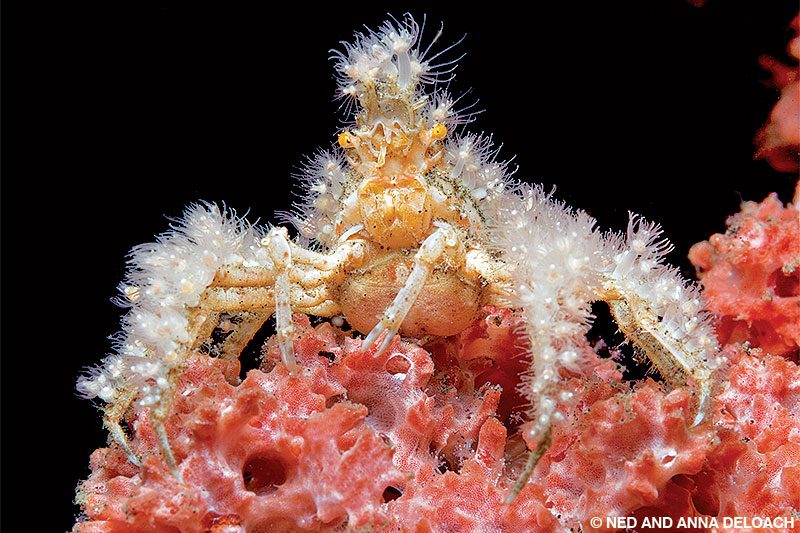
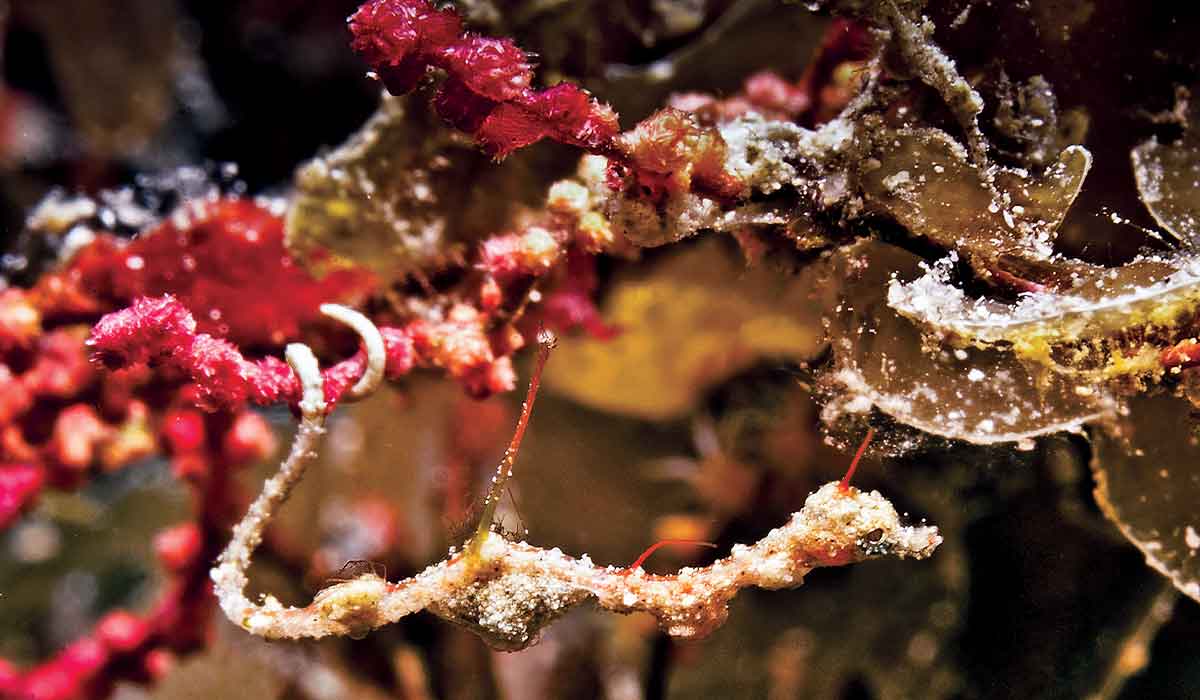
Most decorator crabs belong to one of eight families in the superfamily Majoidea, commonly referred to as spider crabs. About 75 percent of the group’s more than 1,100 global species mask their presence by wearing disguises made from living organisms scissored from the landscape. They commonly hijack seaweeds, sponges, tunicates, bryozoans and hydroids. The crabs manipulate the purloined pieces of attire with their mouths before attaching them to one of the many fishhook-shaped bristles arranged in rows on the carapace, rostrum, walking legs and claw arms, depending on the species.
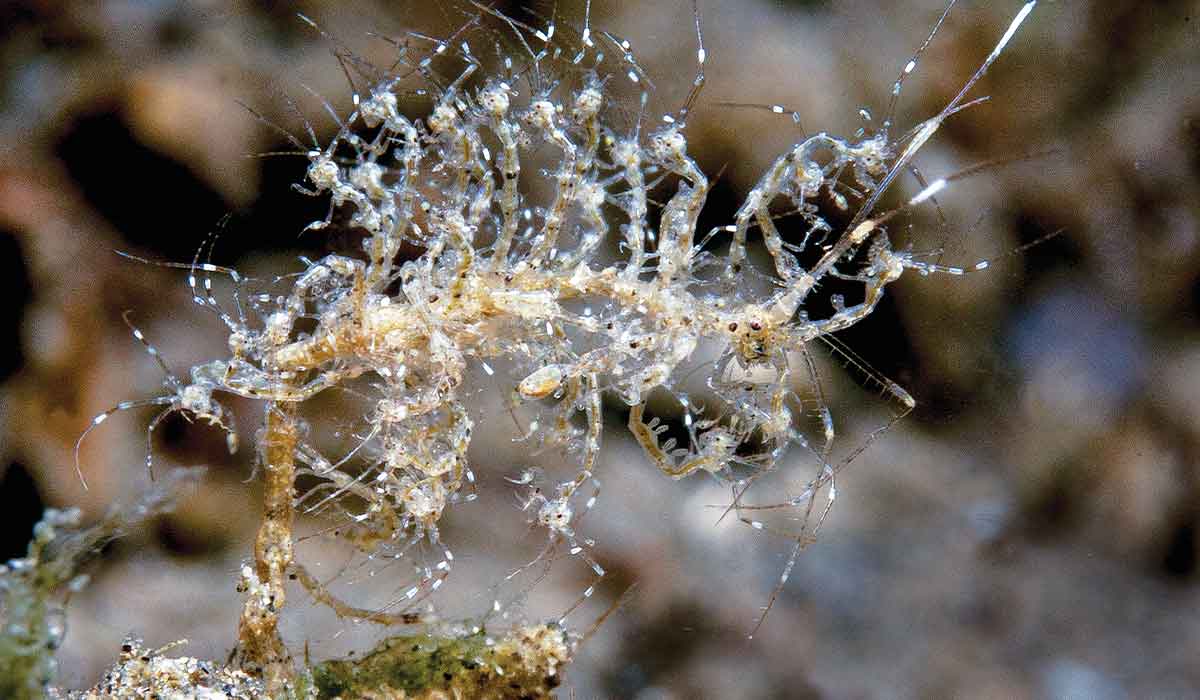
Skeleton shrimp are tiny and inconspicuous critters. They are notoriously moody. Read more about skeleton shrimp.
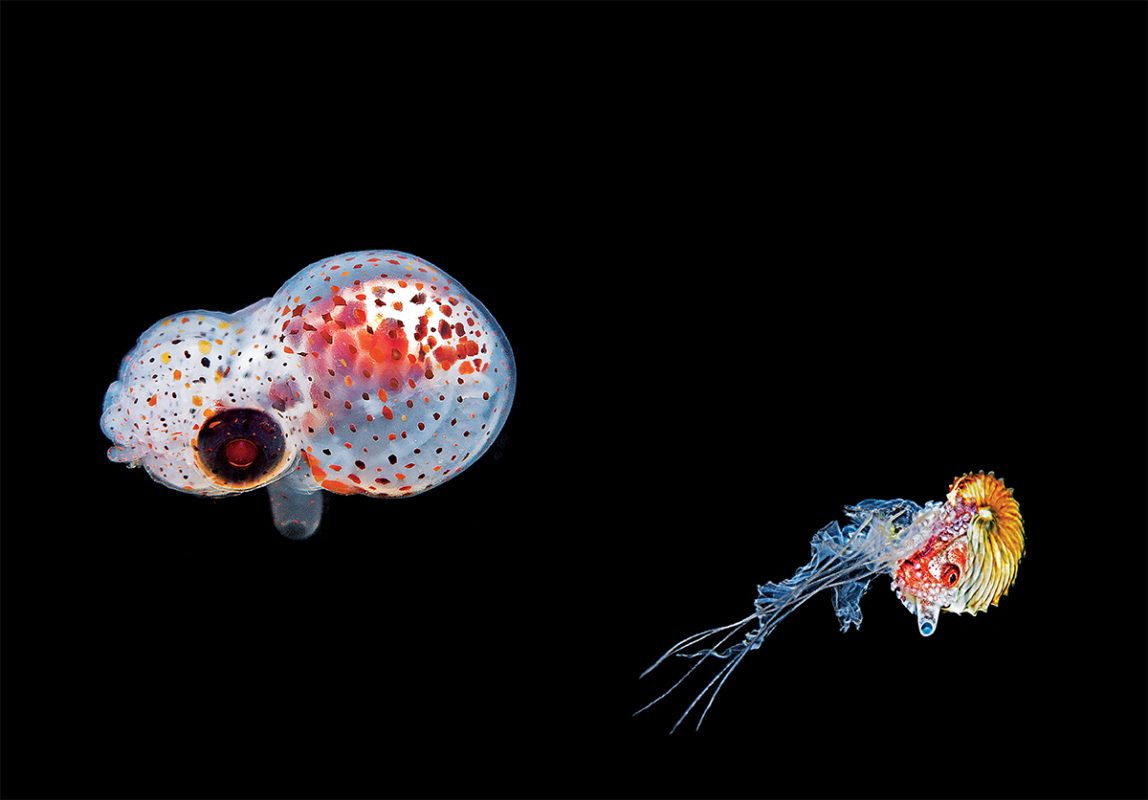
I don’t expect to see animals much larger than my thumbnail while I’m drifting on a night dive in the ocean. So I’m surprised when a translucent skirt of tentacles […]
Diving in Japan exposes divers to colorful sea life and unique experiences. Learn more about diving in Japan.
Noldy Rumengan is a notable underwater critter hunter. Read the story of diving alongside Rumengan and searching for marine life.
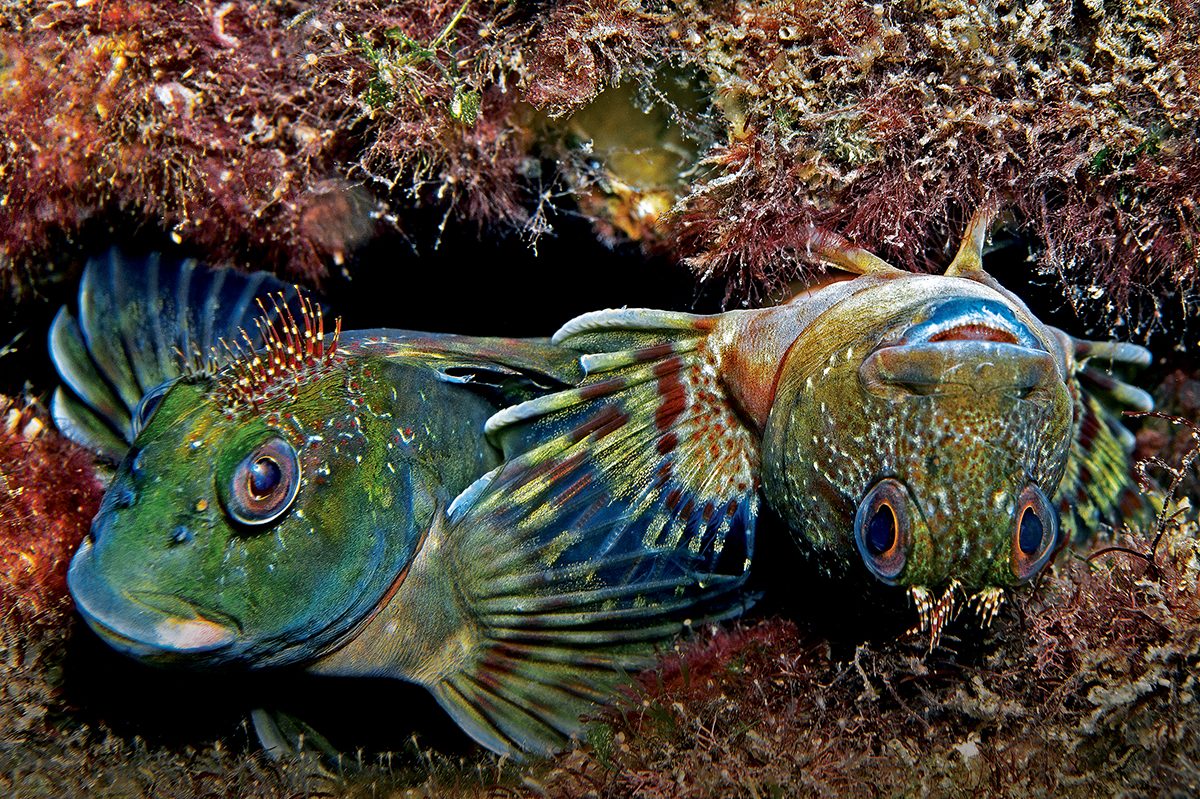
OF ALL THE FISHES IN THE SEA THAT ANNA ADORES, blennies perch high atop her favorites list. Her fascination with the tribe of typically small, hole-inhabiting bottom-dwellers …
Japan has excellent diving with marvelous creatures. Read the second part in this series of diving in Japan.
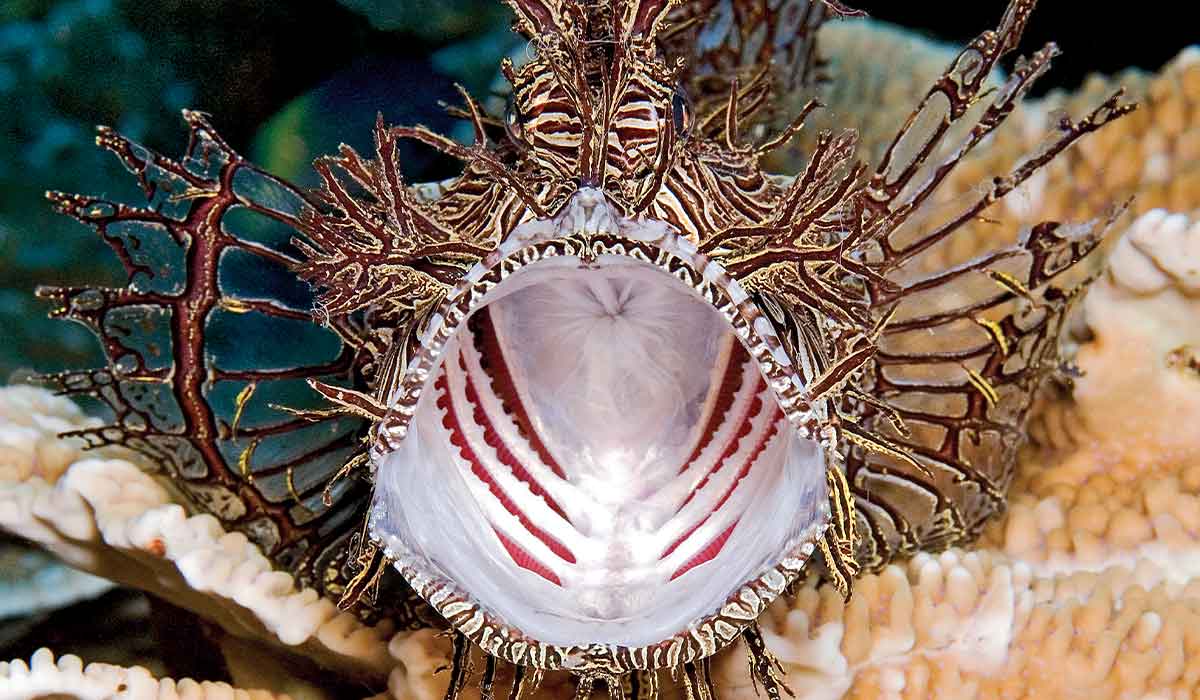
Certain kinds of fish love to open their mouths wide and yawn. It’s quite fascinating! Read more about these yawning fish.
IT HAD BEEN A BUSY WEEK for the fish surveyors aboard the Avalon ll, and things were just beginning to wind down. The Reef Environmental Education Foundation (REEF) team of […]
Male fish exhibit exquisite colors during mating seasons in hopes to attracts mates. Learn more about these colorful and important rituals.