Whether for recreation, research, or commercial work, diving puts humans in a fundamentally hazardous environment. Visibility, pressure effects, and sound distortion limit communication between divers and surface teams, making real-time coordination difficult. Response time is critical in emergencies, and delays can be dangerous.
Diver recall systems are essential safety tools that bridge this communication gap, allowing topside crews to alert divers immediately when conditions change or an emergency arises, necessitating ending the dive or performing another emergency response.
Common Methods
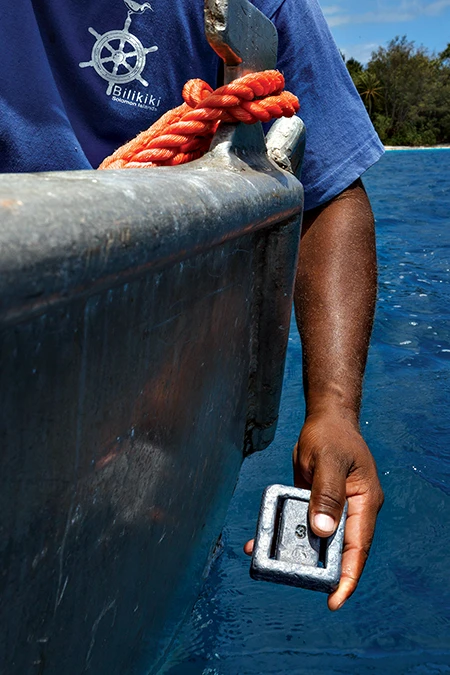
Surface crews can signal divers by banging a dive weight, hammer, or screwdriver against a boat hull or dive ladder. Many divers report that it takes a while to register the recall, even when they expect it.
Surface marker buoy (SMB) tags consist of a carabiner or bolt snap sent down a diver’s line with a note or mini slate attached. Divers feel the tag hit their spool or reel and read the attached message that explains the situation. This method requires a diver to have an SMB deployed and the surface operator to reach the SMB and manipulate the line.
Revving a boat engine is widely considered unreliable and inconsistent as a signal. Divers often can’t distinguish it from normal boat noise, especially during deeper dives or in areas with heavy marine traffic.
Pyrotechnics
A pyrotechnic diver recall system, often referred to as a thunder flash, is a specialized tool that uses controlled underwater detonations to send loud, unmistakable signals to divers. When a thunder flash detonates underwater, it generates an intense shockwave in all directions. The resulting sound and pressure wave travels efficiently through the water, and divers report hearing and feeling the detonation over a range of several hundred feet.
Some are ignited at the surface and then dropped over the side; others are hydrostatically operated and go off once reaching a specific depth. Each type has a disadvantage depending on your dive environment — you may be shallower than a hydrostatic device’s minimum operating depth or have an ignition flame that can injure the operator and spell disaster near oxygen tanks or fuel canisters.
Thunder flashes are no longer common in the dive industry due to several factors. Recreational dive operations avoid them for liability reasons, as they can cause hearing damage, barotrauma, and significant disorientation. Environmentally conscious divers don’t like throwing disposable and nonrecoverable units in the water.
While not suitable for every dive operation, pyrotechnic recall devices are still used in some places when the urgency of recalling divers outweighs the potential risks. They are also the primary method in various specialized dive environments where immediate, unmistakable signals are necessary. Military units, commercial dive operations, and some public safety teams dive in conditions where underwater situational awareness is often compromised, there’s no time to safely deploy other recall methods, and quick reaction capability is critical.
Acoustic
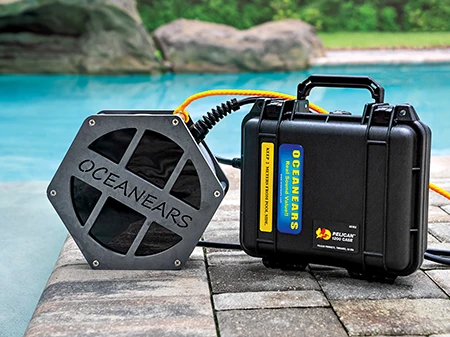
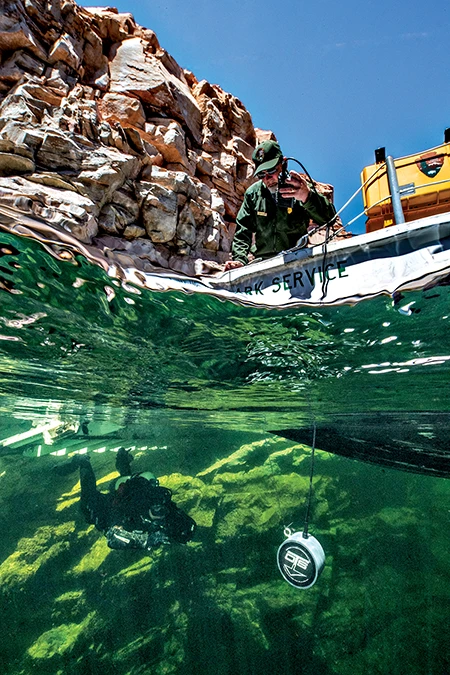
Acoustic diver recall systems use sound waves to transmit signals from the surface to divers underwater, allowing vessels and crew to promptly alert or recall divers to the surface. An underwater speaker attached to a cable dangles in the water at an optimized depth to transmit sound. An operator at the surface can transmit different tone patterns, siren alerts, and prerecorded messages, play music, or speak into a microphone to send direct voice commands and warnings to divers.
Transmissions are loud enough that a hooded diver at several hundred feet can detect them. Divers do not need special electronic equipment to hear acoustic recall systems — the sound travels in all directions and is detectable by the naked ear.
The physical environment — such as bottom topography and composition, physical structures, and currents — can significantly affect an acoustic device’s performance. The projection range and message comprehension can be greatly reduced, so operators should account for background noise and seek to minimize it as much as possible.
Divers often report that exhalation noise often hampers finding the source of a sudden waterborne sound. When using recorded voice transmissions or speaking live to divers underwater, a siren or alert tone before the message can help get the divers’ attention and prepare them for the stated message.
Extensive testing of acoustic recall systems also shows that repetition of clear, short phrases contributes to high intelligibility. Divers may misinterpret vague single-word commands or other complex messages if the specific directions are unclear.
It’s important for divers to observe a safety perimeter from the speaker as outlined in the unit’s operating manual. The dive operator should communicate this safe zone during the predive briefing. While these systems don’t cause anywhere near the physical discomfort level of a thunder flash or submarine sonar ping, these high-powered underwater audio transmission devices can cause permanent hearing loss or physiological damage if used inappropriately.
Conclusion
Diver recall systems allow dive operators to alert or recall divers in an emergency, but they do not eliminate the potential hazards inherent in diving or lessen the need for a thorough emergency action plan. It’s necessary to understand your recall system’s benefits and limitations and recognize if the dive plan includes elements that limit the capacity to quickly recall divers, such as decompression obligations or drift diving. Divers must be briefed in advance on what primary and secondary systems are in use and how to respond when a recall device is activated.
Misidentifying or ignoring the recall signal can lead to confusion and compromise safety. If you have to respond to a recall, use your safe ascent rate and complete any decompression obligations before surfacing.
© Alert Diver – Q3 2025