The Peculiar Fate of the Missing Mate
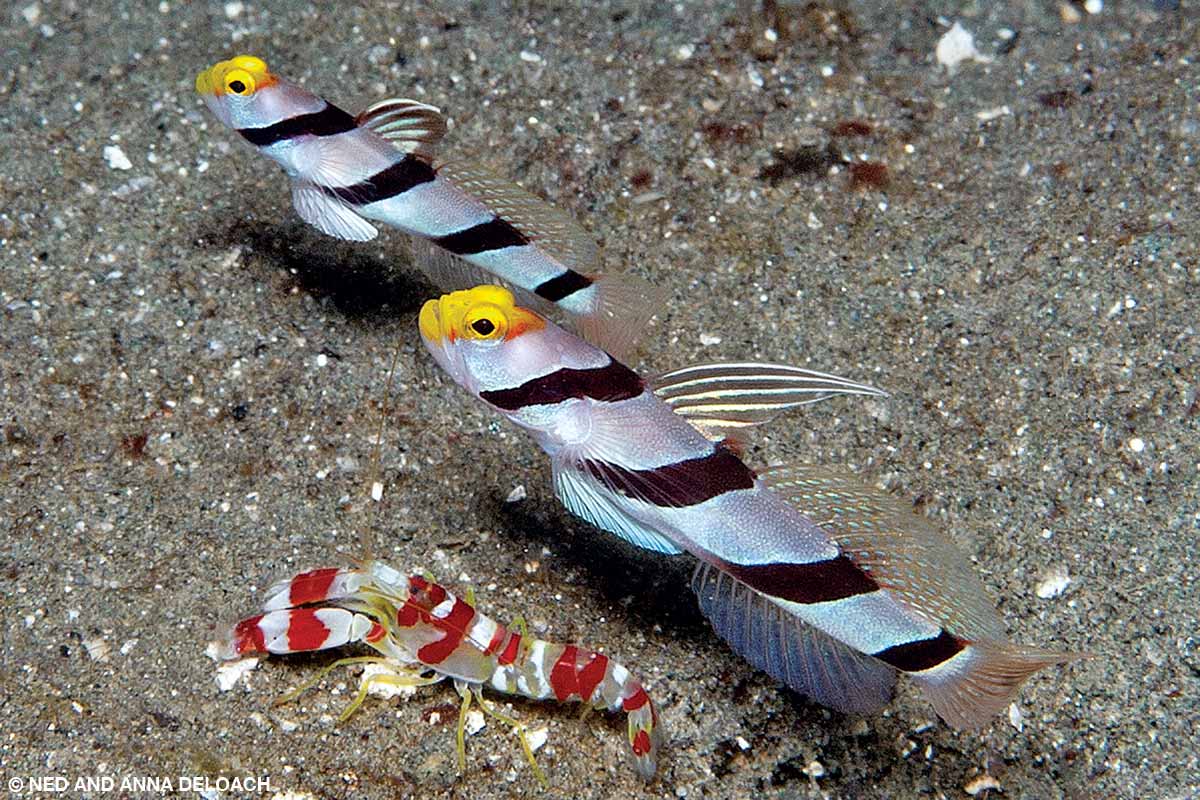
Signal gobies are cute fish and have unique courtship rituals. Read more about this peculiar affair.
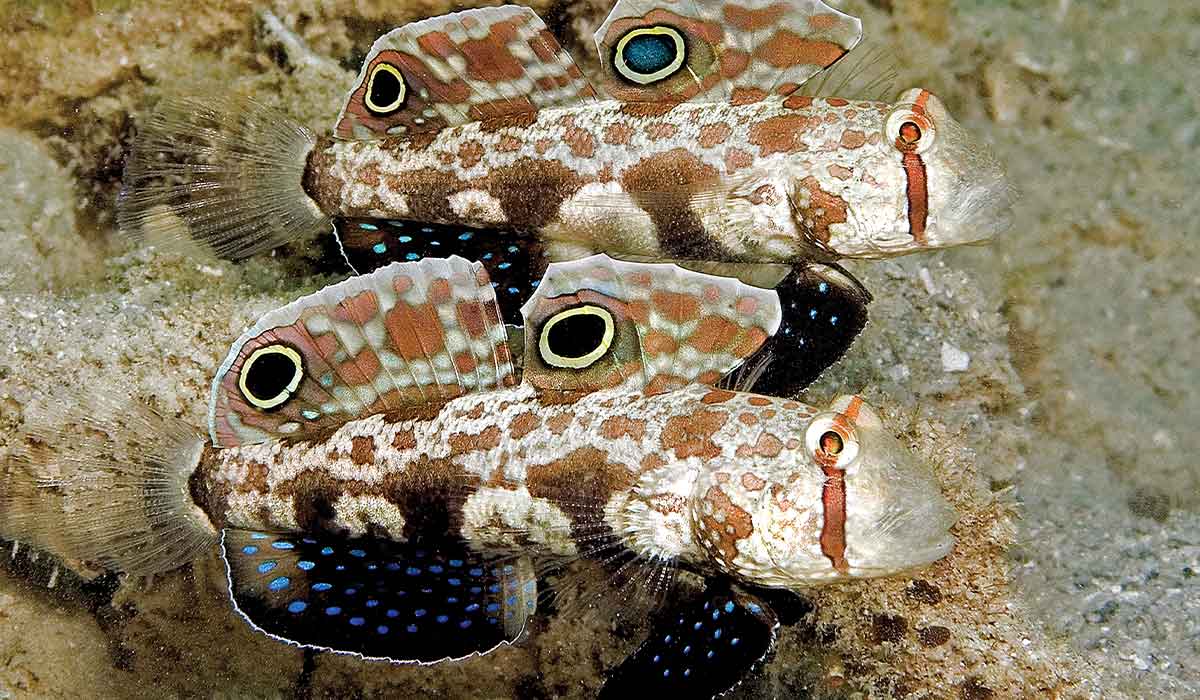
Signal gobies are cute fish and have unique courtship rituals. Read more about this peculiar affair.
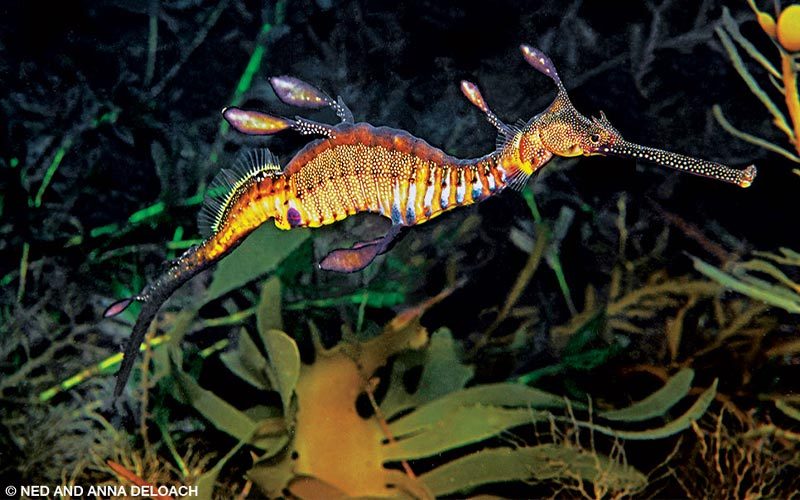
Any animal that looks as unconventional as a seadragon must also have an unconventional sex life. Unlike most marine fishes, which reproduce by spontaneously releasing and leaving behind thousands of tiny eggs in the open ocean, seadragons brood their large eggs attached to the tails of males for a month.
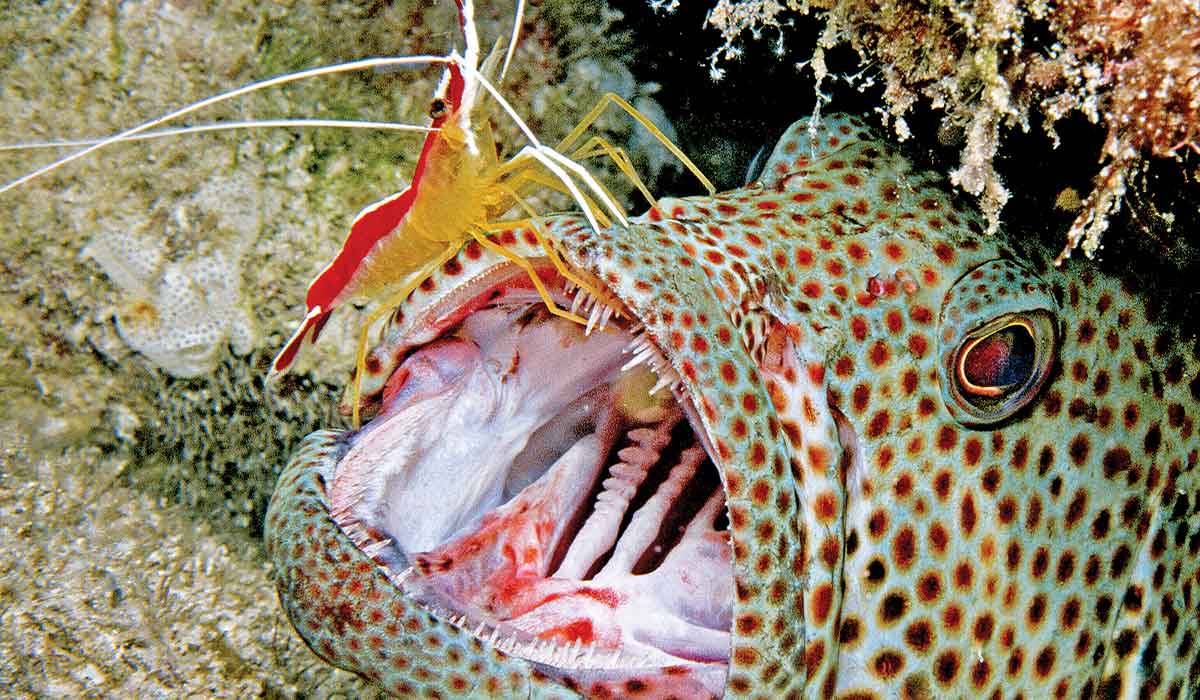
The behavior of a cleaner shrimp is witnessed firsthand by an unsuspecting woman. Read more about this cleaner shrimp.
Interactions between different species, whether above or below water, typically revolve around confrontations between predators and prey. At the opposite and more harmonious end of the spectrum, a scattering of unrelated species coevolved to form lifelong alliances for their mutual security. These relatively rare go-along-to-get-along partnerships provide a net benefit for both parties, improving each species’ reproductive success. The close living arrangement between weak-eyed alpheid snapping shrimp and sharp-eyed partner gobies is a classic example of symbiosis in the sea.
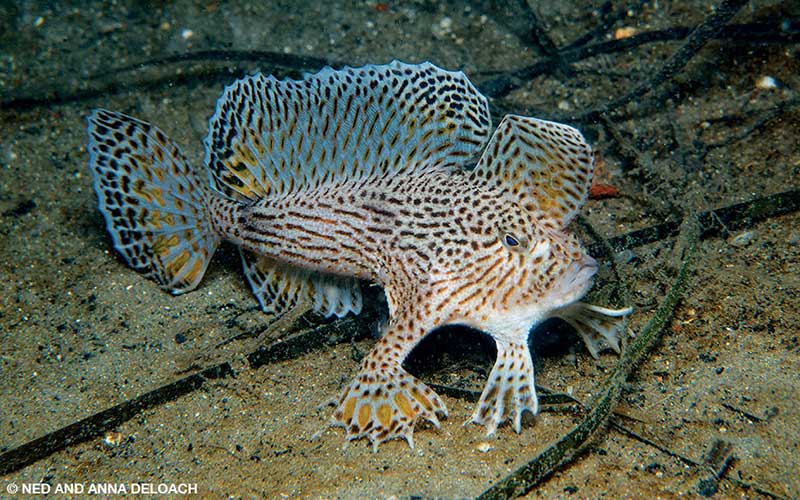
The handfish is a kind of evolutionary oddity that prefers to walk on its fins than swim. However, like so many other marine species, their species are in decline and their habitat is being stripped away.
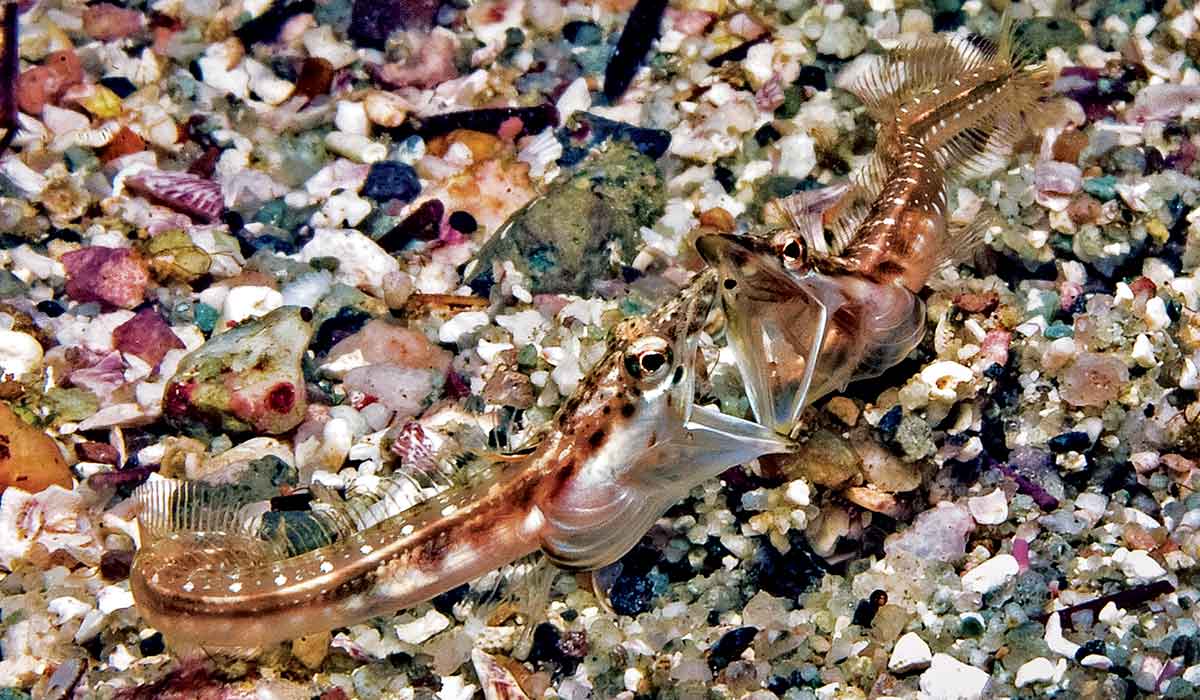
Baja, in the Gulf of California, is home to creatures big and small. Learn more about from this first-person encounter on the critters of Baja.
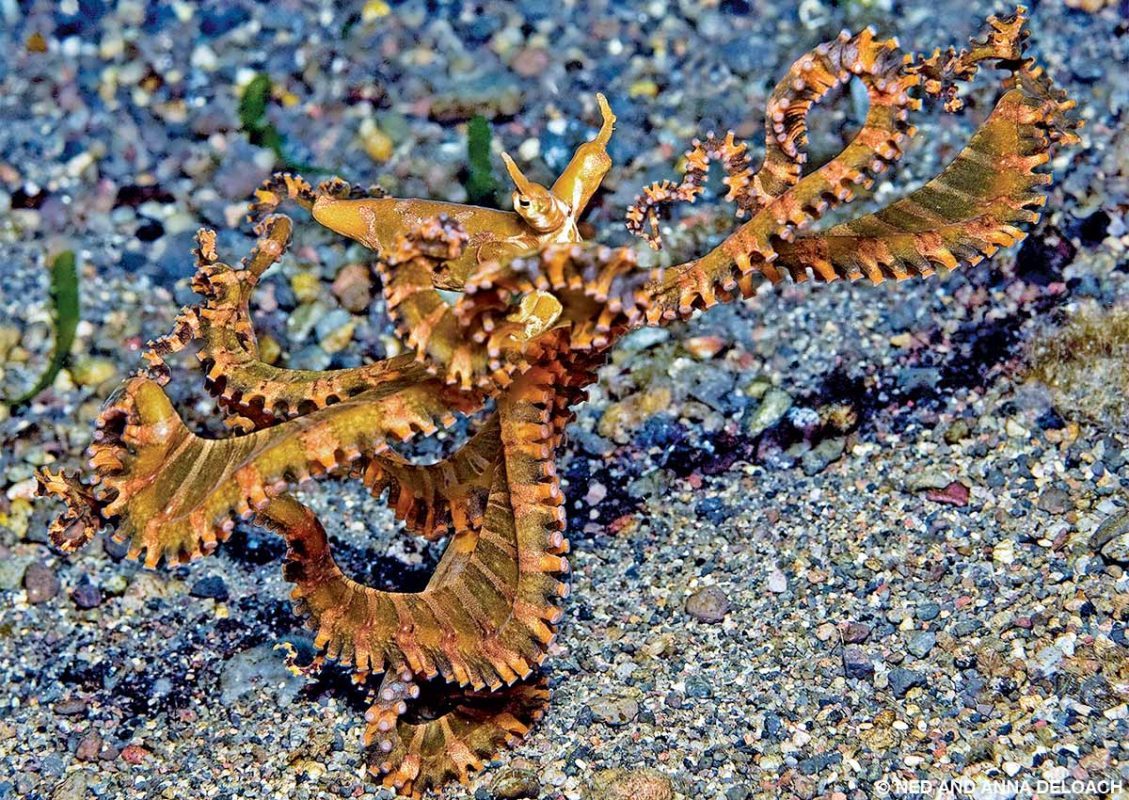
In 1995, when we first explored wunderpus territory, which overlies much of the Coral Triangle, the then-undescribed octopus’ fame had spread far and wide. The newly sensational creatures attained much of their acclaim for dancing like dandies across sandy seafloors on eight unimaginably limber arms — an eye-popping feat of acrobatic dexterity well worth traveling halfway around the world to see.
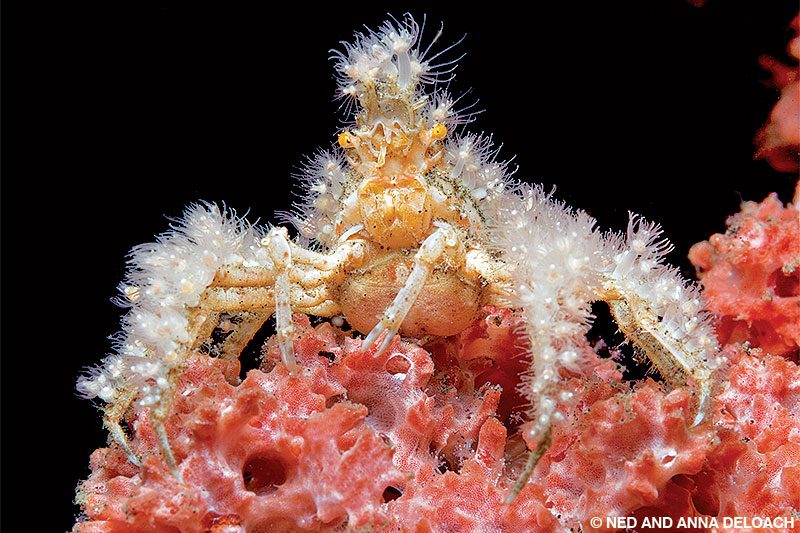
Most decorator crabs belong to one of eight families in the superfamily Majoidea, commonly referred to as spider crabs. About 75 percent of the group’s more than 1,100 global species mask their presence by wearing disguises made from living organisms scissored from the landscape. They commonly hijack seaweeds, sponges, tunicates, bryozoans and hydroids. The crabs manipulate the purloined pieces of attire with their mouths before attaching them to one of the many fishhook-shaped bristles arranged in rows on the carapace, rostrum, walking legs and claw arms, depending on the species.
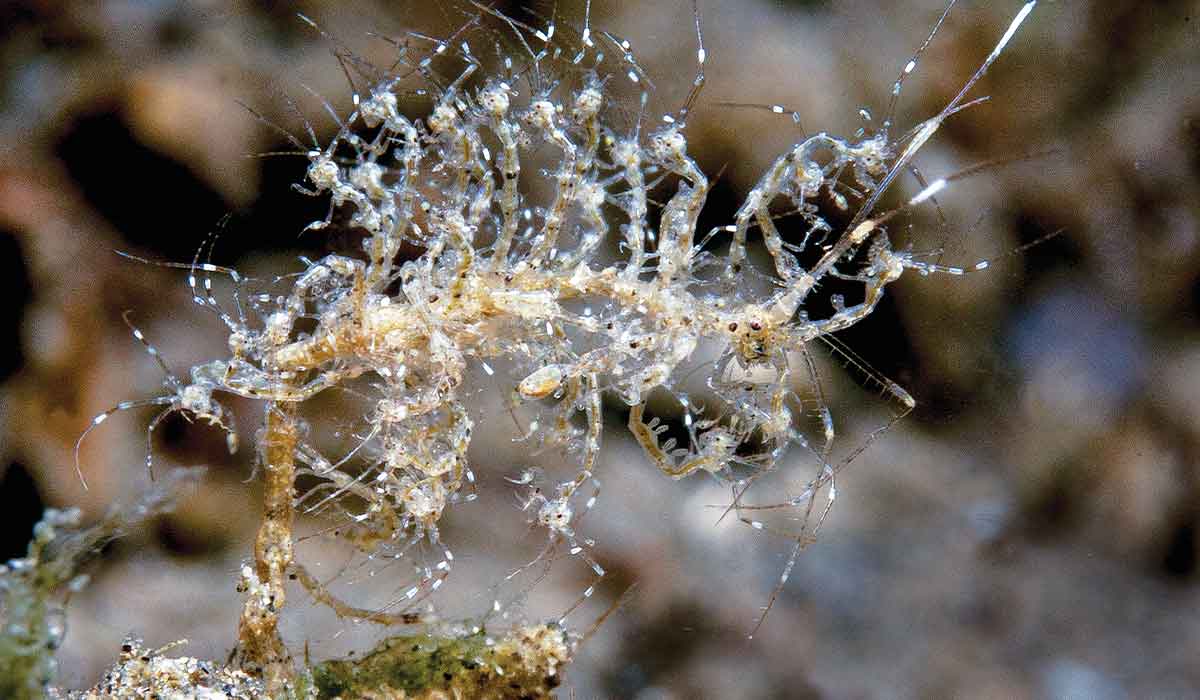
Skeleton shrimp are tiny and inconspicuous critters. They are notoriously moody. Read more about skeleton shrimp.
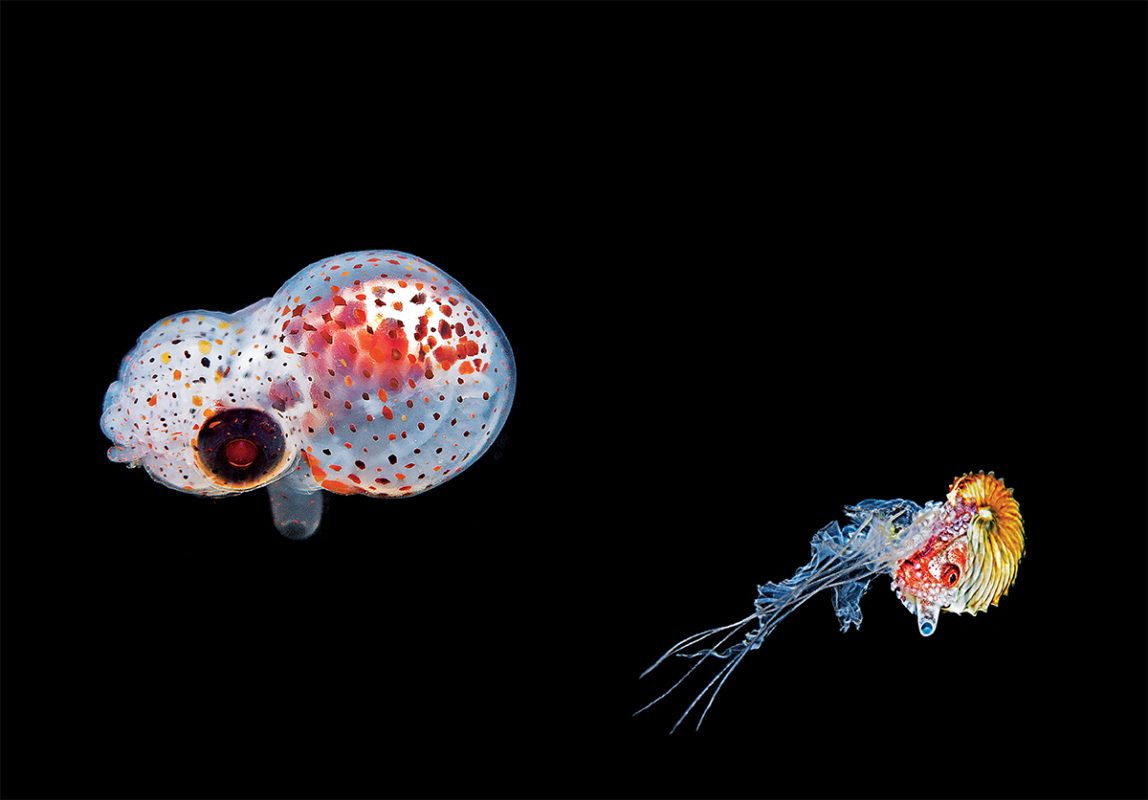
I don’t expect to see animals much larger than my thumbnail while I’m drifting on a night dive in the ocean. So I’m surprised when a translucent skirt of tentacles […]