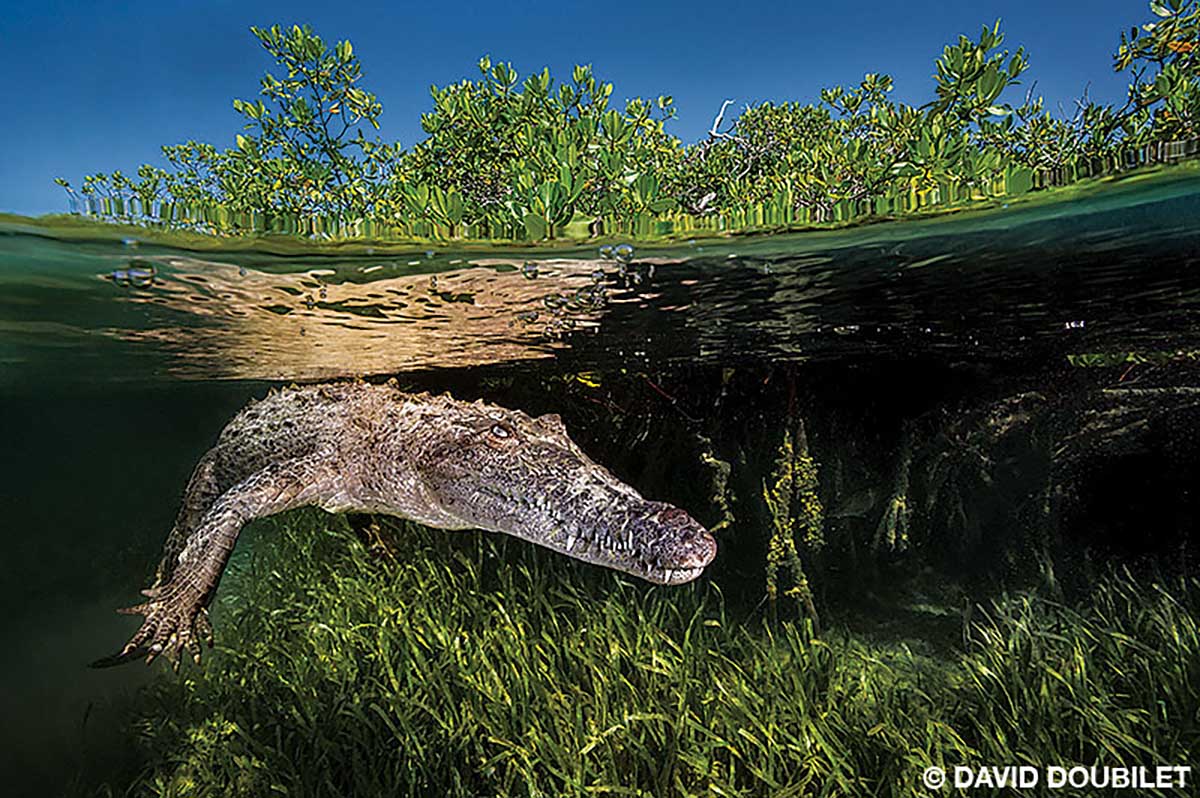
Crocodiles are apex predators, and in the wrong place and time, humans are potential prey. There are exceptions, but most of these wonderful and primitive reptiles won’t squander encountering a potential meal. When swimming in any reptile habitat, know who and what you may encounter, or don’t swim at all. The resident American crocodiles at Jardines de la Reina routinely share their waters with snorkelers and divers, but Jen Hayes didn’t feel the same comfort working in Nile crocodile waters in Botswana.
Sounds can be found underneath the waves. A variety of marine organisms employ complex organs to both create and distinguish sounds. The perception of noise underwater is not necessarily a simple thing, but since sound travels so efficiently underwater, numerous marine creatures have developed methods of sensing it.
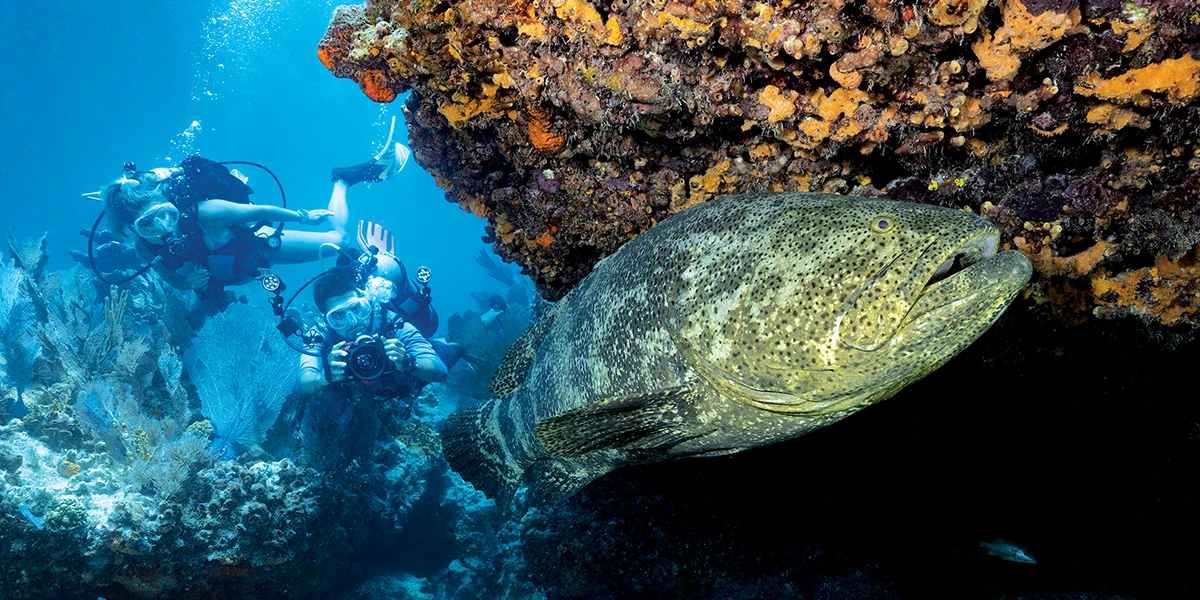
Our group of six researchers back rolled off the vessel near Jupiter, Florida, and began our descent to the sandy bottom nearly 80 feet (24 meters) below. As the wreck became visible, our team streamlined into formation to begin our task: searching for goliath groupers.
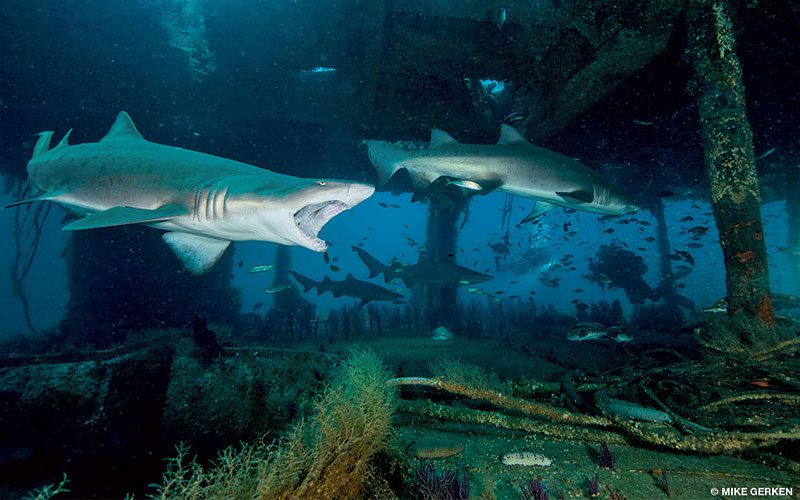
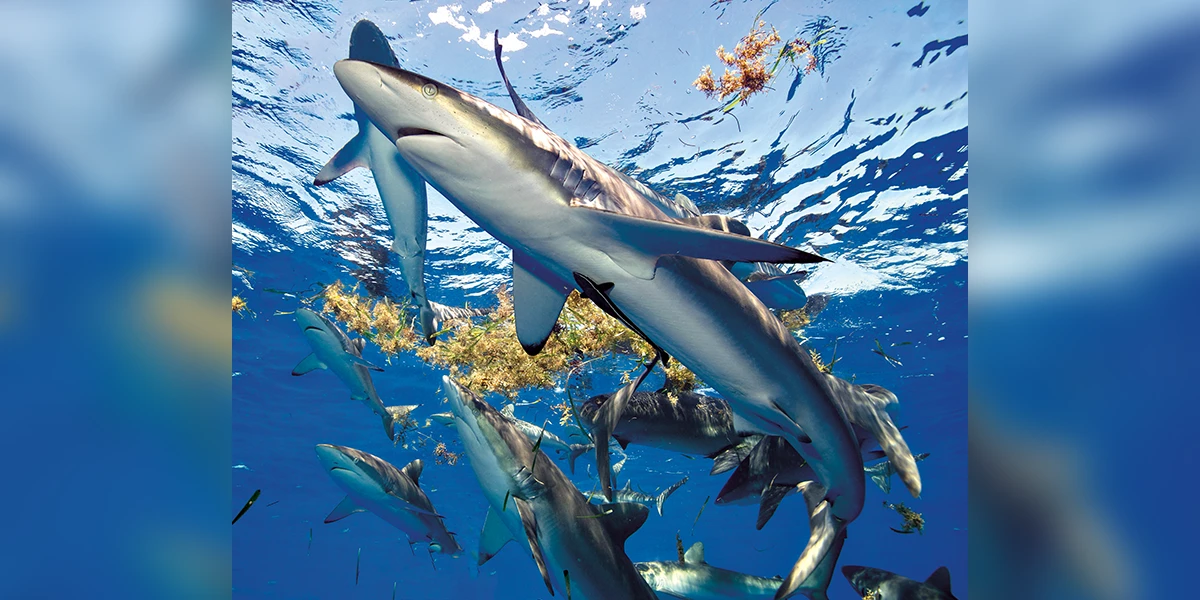
Shark diving has grown in popularity and North Carolina boasts incredible opportunities for divers to get up-close-and-personal.
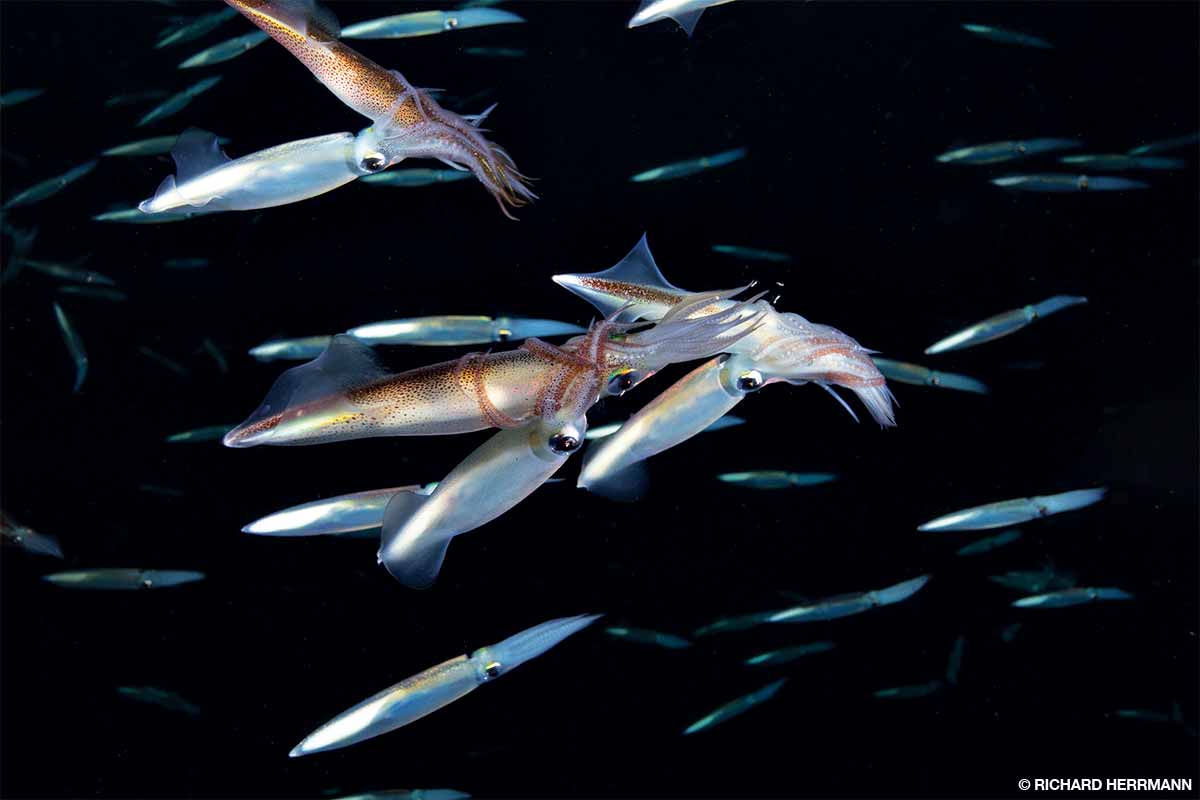
As you drop into water as black as night, thousands of pulsating squid in search of mates suddenly surround you. Mating activity is everywhere as multiple males attack single females. The excited squids’ chromatophores (pigment cells) flash colors reminiscent of a Las Vegas neon sign and put you in the middle of a living, moving light show. The action is so frenetic that animals are in your gear and bounce off every inch of your body.
Fish completely enclose me. Their tiny, silvery bodies twinkle in the half-light as I float suspended in the center of a sphere of clear, warm water. I feel like I am inside a disco glitter ball.
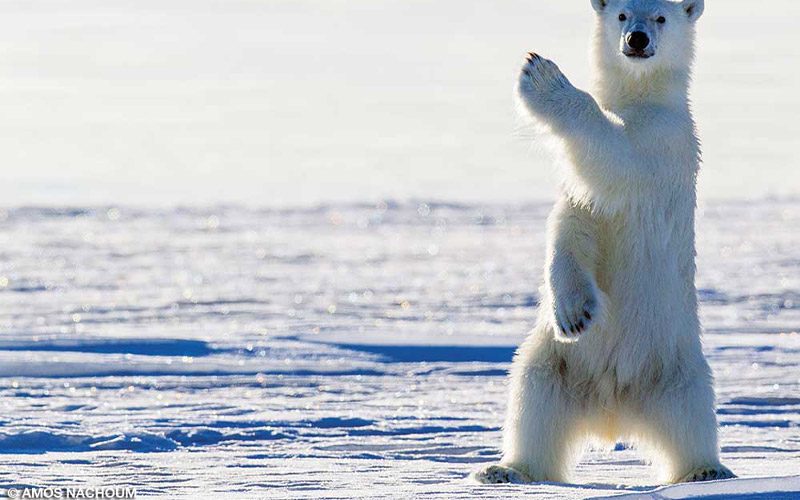
Polar bears are magnificent creatures and one photographer made it their work to capture them on film. The photographer traveled to the cold depths of the globe to find the white bears. Learn more about this polar bear venture.
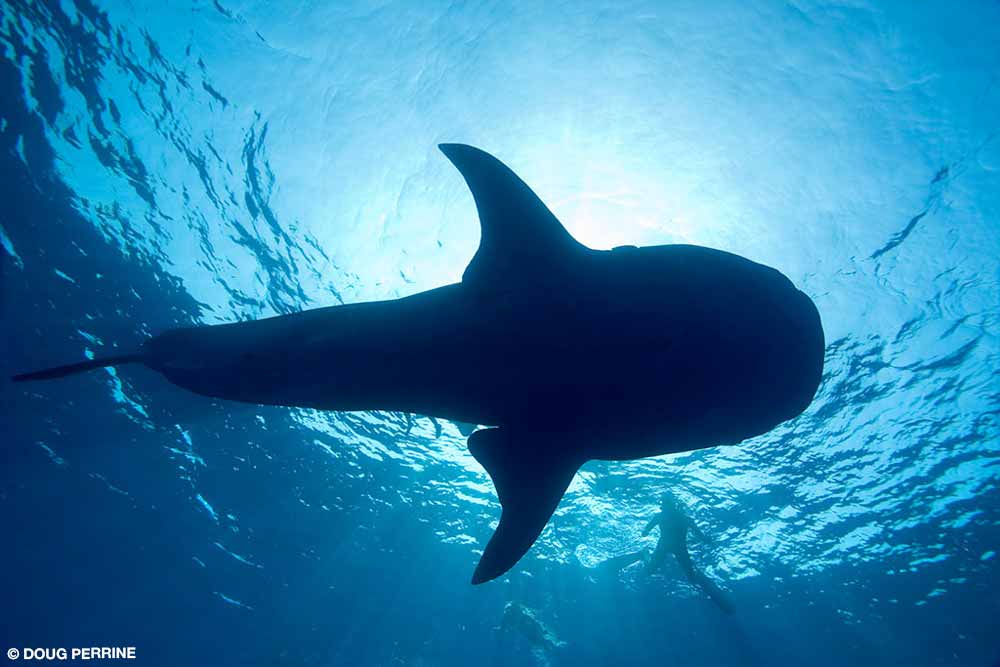
Sharks are among the ocean’s oldest survivors. They have cruised through Earth’s seas for more than 450 million years — long before the first trees grew or Saturn formed its rings.
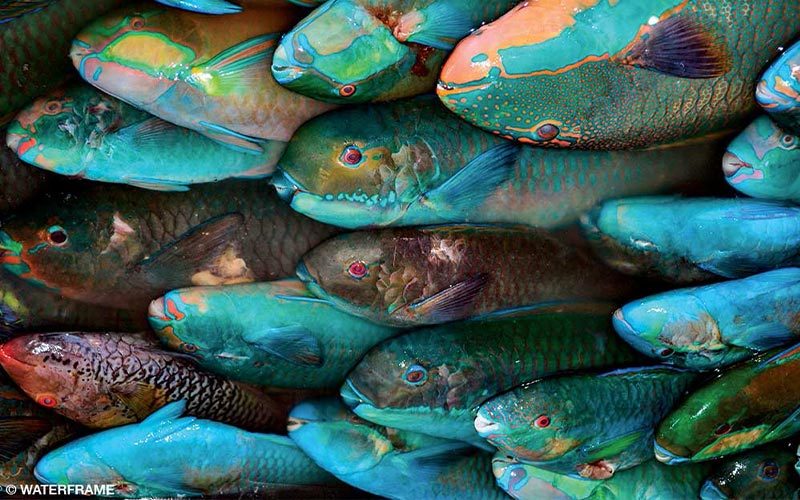
Colorful parrotfish may be vital to a coral reef’s survival. Because of their specific feeding habits — and what they eat — they keep algae down.