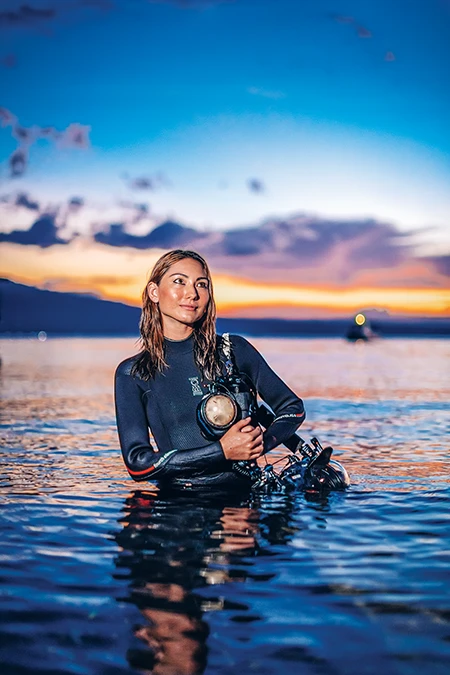
We are the product of our cultures and our life’s experiences, but a simple twist of fate can alter our life’s trajectory. That’s what happened for Jade Hoksbergen. It’s hard to imagine, given her underwater photography, that she was afraid of the water as a child.
She wasn’t so different from many children in Taiwan, her birthplace. It is a relatively small island, and the coastline is hazardous. Many families do not expect their children to learn to swim. As Hoksbergen recalls, “Sport was not my thing then, and the beach wasn’t part of my life.” She lived in Taiwan until she was 7 years old, the only child of her French and Dutch businessman father and Taiwanese mother.
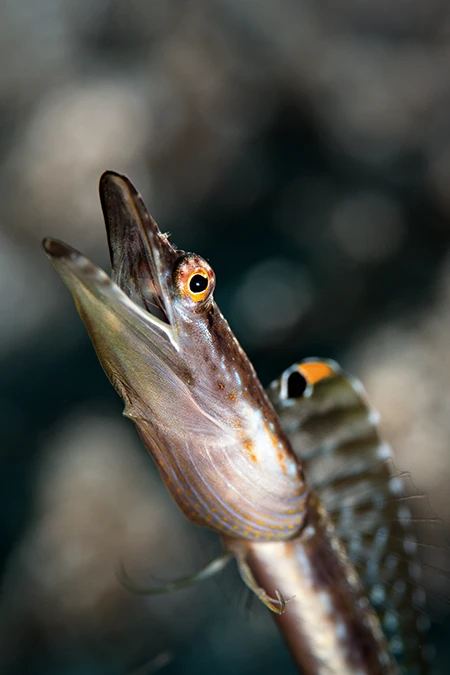
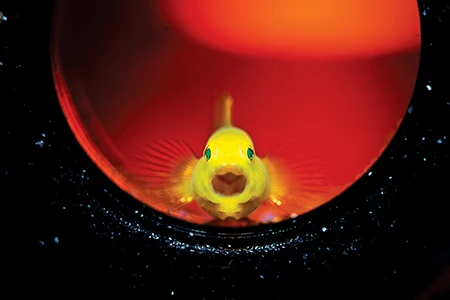
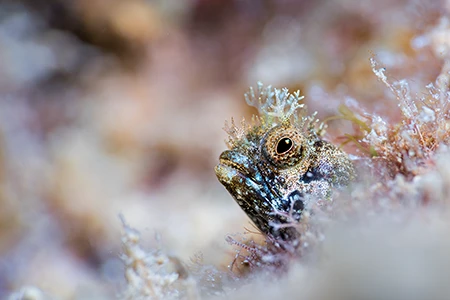
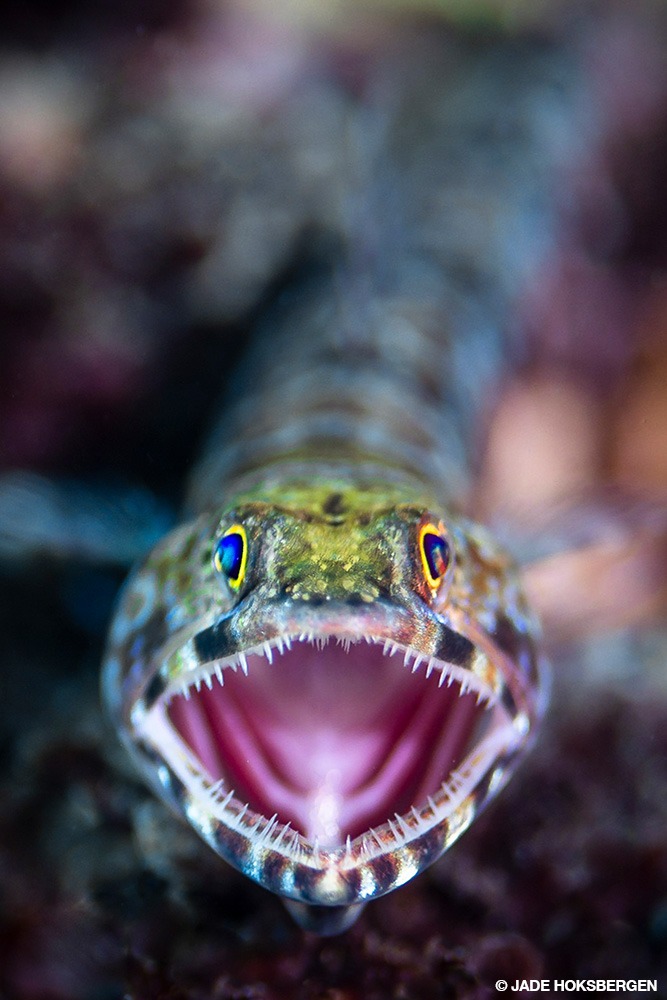
The highlights of the Lesleen M wreck for many photographers is the wreck itself with its abundance of marine life and lavish sponges; in short, it’s a wide-angle paradise. I found myself away from the wreck, captivated by a tiny fish at the sandy bottom: a yellowface pikeblenny. It was the first time I had seen one, and it was perfectly camouflaged against the sediment, with only half its body visible above the sand. My patience was rewarded, and I was able to observe it open its mouth and flash its beautiful dorsal fins in an aggressive display toward a nearby male. To visually separate my small, camouflaged subject from its surroundings, I opened my aperture so that only the fish’s face and mouth remained in focus.
Mandarin was her only language. Her father worked long hours but made time to pursue his love for the ocean and adventure. When they had the opportunity, the family moved to Cebu, Philippines. Jade was already shy but became even more introverted when she was immersed in her new English-speaking school. Visual communication was easier, so she turned to painting, an interest that still captivates her.
There were new perks to living in the Philippines: a beautiful blue ocean, expansive beaches, and plenty of tropical sunshine, much of which was irrelevant to a child who couldn’t swim. The family lived in a building with a pool, however, and Jade was determined to learn how to swim. She was rapidly learning English and taught herself to swim. These were big milestones and confidence boosters.
Living in the Philippines ignited her father’s passion for scuba. He had long followed the exploits of Jacques Cousteau, and each weekend the family headed south from Cebu to enjoy the island’s coral reefs. They couldn’t find scuba gear to fit Jade, so her father got a tiny BCD from Hong Kong and cobbled together enough equipment for her to dive.
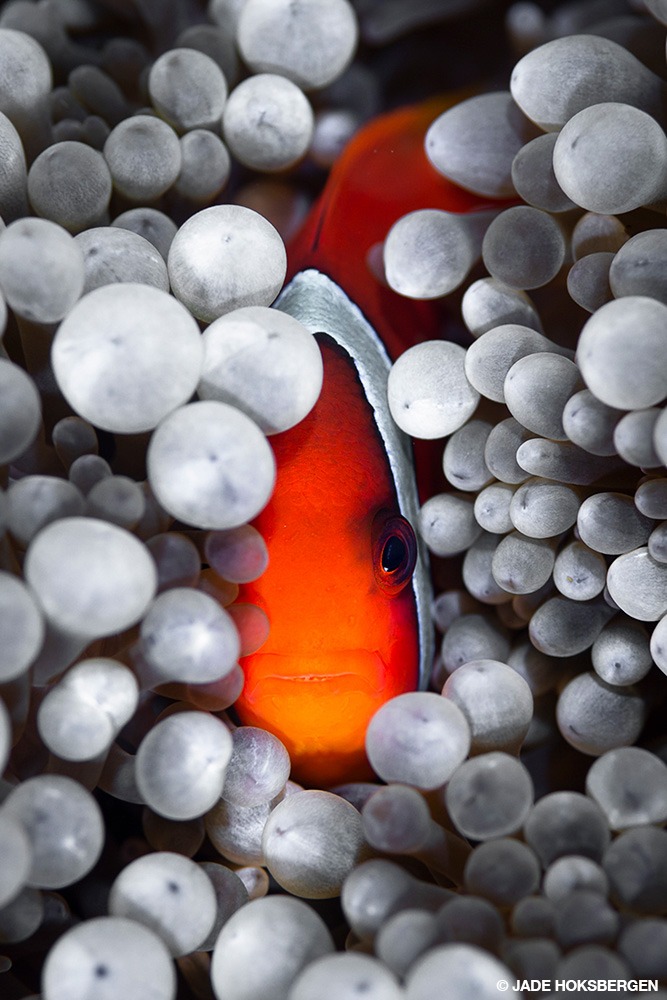
Jade is now only 30 years old, so the influences that forged her love of the sea are inevitably different from those of underwater photographers 30 years her senior. Sea Hunt and Jacques Cousteau were ancient history to her, but 2003’s Finding Nemo enthralled her with its animated marine environment. Her dad promised her that she could see all of it in real life underwater with him. In 6 feet (2 meters) of water on her first ocean dive, she found a clownfish, and that moment changed her life.
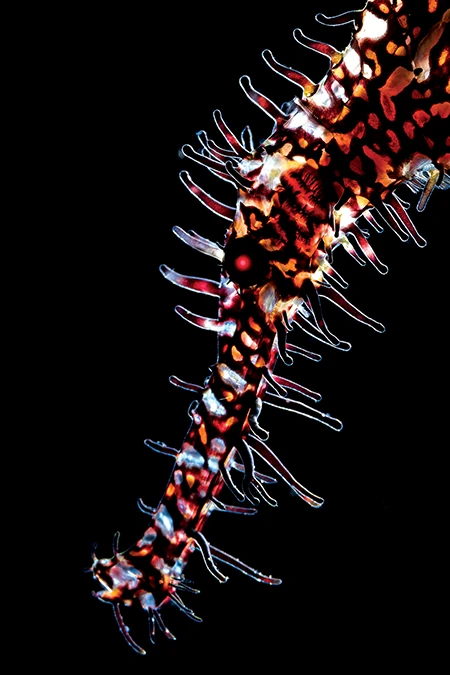
The ornate ghost pipefish is a visually captivating cousin of the seahorse, characterized by its distinctive body form and slender appendages covering its entire body and fins. There is an added dimension to the subject from shooting it using a snoot and backlighting the subject to highlight all its appendages. Sometimes lighting can make or break an image. Whenever I’m shooting, I’m constantly assessing light, both what is available and what I want to introduce.
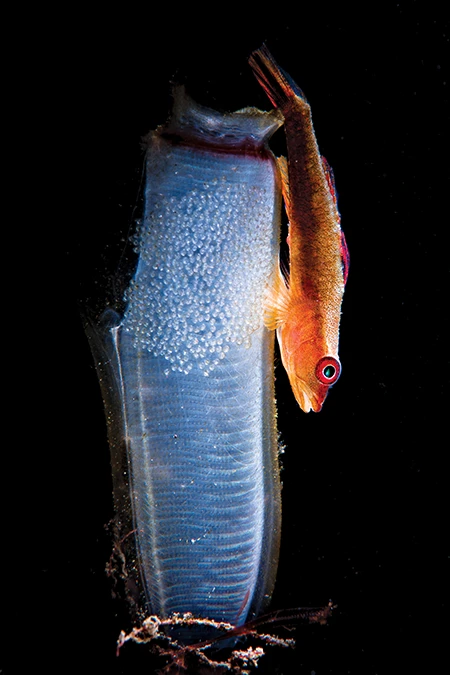
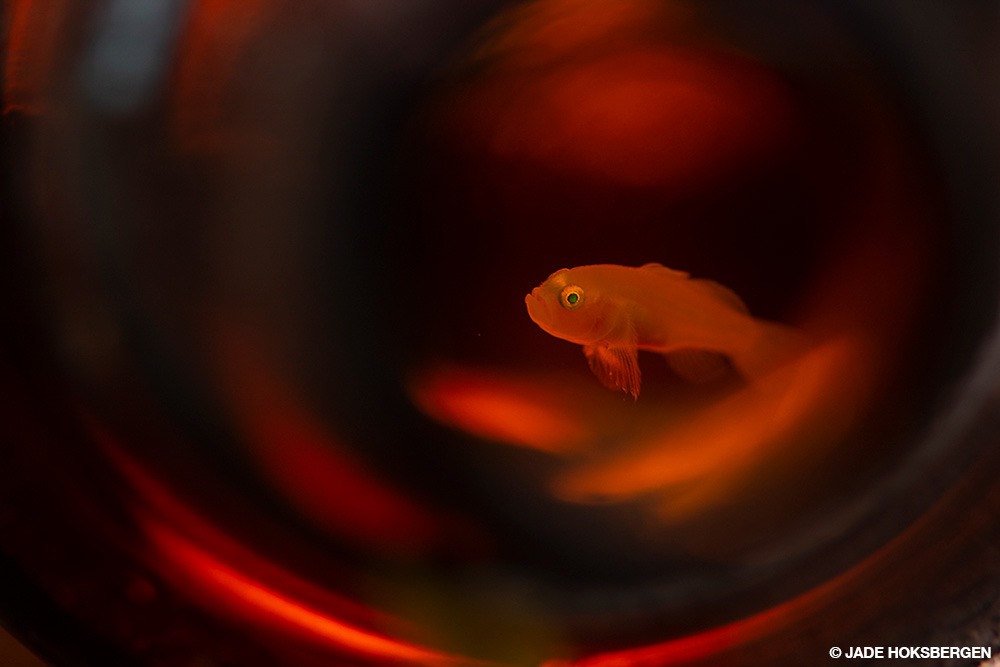
Using side lighting and a snoot, I captured this image of a goby guarding its eggs on a tunicate. It was the first time I had seen this behavior, and I wanted to illuminate the tunicate as if it were a lantern while capturing the eggs and their guardian. I took this image in 2016, when Henley took me to Bali for the first time. He had previously lived there and wanted to show me the extraordinary macro life. It was the very early days of our relationship and our love affair with underwater photography.
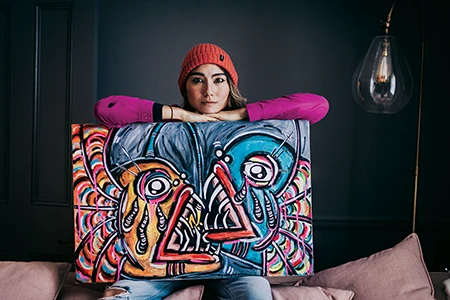
Painting remained her fundamental form of self-expression, and by the time she was 14 she had painted more than 100 canvases, often of abstract marine creatures with huge eyes. She never forgot how much she enjoyed the sea and managed to complete her junior open-water certification at age 13, progressing to advanced, nitrox, and rescue diver certifications over the next three years.
The family met dive instructor and photographer Henley Spiers on a weekend dive to Malapascua to dive with thresher sharks. After Typhoon Yolanda struck the Philippines just two weeks after their trip, the family teamed up with Spiers to organize and deliver hurricane relief supplies. Jade spent more time with Spiers in the aftermath of this horrible natural disaster, and love blossomed between them, beginning a relationship that endures to this day.
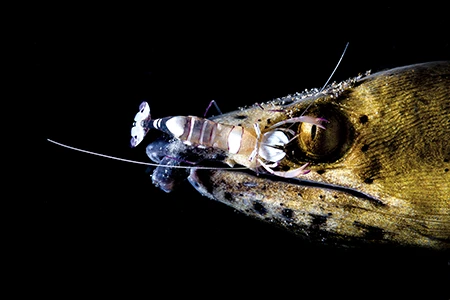
Spiers got a job in St. Lucia in 2014, and Jade joined him, doing her divemaster training there. Their origins in underwater photography mirror the evolution of their relationship and have remained a touchstone. She had an Olympus EM-5 in a Nauticam housing, and she was soon immersed in a new environment very different from the Philippines. She began shooting patterns and colors in a documentary style, often experimenting with unusual compositions. She fell in love with macro and was particularly obsessed with blennies. For her it was not about fish ID images but fish as works of art.
She observes of her time in Saint Lucia, “In my two years diving Saint Lucia, I honed a naturalist skillset in spotting wildlife, especially the more discreet variety. I regularly found creatures that the local dive pros had never seen outside of a book. The images I captured of creatures such as gaudy clown crabs, medusa blennies, and squat urchin shrimp were probably the first visual documentation of those species in the country.” Her eye for small life continues to distinguish her work.
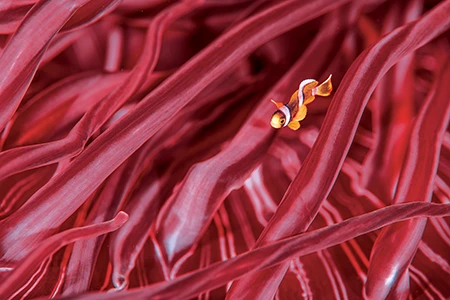
Her comfort both behind and in front of the camera is also notable. All her time in the water — from her first dive at 9 years old to becoming a divemaster by the time she was 20, to her many dives and extensive dive training since then — has helped her become at ease in the ocean. She has been the underwater model for countless photos, including nine that ended up on covers.
Her deep dive into the ocean had a surface interval in 2016, when she returned to England to complete her degree. During this ocean hiatus with Spiers, their two daughters were born. Motherhood predictably changed her life, but she balanced it with achieving a high profile in underwater photography.
She attributes her initial success to competitions, including a highly commended macro shot of a blenny in the Underwater Photographer of the Year 2017 competition, second place in the Ocean Photographer of the Year 2024 competition, and winning the 2023 Ocean Fine Art Photographer of the Year award.
She recently created the lavishly illustrated Guide to Cebu, coauthored with Spiers. “Creating the Guide to Cebu was one of my biggest professional projects so far. Henley and I spent a year documenting our home island of Cebu, writing and shooting what remains the definitive guidebook to diving and snorkeling in the region.
“While my more artistic pictures are perhaps better known, a far greater portion of my portfolio has illustrated dive destinations, including numerous articles for EZ Dive (Taiwan), DIVER Magazine (UK), and Plongez! Magazine (France).” She has also carved out an interesting niche with visual storytelling residencies at luxury dive resorts, particularly in the Maldives.
Her most profound accolade came from luxury watch manufacturer Blancpain, which celebrated her creativity with a portfolio in the 2020 issue of their Edition Fifty Fathoms book series. She has become a proud Friend of the Brand, with their collaborations expanding to include her design of a bespoke timepiece inspired by her abstract painting of a deep-sea anglerfish. In early 2025 she was honored to play a role in the release of Blancpain’s Fifty Fathoms 5007, their first classic dive watch in the smaller 38 mm specification. She inspired and wrote the narration for the stunning Blancpain diving lifestyle film, The Constant.
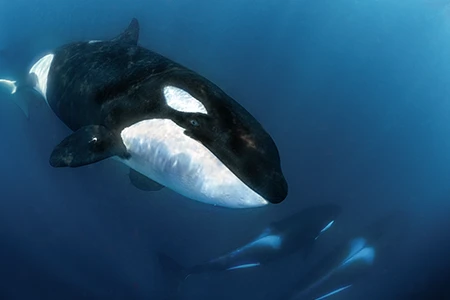
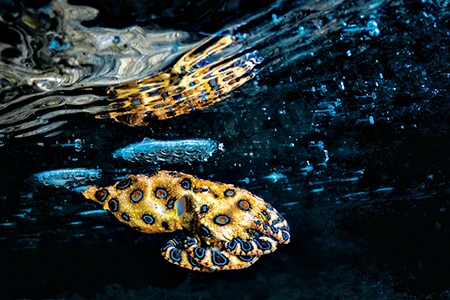
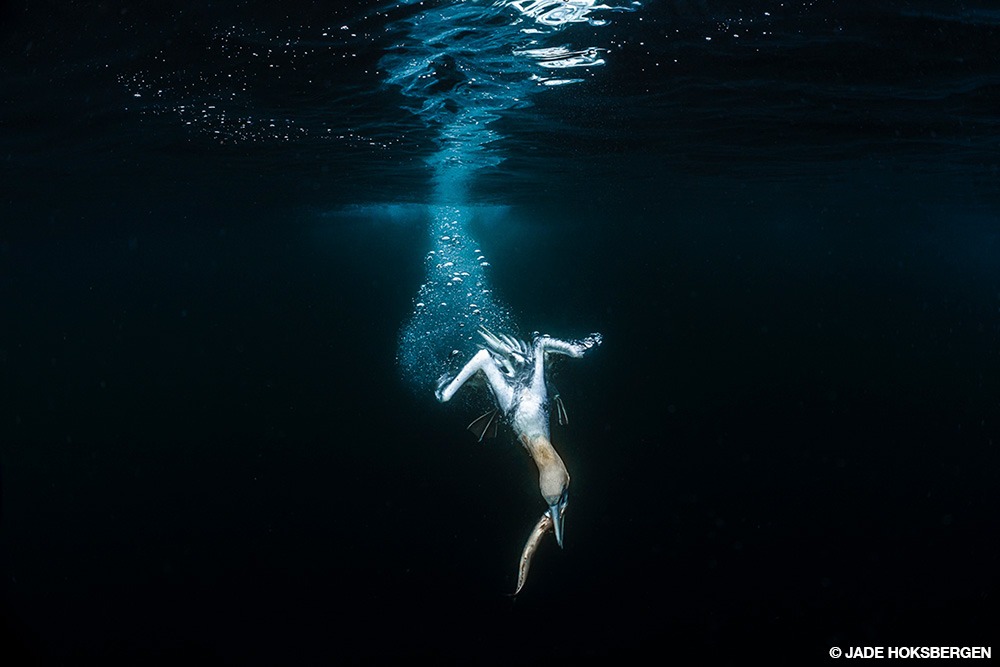
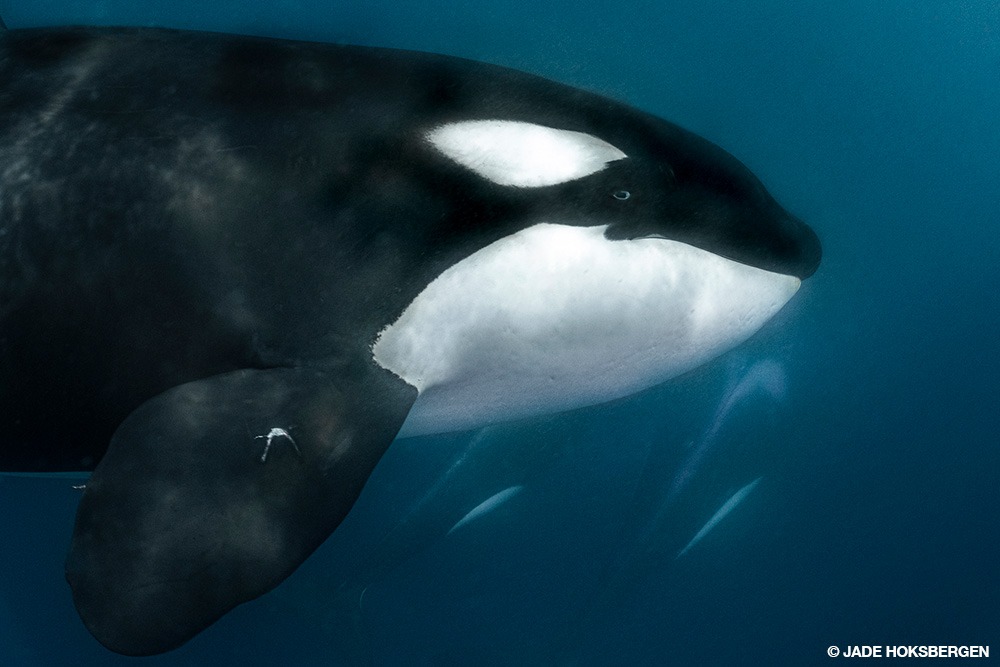
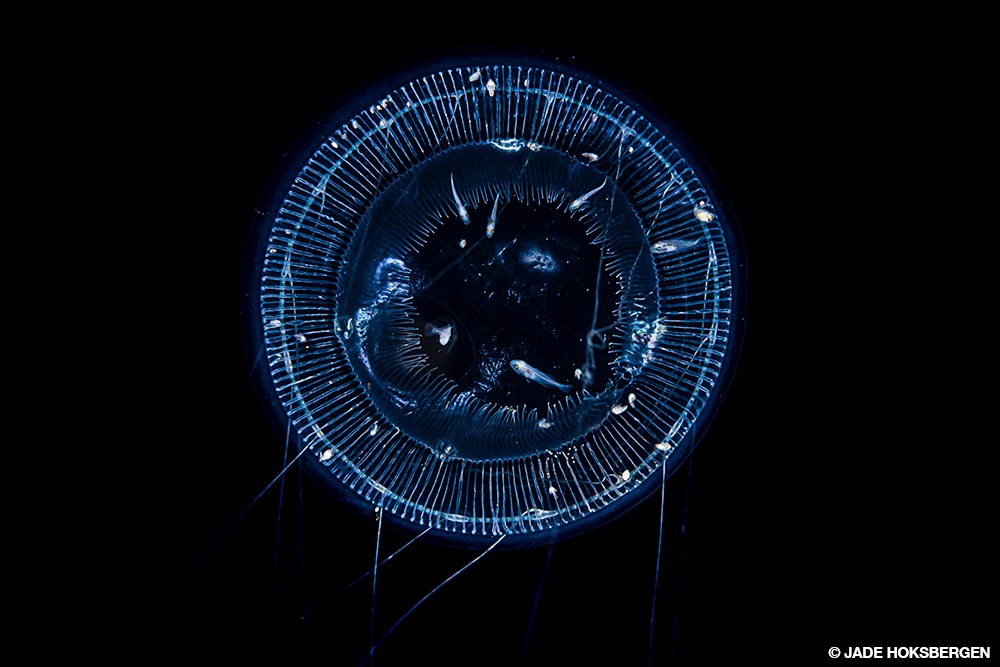
Along her creative journey she has morphed from a heavy focus on macro, typically using a very colorful palette with soft depth of field and slight overexposure, to blackwater photography characterized by its stark backgrounds and spacelike negative areas. This evolution culminated in a coauthored book on the subject, titled Black Is the New Blue (Volume 2). She has recently been targeting marine megafauna, including whale sharks, northern gannets, and orcas. That kid from Taiwan is clearly no longer afraid of what lies beneath the sea.
Explore More
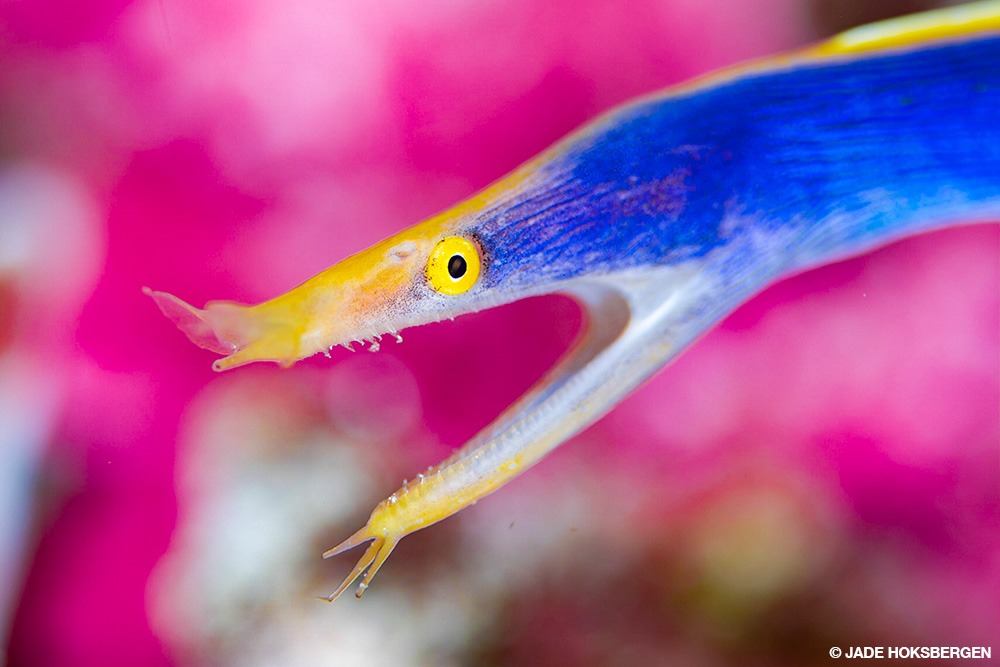
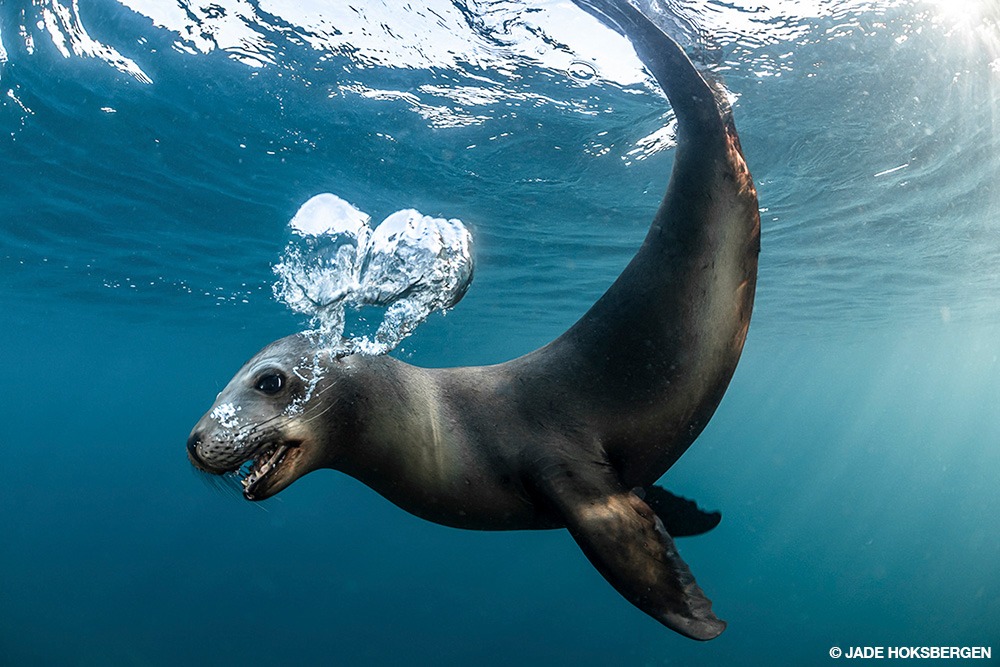
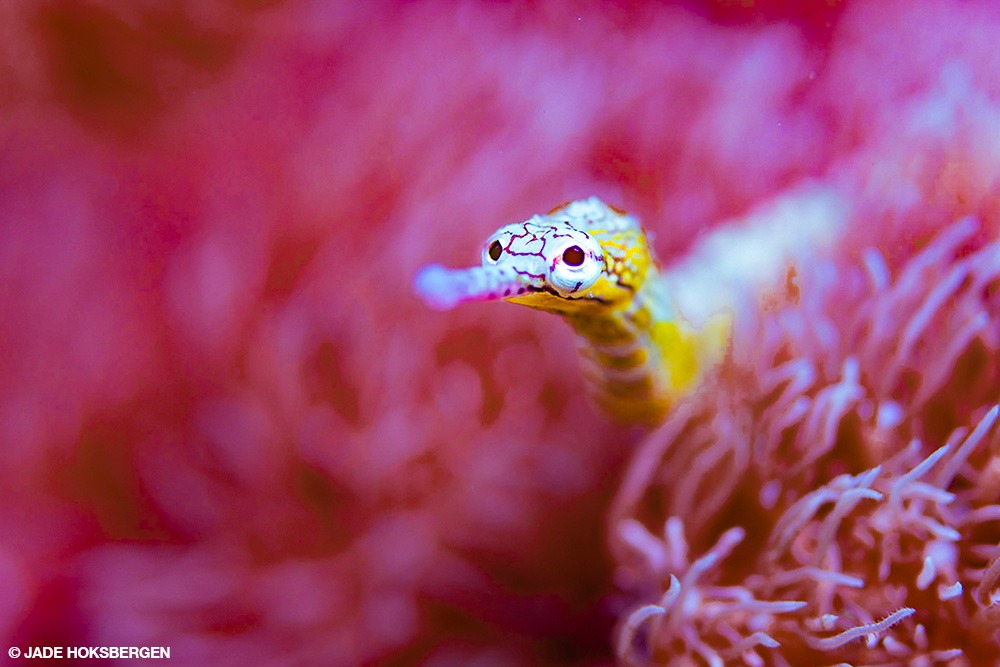
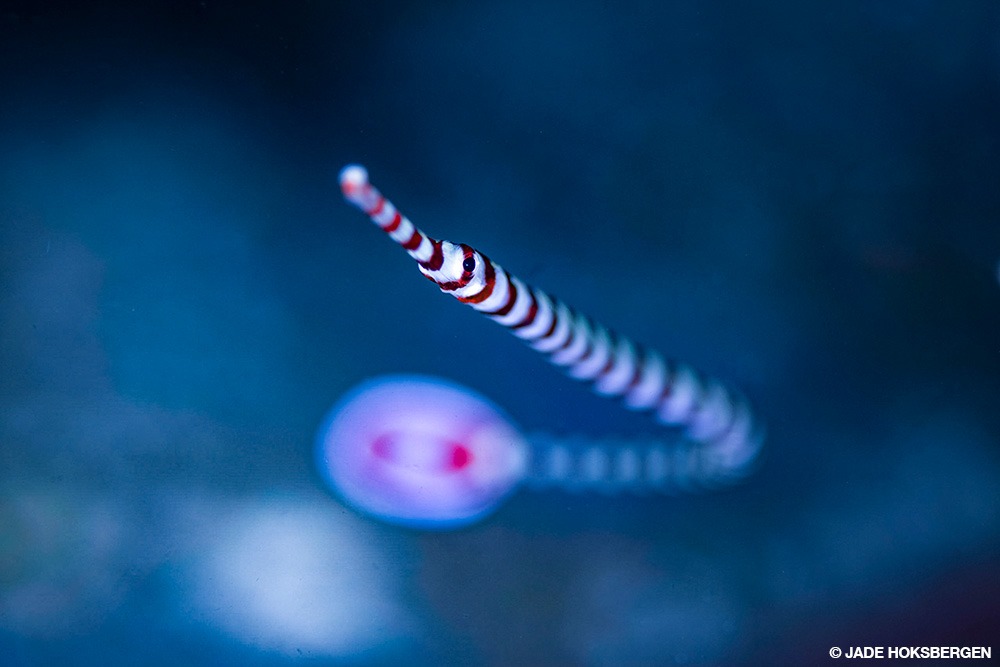
Find more about Jade Hoksbergen in this bonus photo gallery and video.
© Alert Diver – Q4 2025