Riches Under the Mountains
Looking down from space, the Windward Islands resemble an emerald necklace floating in the sea. Viewed from underwater, when you are immersed in that warm, blue sea and surrounded by colorful reefs bustling with life, the Windwards take on new dimensions. It becomes readily apparent why they boast some of the finest diving in the Eastern Caribbean.
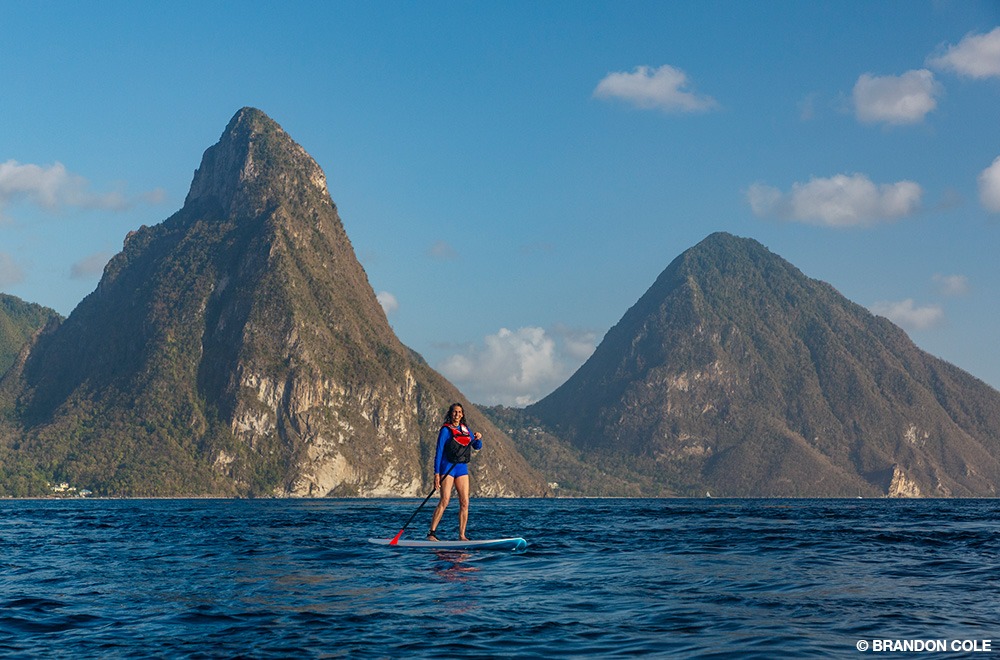
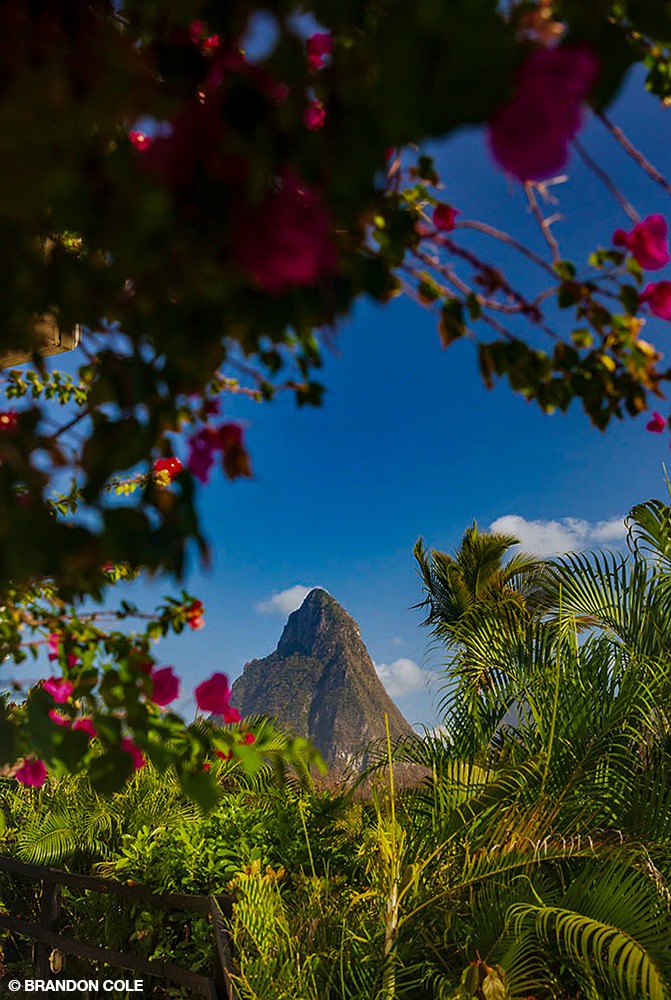
Saint Lucia is nestled in the middle of this north–south arc of verdant islands, also known as the southern Lesser Antilles. Though not especially large at about 27 miles (43 kilometers) long and 14 miles (23 km) wide, rainforest-covered Saint Lucia commands an oversized presence in scuba circles, thanks in part to the postcard-perfect Pitons.
These twin peaks, which tower majestically over the ocean on the island’s southwest corner, piqued my interest many years ago. Magazine articles and comments from friends and photographers lauding the vibrant, sponge-covered reefs that light up the shadows cast by these monoliths all but guaranteed that someday I would explore the area beneath the waves and below the Pitons.
We (and You) Must Go
“The mountains are calling, and I must go,” famously said John Muir, environmental activist, philosopher, explorer, and founder of the Sierra Club.
It took many years, but we finally answered the call of Saint Lucia’s iconic mountains. We chose a world-class resort on the southwest coast that — in addition to luxe lodgings, fine dining, and a view to die for — was ideally located for easy access to the country’s top dive sites. Boat rides were only two to 20 minutes long.
In the time it took to open the tank’s valve and check my gas supply, we had already arrived at Fairyland. This site is often subject to strong currents, but we experienced just enough northerly flow along the steep slope there to keep us steadily moving from one brightly hued, artfully tangled sponge cluster to the next.
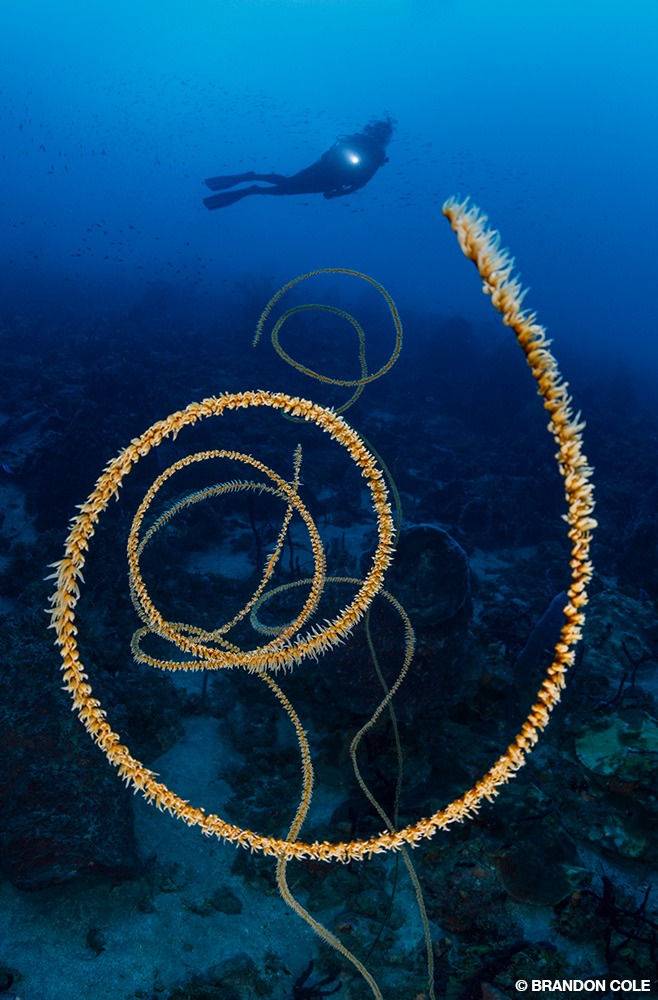
We passed walls of deepwater gorgonian sea fans and parted through shimmering clouds of brown chromis. Creole wrasses were also abundant. Most of these purply-blue beauties were on the move en masse, but a stationary group of about a dozen was parked next to a barrel sponge, which served as a cleaning station. The fish patiently lined up, heads down and tails up, as they waited to be serviced by a few industrious little yellow wrasses buzzing around like bees as they performed their hygienic duties.
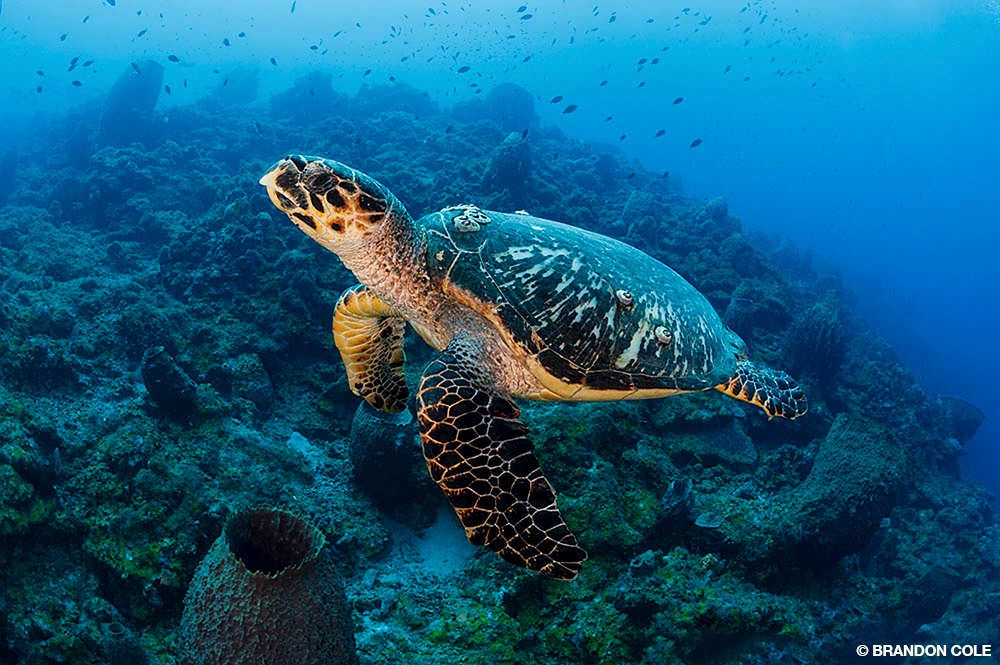
A school of about a hundred horse-eye jacks flashing in open water over my shoulder pulled me off the slope, but I would have missed the passing hawksbill turtle had my wife, Melissa, not redirected my photographic focus back to the reef. Thank you, buddy dearest.
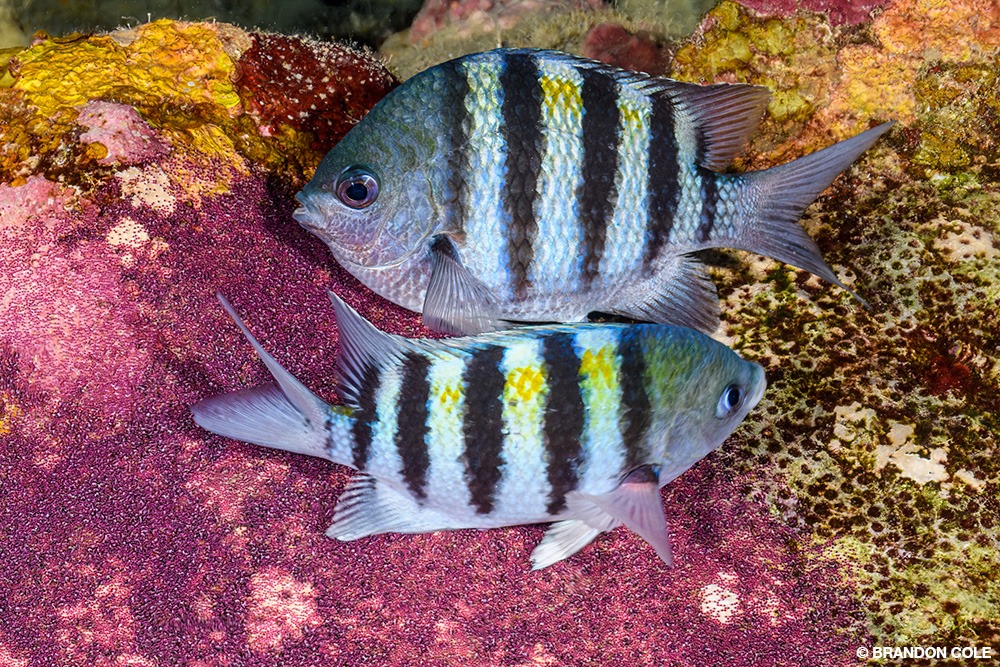
Nitrox extended our no-decompression limits, allowing us to comfortably cruise between 60 and 80 feet (18 and 24 meters) for most of our bottom time. This depth range seemed to be the sweet spot for fishiness combined with maximum colorful invertebrate cover, but divers shouldn’t miss the shallow plateau above. Huge boulders create a playground for enjoyable exploration while offgassing. We saw schools of silver chubs, sergeant majors tending clutches of mauve eggs, and photogenic formations of mustardy tube sponges.
We asked for repeat splashes at Fairyland twice during our nine-day stay this May. Thankfully, with multiple boats and many divemasters, they graciously accommodated this and other special requests. Even if you have only a couple of days to dive Saint Lucia, you must go to Fairyland.
Celebrating Sponges
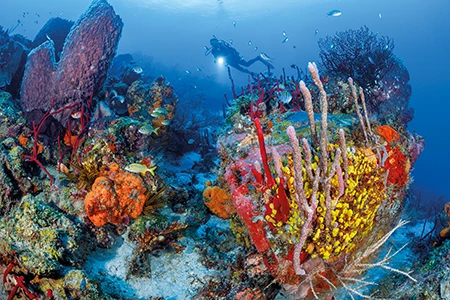
Think of the Pitons as goalposts. Kick in their general direction, and you’re sure to score. Below Petit Piton, the northernmost spire soaring to 2,438 feet (743 m), is Superman’s Flight. It’s so named because the mountain looming above was the vertiginous backdrop in a scene from Superman II. This superb dive site could just as aptly be called sponge-apalooza.
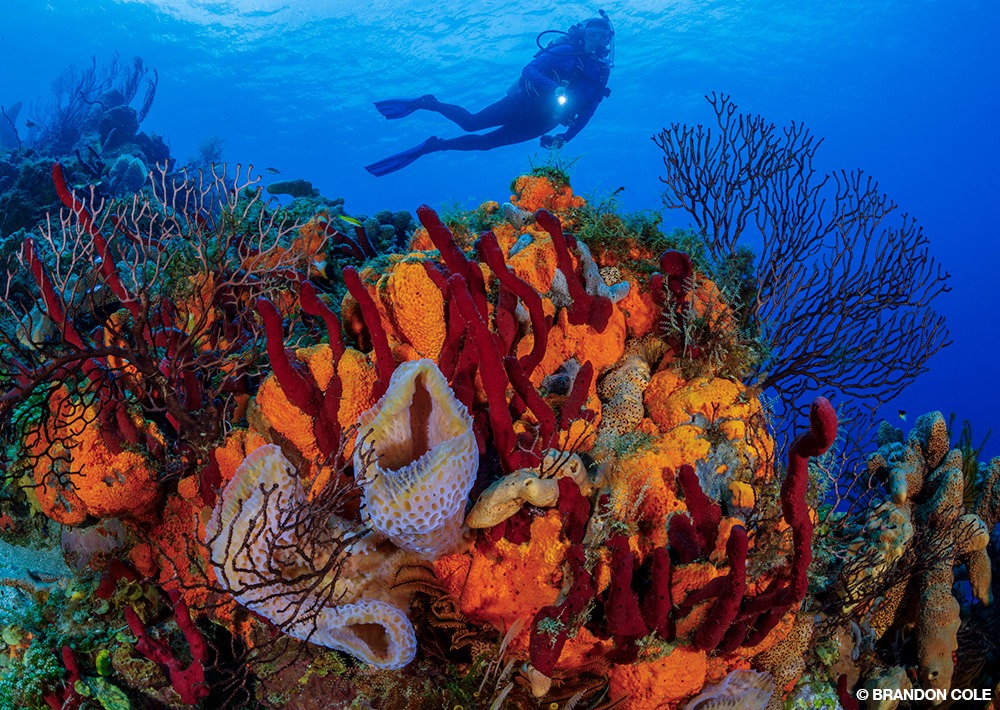
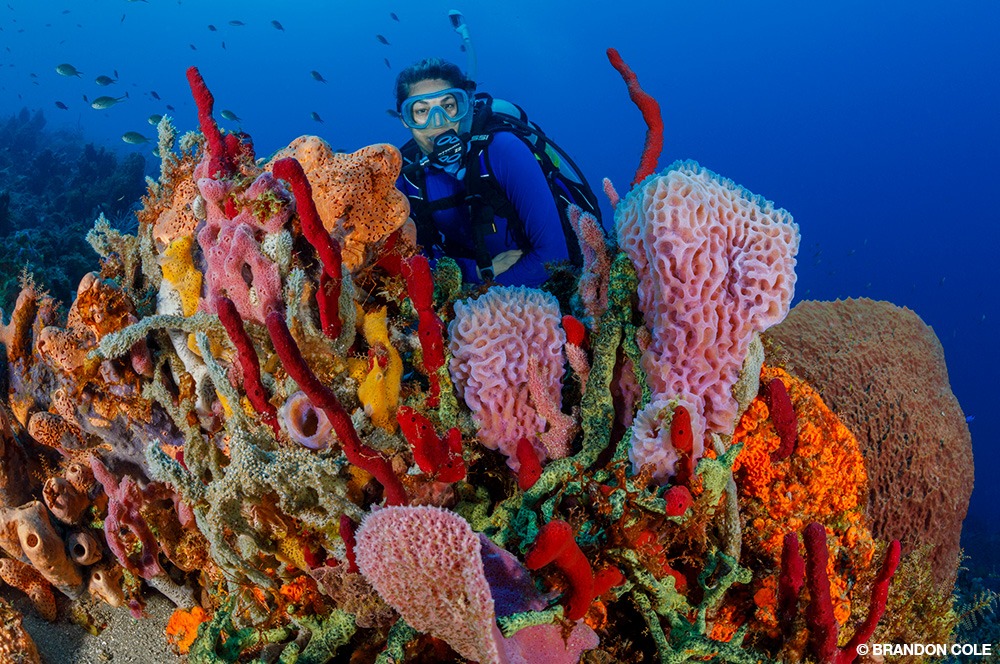
A brisk current was running on our first dive here, resulting in us flying too quickly over a kaleidoscopic sponge garden. A few days later we leisurely drifted to enjoy the chromatic resplendence on display in 60-foot (18-m) visibility. Although my computer showed 81°F (27°C), the water felt significantly warmer.
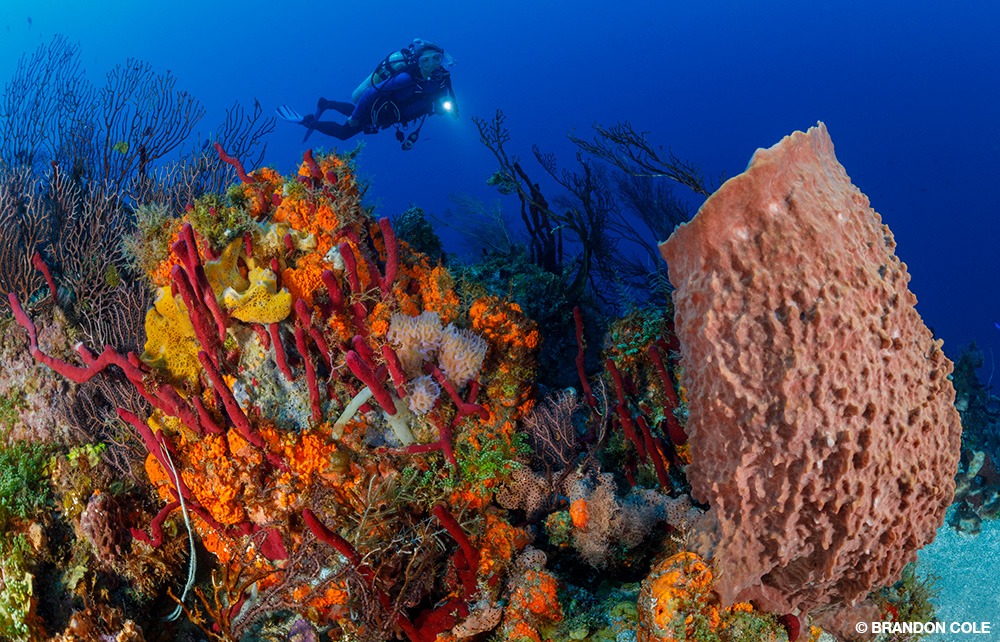
Fiery red branching rope sponges and glowing orange elephant ear sponges had me imagining gouts of flame and bubbling magma escaping from Earth’s molten core. That scene isn’t too far off the mark because Saint Lucia has volcanic origins. The charming nearby town of Soufrière, with a population of approximately 8,000, lies within the caldera of the now-dormant Qualibou volcano. The geothermally active Sulphur Springs area just outside town is affectionately referred to as the world’s only drive-in volcano.
The Pitons’ specific geological pedigree originates some 200,000 to 300,000 years ago, when they were the centers of two dacitic lava domes, which are steep mounds formed by highly viscous magma that erupts but doesn’t flow far. The impressive peaks we see today are characterized as volcanic plugs — pinnacles of solid rock that remain standing after the forces of erosion have eaten away the surrounding layers of these once-active volcanoes.
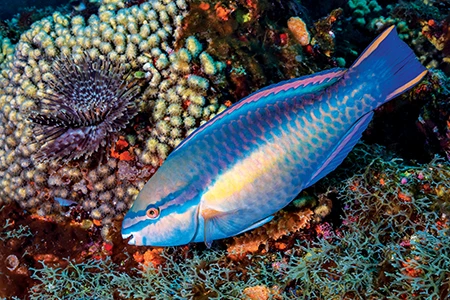
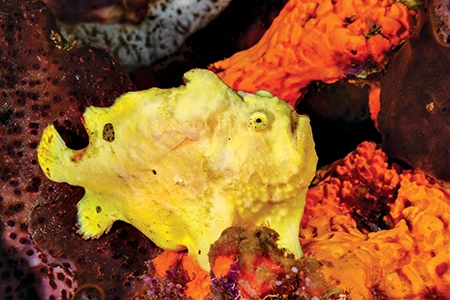
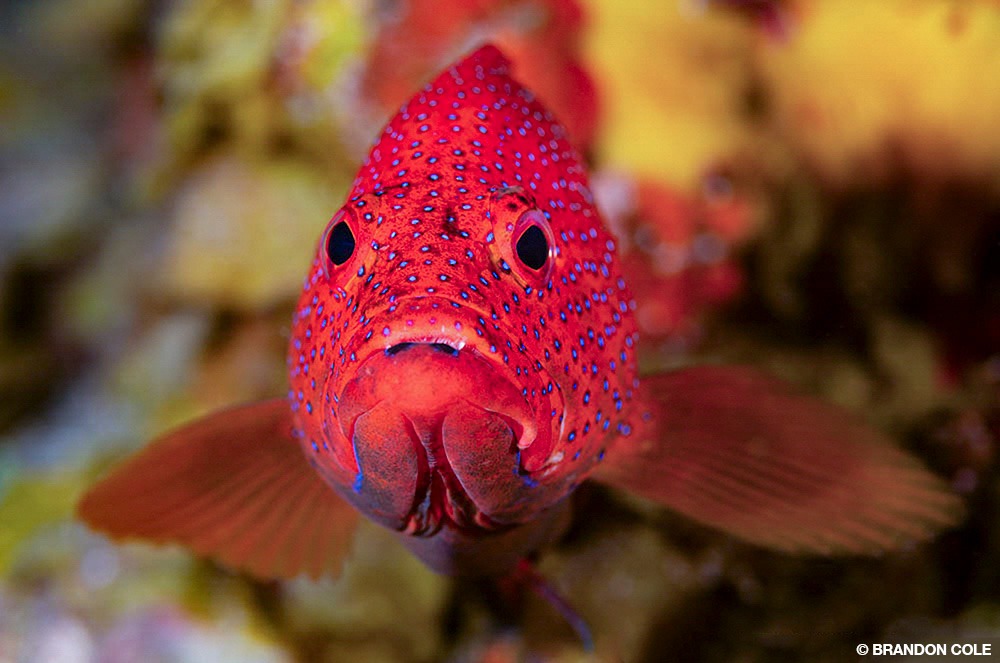
Biologically speaking, there’s more to this site than just the surplus of humble, beautiful filter feeders that bedazzled me. We saw an eagle ray, stoplight parrotfish, and a few snappers and groupers. Our guide spied a lemon-colored longlure frogfish astride a pile of sponges.
Froggy numbers ebb and flow on Saint Lucia’s reefs, and with precious few seen recently, our sighting was cause for celebration. Thankfully, I didn’t choke and blow the moment; I’m passably pleased with the portraits I made of the grumpy-faced fish.
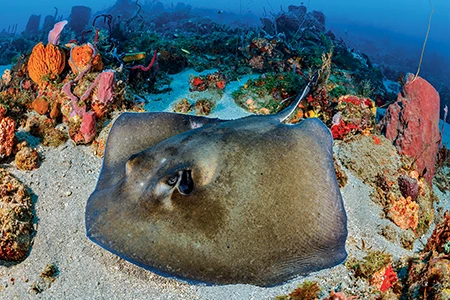
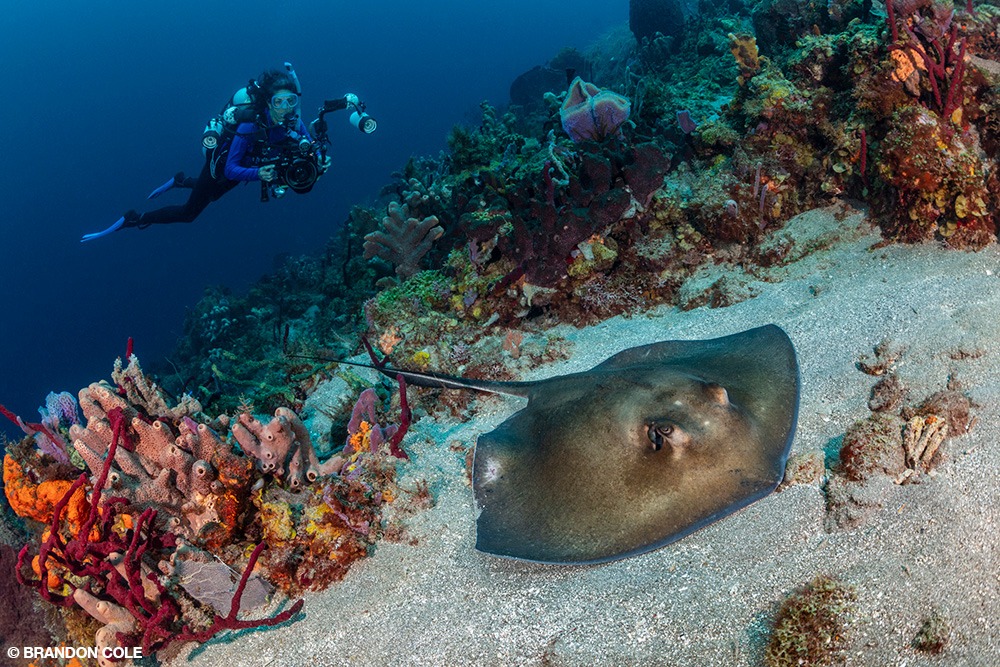
Another highlight of Superman’s Flight was a southern stingray, which I followed and photographed as it descended along the invert-covered incline from 70 to 110 feet (21 to 34 m).
The larger, taller Gros Piton rises to 2,526 feet (770 m). At its base is Coral Gardens, another crowd pleaser that most people would rank as intermediate in skill level. It is possible to descend far beyond recreational depths here, but there is no need. Expect lovely, lively reef scenery, featuring an array of fish and invertebrates, in just 40 to 75 feet (12 to 23 m).
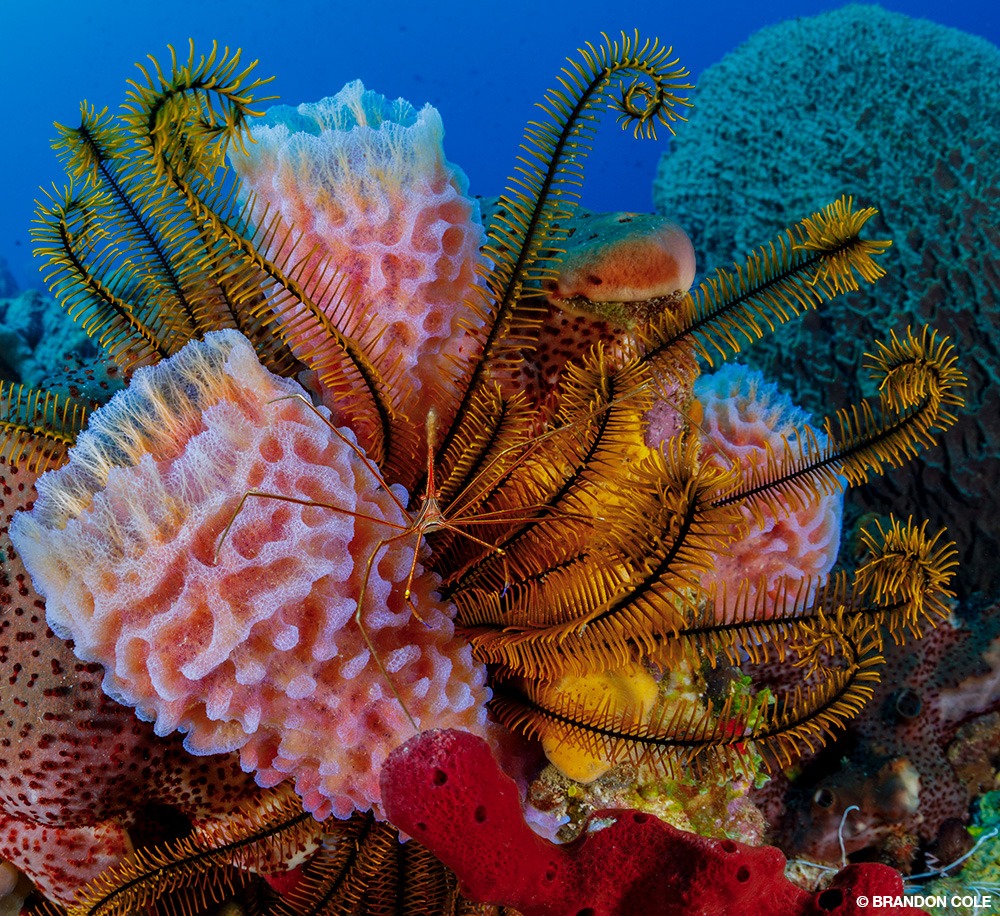
We found baitfish, chromis, grunts, soldierfish, and squirrelfish streaming over and sheltering amid sea fans, feather stars, and a diverse mix of sponges. In addition to the usual five-alarm-blaze species in brilliant scarlet and tangerine, there were large, spiky barrel sponges of ruddy complexion, exquisitely textured azure vase sponges shining in pearlescent pink, nubbly mats of canary yellow boring sponge, and tan tube sponges shaped like curved flutes.
Shooting the Ship
I am not a wreck head or techie, but I do like shipwrecks, especially those that have undergone a remarkable transformation from inert hunks of steel into artificial reefs teeming with life. They are even better when easy and safe to dive and productive for photography.
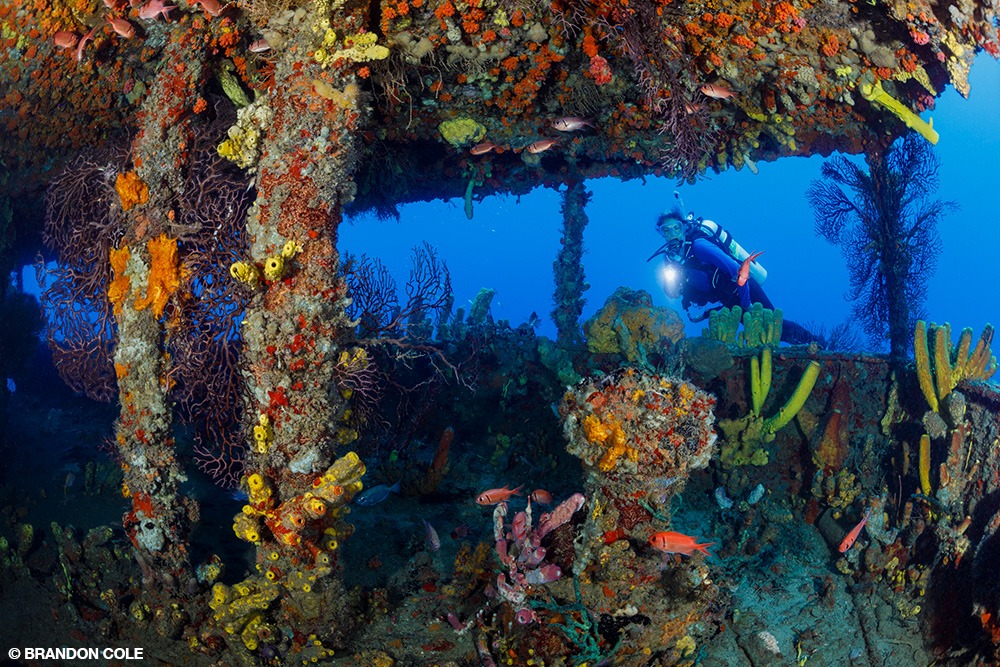
The sunken, splendid remains of the Lesleen M, a wreck dive that ticks all the boxes, are a 20-minute boat ride north from our resort. I devised a plan that I hoped would make the most of our time underwater and the many photo opportunities that awaited on and inside this 165-foot (50-m) freighter, sunk in 1986 by Saint Lucia’s Department of Fisheries.
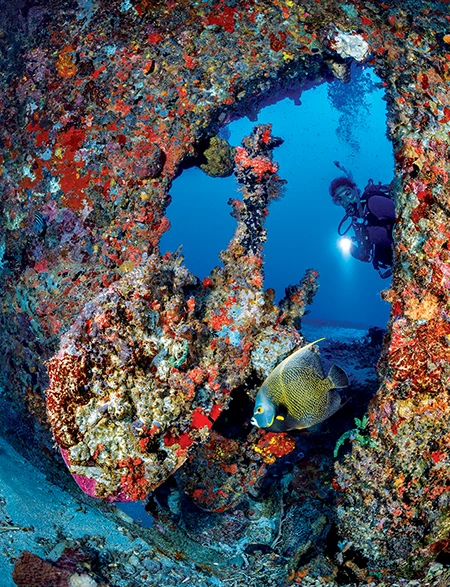
First, we devised our strategy. Our plan was to follow the descent line down to the ship’s deck at 30 feet (9 m) and swim without delay straight to the stern. We would shoot there until the other divers arrived and then drop down onto the sand at 65 feet (20 m) for the classic propeller shot. After that, we would ascend to the deck at midships and work there for a few minutes. Finally, we would reposition ourselves at the bow section, which lists very hard to starboard, for the final frames before returning to the line and ascending for our safety stop.
Second, we gathered our gear. I used my ancient Canon 5D Mark IV camera, a full-frame fisheye lens, two powerful wide-beam strobes with diffusers, and long strobe arms. My wife, multitasking as dive buddy and photo model, carried two dive lights with different lumen ratings and beam widths. She would switch back and forth depending on ambient light levels and distance from the camera.
The final piece was the plan. Hoping for sun and decent visibility, we lucked out with both. Our route, drawn on a slate and discussed presplash with the divemaster, was optimized to keep us ahead of our fellow divers as we navigated the Lesleen M. This spatial buffer preserved water clarity as long as possible in overhead environments such as the stern gallery, where exhalation bubbles and fin kicks would introduce silt, which would mean floating particulates becoming unwanted backscatter.
The plan worked like a charm. We had the very photogenic stern area to ourselves for about 10 minutes. We worked quickly to compose half a dozen different scenes showing Melissa exploring the ship’s shadowy spaces, while fish helpfully loitered about. In conjunction with the riot of vibrant sponges, fans, hydroids, and cup corals decorating railings, beams, machinery, and the ceiling, the fish provided living window dressing for our little movie set. We were similarly blessed with imaging success at the subsequent stops on our tour. We called it a wrap and smiled all the way back to the surface.
Zooming In
All wide-angle vistas and no fine details can make for an incomplete picture of a place. Getting up close and personal with the island’s smaller creatures fleshed out our image portfolio and diversified our overall Saint Lucia
dive experience.
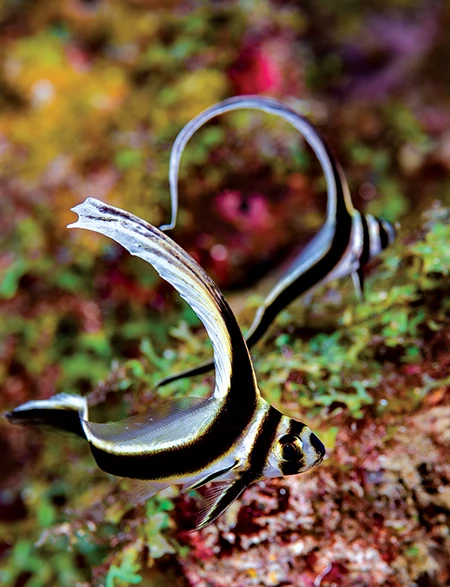
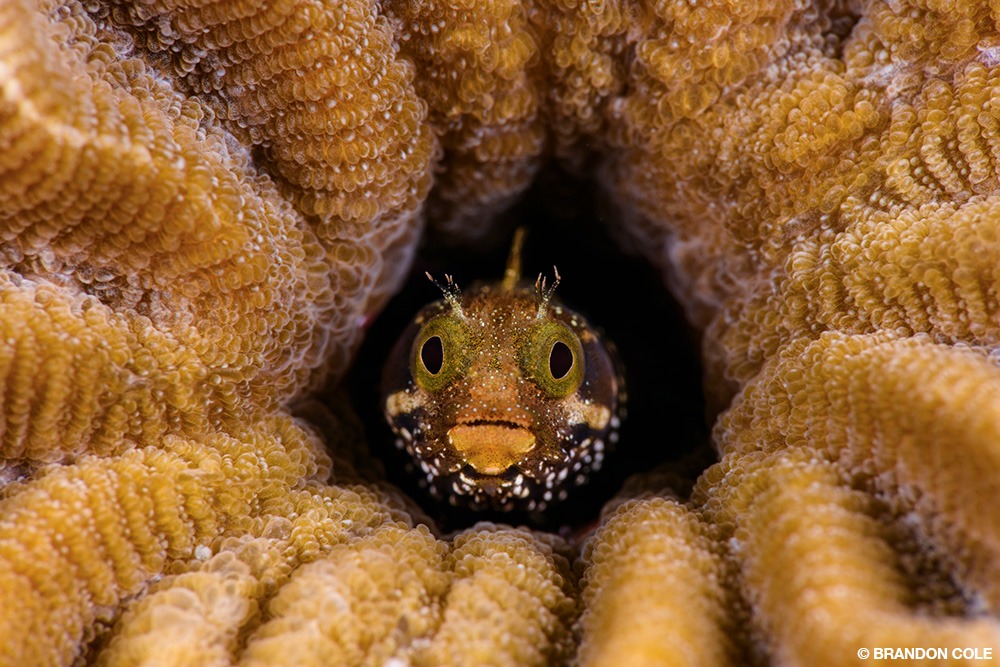
The simplest of shore entries gives access to our resort’s House Reef. Popular day and night with newbies and old salts alike, this site proved a gold mine for camera-worthy critters. Things started with a bang in only 5 feet (1.5 m) of water with a bug-eyed secretary blenny, whose home base was a hole in small brain coral. Juvenile spotted drums rehearsed their hypnotic, sashaying swimming style back and forth on a ledge at 20 feet (6 m).
Just below that I jumped down the rabbit hole of high-magnification, super-macro photography when I committed to creating an interesting, abstract image of an arrow crab. After quite a bit of squinting, cursing, and refocusing, I managed to fire off a few frames that successfully rendered only the crab’s striped eye in sharp focus against a soft, blurred background, while its stilt-like legs disappeared all over the place at odd angles.
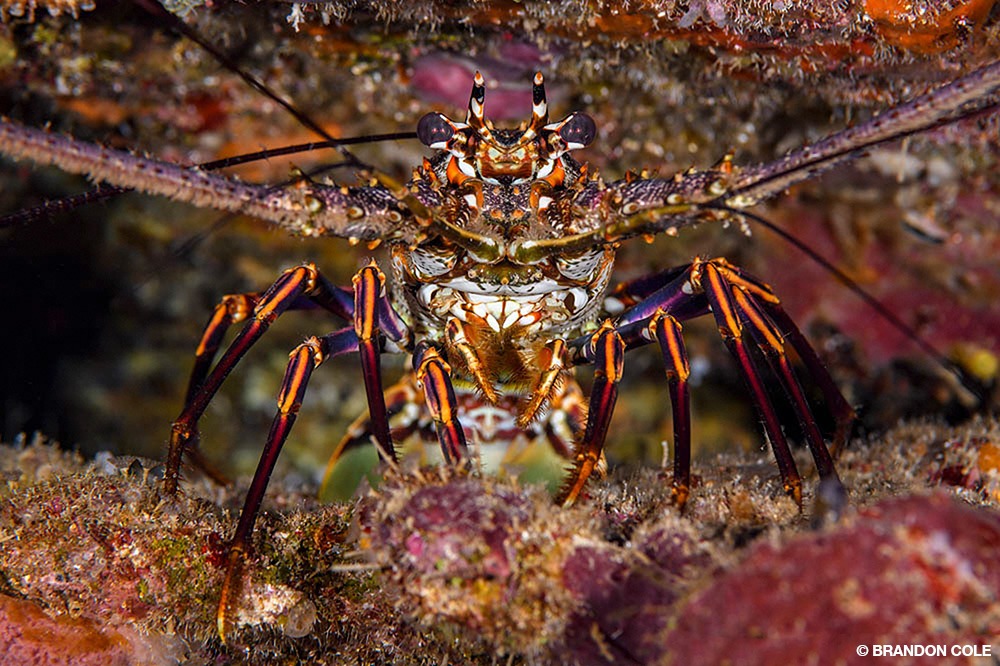
The House Reef likewise delivered the goods under the cover of darkness. We discovered spiny lobsters marching around, basket stars unfurled and feeding, eels hunting, and many fish species tucked in and sleeping for the night.
When the moon is just right, divers may witness a bioluminescent display of ostracod fireworks. These minuscule planktonic crustaceans, cleverly nicknamed sea fireflies, trace glowing streaks of electric blue light in the inky water as they swirl about in a courtship dance.
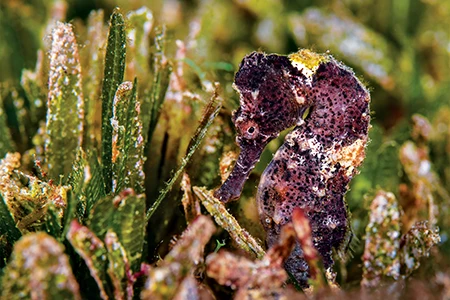
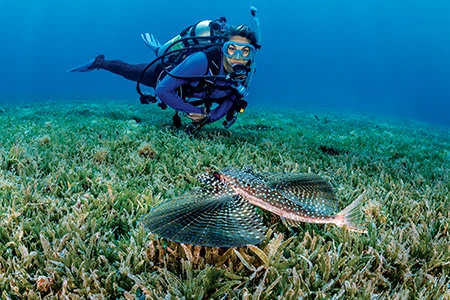
Turtle Reef is also very close to our resort, reachable by boat in just a couple of minutes or with a 10-minute swim from shore. Starting in the shallows in the turtle grass bed, we found flying gurnards, peacock flounders, sharptail and goldspotted snake eels, and a burgundy-colored seahorse.
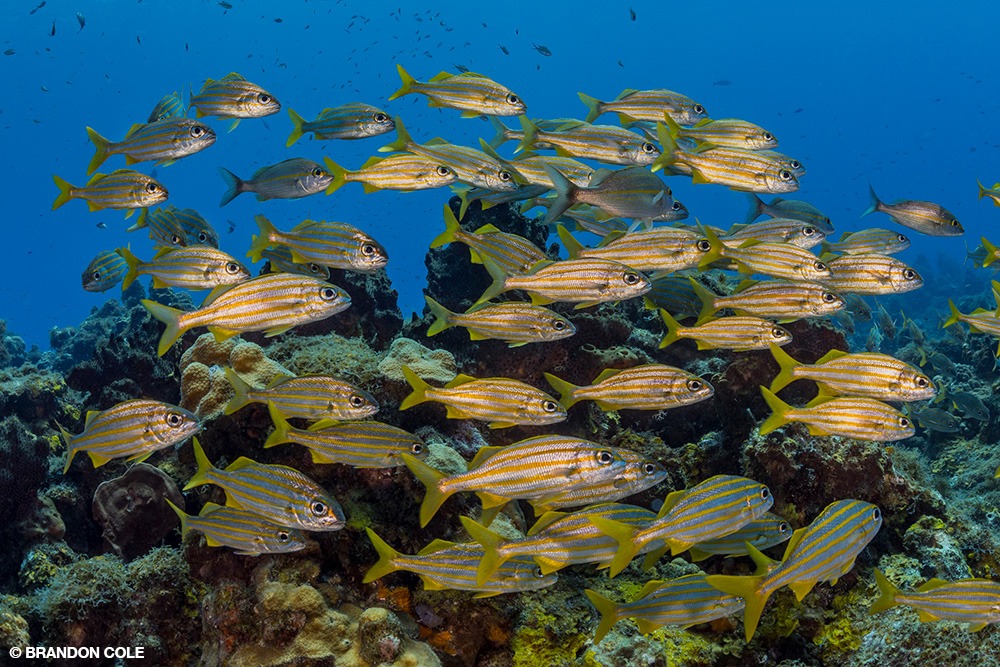
A small, shy green sea turtle sculled by, too far away for anything other than a proof-of-life shot. But when we angled out and descended to the sloping reef, where blackbar soldierfish and smallmouth grunts chill next to barrel sponges at around 50 feet (15 m) deep, a large hawksbill boldly approached us before casually veering off. Melissa moved next to it, smoothly gliding into the ancient mariner’s slipstream to avoid causing alarm. Her quick thinking and mermaid-worthy maneuvering made for a great point-of-view video with her GoPro as the turtle continued on its way.
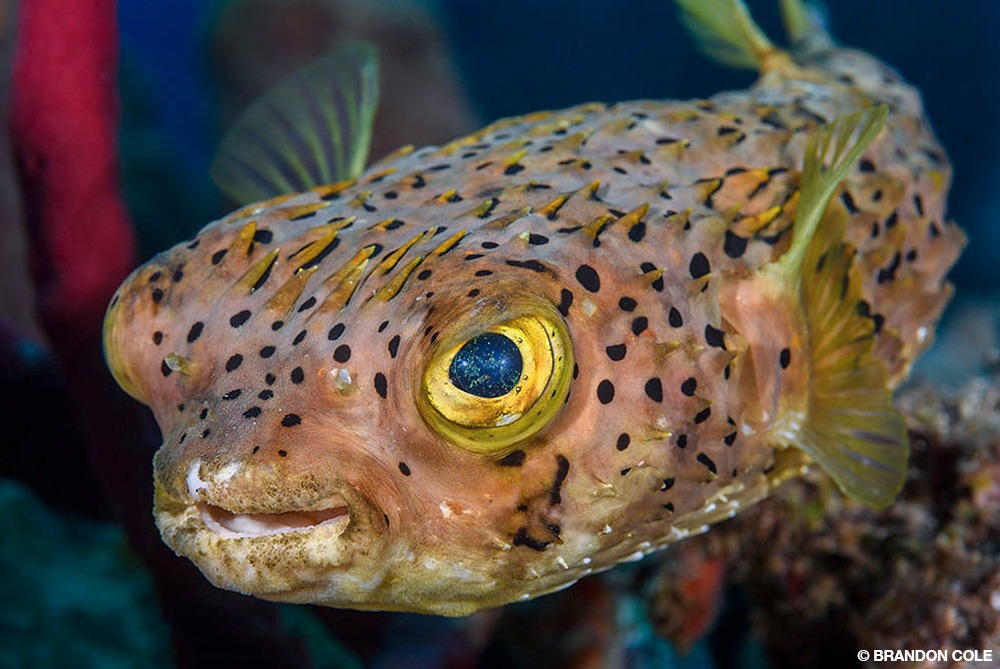
Rock beauties, balloonfish, and yellowhead jawfish kept me busy snapping on Anse Couchon reef. Flamingo tongue snails, mating hamlets, and a channel clinging crab carrying eggs underneath were some of my macro subjects at Malgre Toute.
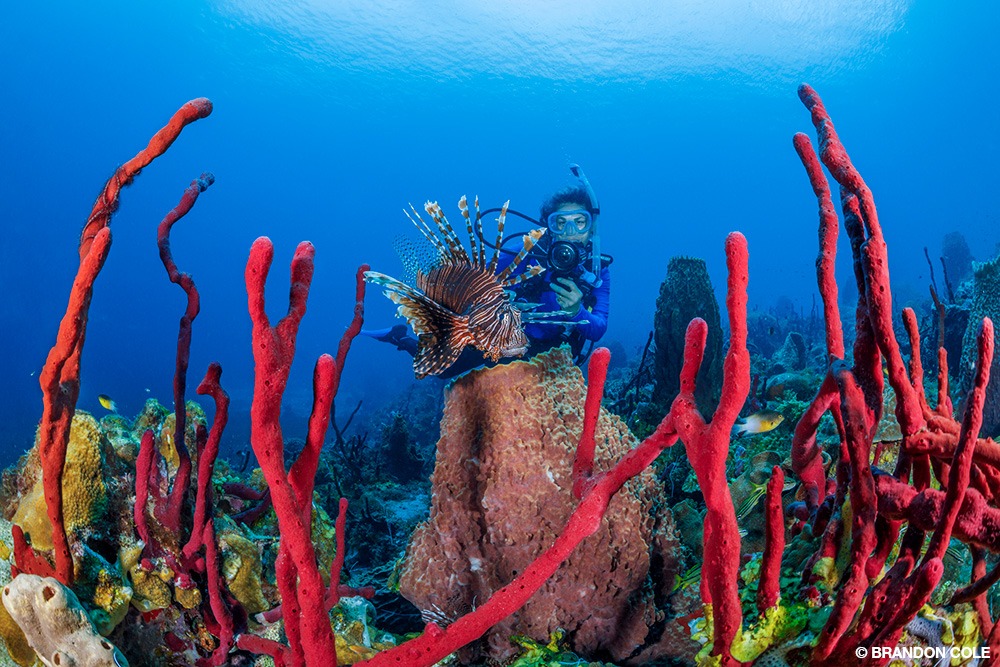
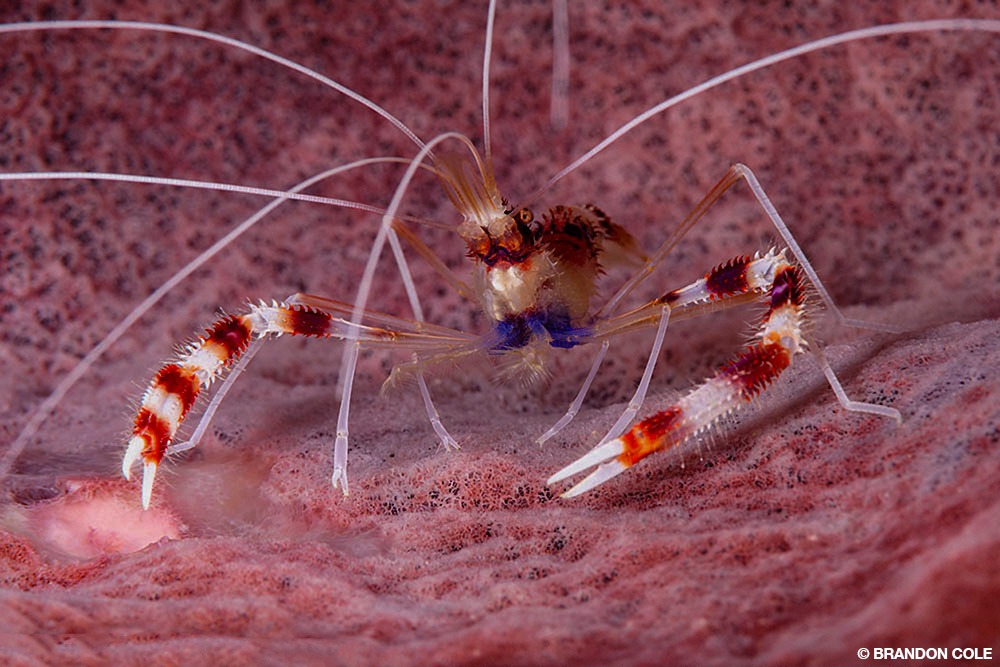
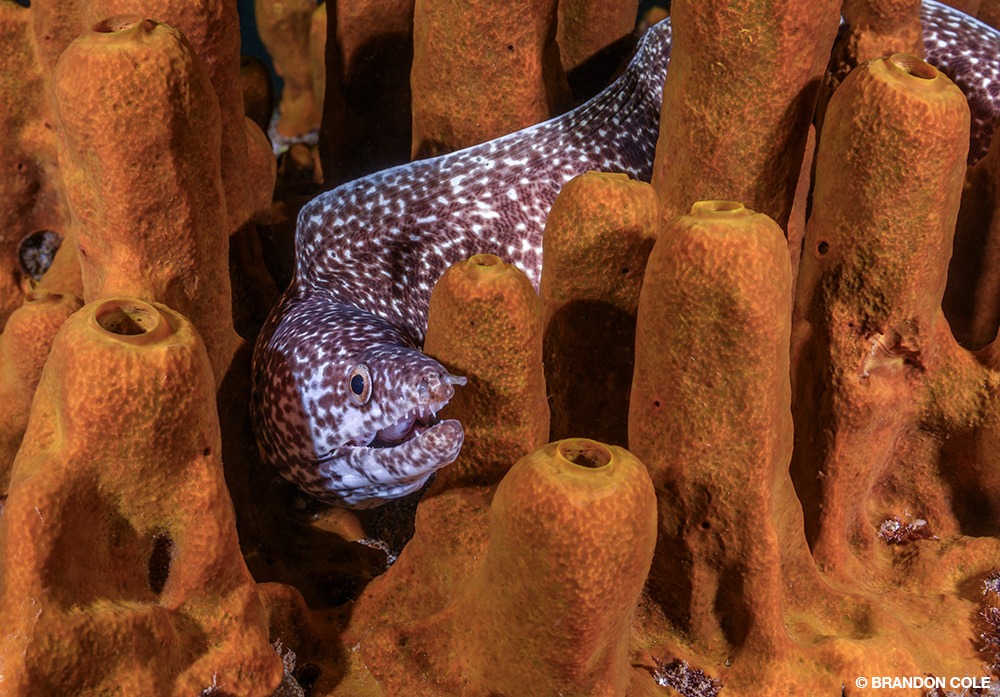
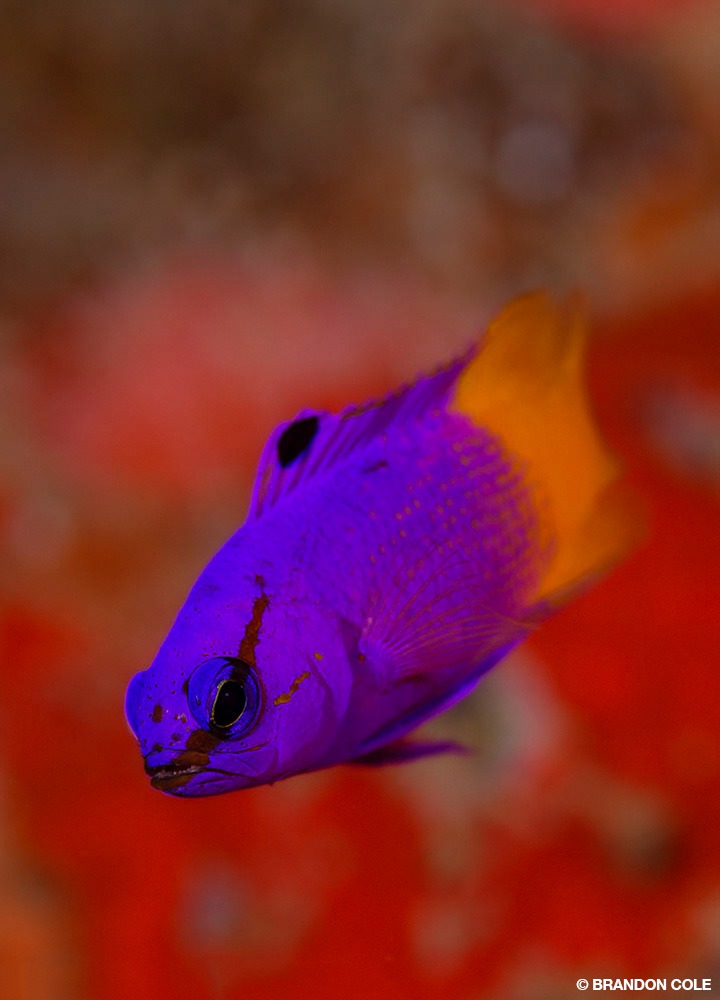
Weaving through the foursome of multistory columnar rocks known as the Pinnacles, we became acquainted with a few nosy morays. They were bold and curious because divers regularly cull tasty lionfish here. Stunning magenta and orange royal grammas hovered upside down under overhangs. There were Pederson shrimp in corkscrew anemones, banded cleaner shrimp in vase sponges, and camouflaged scorpionfish in plain view. All these critters were sights to behold.
When our last day rolled around, we boarded the boat and greeted the crew for the last time. We were the only guests on board, so the captain said we could choose where to go. I asked him to surprise us. He thought for a moment, smiled, and spun around the boat. As he leaned into the throttle he announced, “Jalousie!” It was a new spot to us; its name means “jealousy” in the native Creole tongue.
We smiled as we raced south toward those singular, twin peaks thrusting upward from the sea. Unmistakable and unforgettable, we knew they were jealously guarding living riches under the waves. The Pitons were calling. We had to answer.
How to Dive It
Getting there: American Airlines and Delta currently have daily nonstop flights from the U.S. to Saint Lucia’s Hewanorra International Airport (UVF) in Vieux Fort. Other carriers (such as JetBlue, United, and Canada Air) offer connecting flights via many cities in the U.S. and Canada. Resorts can arrange transport from the airport to their properties.
Conditions: Diving is possible year-round. Topside weather is generally drier and cooler in winter, although temperatures average from the low 70s°F to the high 80s°F (22°C to 31°C) throughout the year. Although hurricanes rarely hit, storms are possible, so some people avoid June to November.
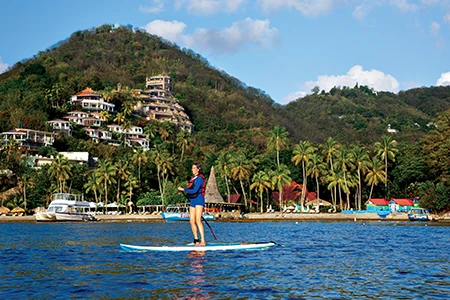
Ocean temperatures are around 81°F (27°C) in winter and 85°F (29°C) in summer. Underwater visibility ranges from 30 feet (9 m) to more than 80 feet (24 m), depending on location, site profile, and the amount of recent rainfall and runoff. Some sites have regular currents, but Saint Lucia is known for relaxing diving. Most scuba activities are along the western side, which is generally protected from prevailing winds.
Miscellaneous: A passport is mandatory to visit Saint Lucia. U.S. citizens do not require a visa to enter for tourism purposes. The Eastern Caribbean dollar is the country’s official currency, but U.S. currency and credit cards are widely accepted. English is the official language. Type G electrical outlets with three square pins are standard, but some resorts have U.S.-style outlets.
The tourism authority and Saint Lucia Dive Association organize a weeklong Dive Fest celebration every September. Saint Lucia’s terrestrial activities include hiking, yoga retreats, wellness clinics, mountain biking, ziplining, kitesurfing, and bird-watching, along with tours emphasizing local culture, music, cuisine, and history.
Explore More
Find more about Borneo in this bonus video and photo gallery.
© Alert Diver – Q4 2025