The Case for Regular First Aid Refreshers
Divers Alert Network (DAN) provides the industry’s most comprehensive cardiopulmonary resuscitation (CPR) and first aid training, grounded in evidence-based practices. Our programs leverage DAN’s research and medical expertise, along with the internationally recognized guidelines established by the International Liaison Committee on Resuscitation (ILCOR).
Many divers are surprised to learn that these certifications expire after two years. There are two reasons to need renewal.
Skill retention declines quickly. Research shows that first aid skills can deteriorate in as little as six months without practice. Most recent studies recommend retraining at least annually.
The first and most critical skills to fade are chest compression rate (100 to 120 per minute) and depth (2 to 2.4 inches, or 5 to 6 centimeters, for adults), which are essential for high-quality CPR. Evidence also supports microlearning or brief refreshers throughout the year as an effective way to maintain proficiency.
Guidelines evolve continuously. ILCOR brings together leading resuscitation organizations worldwide to review scientific evidence and set best practices for first aid and resuscitation. Through its continuous evidence evaluation (CEE) process, ILCOR updates its guidelines annually to improve outcomes across all age groups.
In early 2026 DAN will incorporate the latest updates into our instructor-led courses, including Diving First Aid (DFA), Basic Life Support (BLS), and Emergency Oxygen (EO₂), as well as programs that our Powered by DAN partners offer.
The following are some of the key changes:
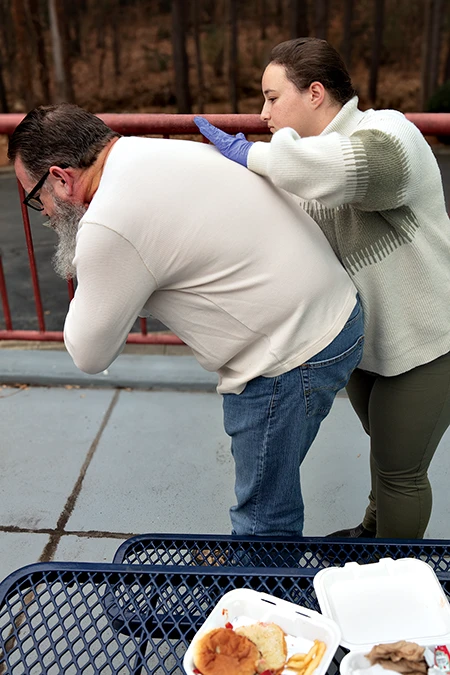
• Foreign body airway obstruction (FBAO): Research shows that back blows are more effective for choking and cause fewer injuries than abdominal thrusts (Heimlich maneuver). Rescuers should now start with back blows, and then use abdominal thrusts, repeating as needed until the airway is clear. Chest thrusts, which were previously included in the treatment sequence, are now reserved for cases in which abdominal thrusts are not feasible, such as with obese or pregnant people and infants.
• Infant chest compressions: Rescuers should now use either the heel of one hand (as with children) or the two-thumb encircling technique to give chest compressions to an infant. The two-finger method is no longer recommended because it often results in incorrect hand placement and insufficient compression depth due to rescuer fatigue. This change will improve accuracy and reduce strain during prolonged resuscitation efforts.
• Automated external defibrillator (AED) use with bras: ILCOR clarifies that there are no safety concerns with using an AED on someone wearing a bra, even one with underwires. Defibrillation requires direct contact between the pads or paddles and bare skin, which usually means exposing the chest. Scientific studies have shown, however, that this can make some people hesitant to help women. Allowing rescuers to simply adjust the bra instead of removing it can reduce discomfort and fears of inappropriate contact, making it easier for bystanders to act quickly and save a life. DAN recommends incorporating this topic into training and using manikins with breasts to better reflect real-world scenarios.
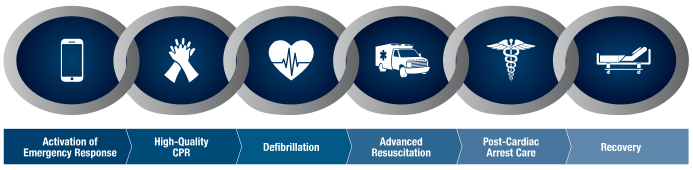
• Chain of survival: The chain of survival, which provides a progression of care for cardiac arrest, has been streamlined. Previously, some organizations taught up to four different versions. This unified approach will apply to infants, children, and adults, both in and out of hospital settings. Simplifying these guidelines makes training easier to understand and ensures consistent, high-quality care across all age groups.
• In-water rescue breaths: The recommendation to give rescue breaths while still in the water has been updated. Although evidence suggests that breaths that interrupt the drowning process can improve survival by as much as 49%, opening the airway in water can allow additional water in. The provider must also consider personal safety and distance to shore when determining whether to perform in-water breaths. The current recommendation is that in-water rescue breaths should be performed only by rescuers trained in the technique and when conditions are safe, such as calm water without waves. In all drownings, trained rescuers should administer supplemental oxygen as soon as possible.
• Airway management: When giving CPR to an adult with a suspected head or neck injury, opening the airway is the top priority. Start with a jaw thrust. If that doesn’t work, trained rescuers should use the head-tilt, chin-lift method to allow breathing, even if it means some spinal movement. Ensuring ventilation is more important than keeping the head perfectly still.
The dive industry looks to DAN as the authority on dive-related first aid, a role that grows each year as more training agencies adopt DAN’s curriculum through the Powered by DAN program. Keeping divers informed of evolving standards is essential, just as maintaining first aid skills is every diver’s responsibility.
Between natural skill degradation and the continuous advancement of medical practices, regular recertification is critical. Divers and dive professionals should renew their training at least every two years to remain prepared and effective when emergencies occur.
© Alert Diver – Q1 2026