MANAGING TRAVEL-RELATED ILLNESSES
DIARRHEA

While you may hope to never need to know about the causes, symptoms and treatments for travel-related illnesses, the information is important to have if a need arises. The following text provides detailed information on travelers’ diarrhea, the most common travel-related illness, and malaria, the most serious threat to people traveling to tropical and subtropical regions, as well as a brief synopsis of other conditions you might encounter while traveling.
Travelers’ Diarrhea
Travelers’ diarrhea (TD), the most common complaint of travelers, can be contracted anywhere in the world. While travel involves some risk of acquiring diarrhea, the risk is much higher in certain areas. The CDC estimates that between 30 percent and 50 percent of travelers will develop TD during a one- to two-week stay in high-risk areas.
The risk for TD varies by destination. Generally, the world may be divided into low-, intermediate- and high-risk zones.
Low-risk zones include the United States, Canada, Australia, New Zealand, Japan and Northern and Western Europe.
Intermediate-risk zones include Eastern Europe, South Africa and some Caribbean islands.
High-risk areas include most of Asia, the Middle East, Africa, Mexico, and Central and South America.
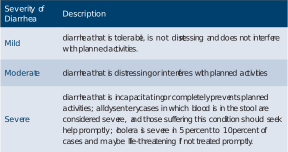
TD can be mild, moderate or severe (Table 7). One type of TD is dysentery, which is characterized by diarrhea containing blood or mucus and is usually associated with painful abdominal cramps, vomiting and fever higher than 100.4°F (38°C). It occurs in tropical areas and is caused by shigella bacteria or amoebas.
One of the worst forms of diarrheal disease is cholera, with 1.3 million to 4 million cases occurring annually.37 It is caused by Vibrio cholerae and characterized by profusely watery stools and progressive dehydration.
Symptoms: TD is typically caused by bacteria (80 percent to 90 percent of cases), viruses (5 percent to 8 percent) or protozoa (up to 10 percent in longer-term travelers), which enter the body through the mouth. Infections occur primarily due to contaminated food, drinks or dirty hands. Diseases can also be transmitted by utensils, glasses, swimming in contaminated waters or using contaminated water for washing or tooth brushing. Bacterial and viral infections can last for a few hours (intoxications) or days (infections) and may occur more than once during a single short trip. The symptoms of protozoan infections usually manifest a few weeks after infection and are likely to affect you upon returning home from a two- or three-week trip. For most forms of TD, symptoms occur shortly after infection while the traveler is still on the road. In other cases, the incubation period is days.
Treatment: While TD may cause discomfort, it usually is not life-threatening, it is easily treated with over-the-counter medications, and it will eventually go away even without any treatment. Most travel physicians do not advise taking antibiotics to prevent diarrhea because severe reactions to the antibiotics are about as common as severe diarrhea, and the widespread use of antibiotics has led to significant microorganisms’ resistance, making treatment less effective for individuals who become ill.
The CDC does not recommend that travelers take prophylactic antimicrobial agents to prevent TD but suggests some specific medications for physicians to consider when treating individuals with TD symptoms. Bacterial causes of TD far outnumber other microbial causes, so practical treatment with an antibiotic directed at intestinal bacterial pathogens remains the best therapy.
An antimicrobial’s effectiveness depends on the specific microbe that’s causing the ailment and its antibiotic sensitivity. First-line antibiotics include ciprofloxacin, levofloxacin and other members of the fluoroquinolone family of drugs. Increasing microbial resistance to fluoroquinolones, however, may limit their usefulness at some destinations such as Thailand and Nepal. The U.S. Food and Drug Administration (FDA) warns about these drugs, noting a significant risk of tendon rupture; DAN has received reports of several Achilles ruptures potentially associated with the drugs. The FDA has approved azithromycin and rifaximin as alternatives for the treatment of TD caused by noninvasive strains of E. coli.
The standard treatment regimen for TD is three days on an antibiotic. If treatment is initiated promptly, however, a shorter course, sometimes just a single dose, may reduce the duration of the illness to a few hours.
Pepto-Bismol is also helpful in the treatment of diarrhea, but less so than antibiotics. The dosage for treating TD is 1 ounce of Pepto-Bismol every 30 minutes, not to exceed 8 ounces in 24 hours or a total of eight doses. Wait at least two hours after taking an antibiotic before taking Pepto-Bismol since it will otherwise delay the absorption of the antibiotic. Note the prohibitions regarding Pepto-Bismol listed in the prevention section.
Self-treatment of TD is possible with some preparation.
The following items are required:
- thermometer
- antidiarrheal medication such as loperamide (Imodium)
or diphenoxylate (Lomotil) - Pepto-Bismol
- antibiotic prescribed by a physician
Any sign of illness requires quick action. Immediately take your
temperature after having a bloody or watery stool.
- If you have a fever — a temperature at or above 100°F (38°C) — or a bloody stool, take only the antibiotic.
- If you have no fever or bloody stool, take both an antidiarrheal
medication and Pepto-Bismol (1 ounce or 30 ml of the liquid form
or two tablets every 30 minutes for a total of eight doses). - If you have nausea, vomiting or cramps, take an antibiotic along with Pepto-Bismol and an antidiarrheal.
This regimen will usually relieve symptoms in 12 to 15 hours. Avoid using antidiarrheal medication in children younger than 2 years old.
Significant dehydration usually does not occur in adults, but be sure to drink plenty of fluids. If you have fewer than eight watery stool episodes per day, continue with your regular diet supplemented with clear broth, salted crackers and 2 to 3 quarts or liters of clean water daily. Avoid dairy products and beverages that contain high levels of sugar, such as nondiet soft drinks.
Rehydration beverages containing electrolytes, such as Gatorade, are also appropriate in cases of TD. The best strategy is to take liberal quantities of oral rehydration salts (ORS). World Health Organization ORS solutions are widely available at stores and pharmacies in most developing countries and can often be purchased at open-air stores.
If your symptoms do not improve within 48 hours, seek medical attention for the possibility of a parasitic infection. TD treatments do not eradicate parasites such as Giardia intestinalis, which causes the diarrheal disease giardiasis; antimicrobial drugs are needed to get rid of Giardia.
Be prepared by doing the following:
- Learn about specific risks at your destination, and mitigate them.
- Use hand sanitizer that is at least 60 percent alcohol.
- Carry loperamide with you.
Prevention: The best defense is to develop safe eating and drinking habits when you are visiting high-risk areas. Most cases of TD can be avoided by eating only food that is not just cooked but is steaming hot, that has a high acid content (such as citrus fruits — oranges, grapefruits, etc.), that has a high sugar content (such as jellies or syrups) or that is dry
(such as bread).
Any foods that are moist and warm or served at room temperature are potentially unsafe. This includes sauces, salads and anything served on a buffet. Citrus and other fruits that you peel are safe, assuming your hands and utensils are clean. Unpeelable fruits, such as grapes and berries, are not safe. An unpeeled tomato is not safe, but a tomato that you peel is safe. Watermelons are sometimes injected with water to make them heavier, so consider them unsafe, particularily when they are sold by weight instead of by size or unit.
Untreated water is not safe, but bottled drinks, wine and beer can be considered safe. Bottled water must have an intact seal at the time of purchase to be considered safe. Be aware that in some locations, local people will sometimes refill empty water bottles at a town well and resell them as supposedly safe water, so make sure your bottles have an intact seal, and purchase water only from reputable sources.
Following these simple precautions will give you a better chance of avoiding diarrhea, even in high-risk areas. Antidiarrheal medication can slightly improve your odds, but the remedy is not without its risks; side effects can include dizziness, constipation and nausea. Between 30 percent and 50 percent of travelers in high-risk areas who don’t take preventive medication get diarrhea, but not taking the medication offers different benefits: It is more convenient, you avoid any side effects, and it costs you nothing.
Bismuth subsalicylate (Pepto-Bismol) significantly decreases diarrhea incidence when taken as a preventive measure; the standard prophylactic regimen is 2 ounces (60 mililiters) of liquid or two tablets four times a day for no longer than three weeks. Because of the possible risk of Reye’s syndrome, do not give Pepto-Bismol to children younger than 12 years of age or to those between 12 and 19 years old if they have chicken pox or the flu. Avoid taking Pepto-Bismol if any of the following conditions pertain to you:
- You are allergic to or intolerant of aspirin.
- You are taking an anticoagulant (blood thinner).
- You have renal insufficiency or gout or are taking
probenecid or methotrexate. - You have any type of bleeding disorder.
- You have a history of peptic ulcer.
Considerations for divers: Do not dive if you have diarrhea, and allow at least 24 hours for recovery after your last loose stool.
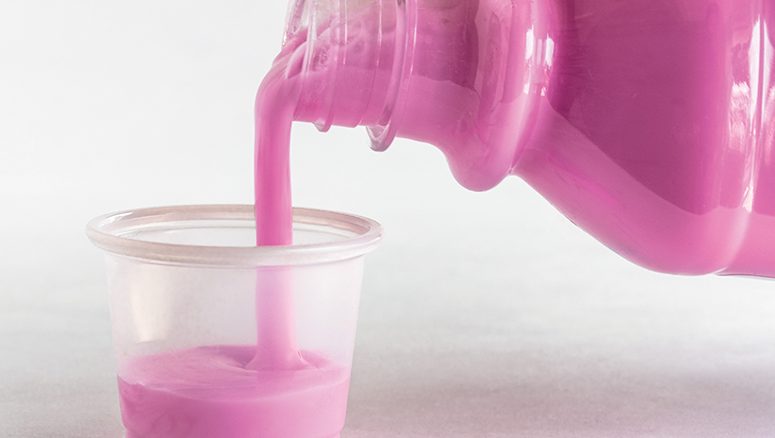
Pepto-Bismol is also helpful in the treatment of diarrhea, but less so than antibiotics.

Any foods that are moist and warm or served at room temperature are potentially unsafe.

Bottled water must have an intact seal at the time of purchase to be considered safe.

Travelers’ Diarrhea Treatments
Mild TD
- Self-treatment is possible.
- Consider using an antidiarrheal medication such as loperamide
or a balanced salt solution. - Consume plenty of fluids, especially oral rehydration solutions.
- The CDC does not recommend antibiotic treatment for people with mild TD.
Moderate TD
- Seek medical consultation in person or by phone.
- Your personal physician or a travel clinic may prescribe antibiotics in advance of your trip and provide instructions for how and when to use them.
- An antibiotic such as fluoroquinolones, azithromycin or rifaximin may be necessary.
- You can use an antidiarrheal medication such as loperamide on its own or in conjunction with other interventions for diarrhea.
- Consume plenty of fluids, especially oral rehydration solutions.
Severe TD
Go to a medical professional for
evaluation and treatment.
- An antibiotic treatment is necessary.
— Azithromycin is preferred to treat severe TD.
— Fluoroquinolones or rifaximin can treat severe, nondysenteric TD.
— Single-dose antibiotic regimens may be used.
- Consume plenty of fluids, especially oral rehydration solutions.
DAN Customer Service
Mon–Fri, 8:30 a.m. – 5 p.m. ET
+1 (919) 684-2948
+1 (800) 446-2671
Fax: +1 (919) 490-6630
24/7 Emergency Hotline
In event of a dive accident or injury, call local EMS first, then call DAN.
24/7 Emergency Hotline:
+1 (919) 684-9111
(Collect calls accepted)
DAN must arrange transportation for covered emergency medical evacuation fees to be paid.
Medical Information Line
Get answers to your nonemergency health and diving questions.
Mon–Fri, 8:30 a.m. – 5 p.m. ET
+1 (919) 684-2948, Option 4
Online: Ask A Medic
(Allow 24-48 hours for a response.)