NEW AND EMERGING DISEASES:
THE THREAT OF PANDEMIC
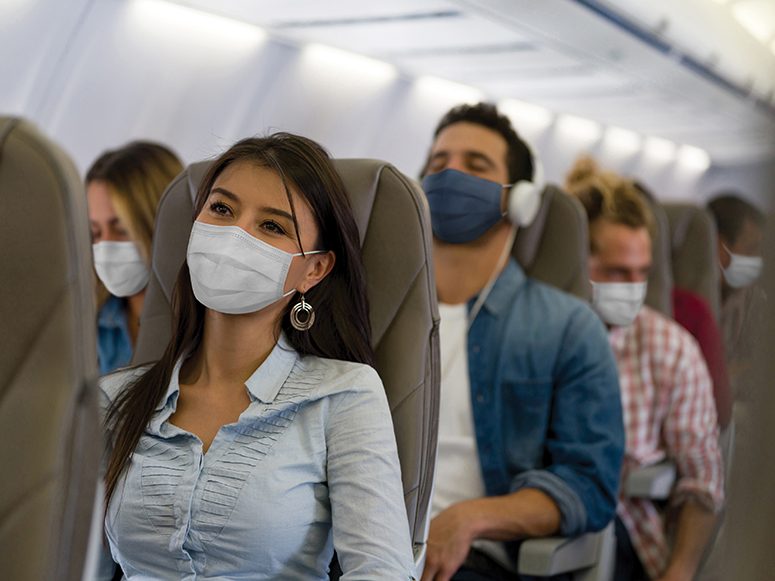
Microbial disease agents are constantly evolving, especially now with the ubiquity of global travel and thus the ease with which microbes can spread.
Before the 2014 Ebola virus disease outbreak in West Africa, for example, few people outside of the infectious diseases community had ever heard of the potentially deadly illness, and then suddenly it was in the news. Public health professionals have been concerned for a long time that one of these new diseases may turn into a pandemic, with the number of ill people surpassing the health care capacity to treat them, causing a large number of deaths and disrupting the global economy. That is what recently happened with COVID-19.
A pandemic is a contagious disease outbreak that typically affects multiple continents and countries and involves various groups of people. Devastating diseases have ravaged the world’s populations throughout history. Widespread diseases have included bubonic plague, leprosy, smallpox, measles, Ebola, HIV, dengue, malaria, influenza, yellow fever, tuberculosis, typhus, cholera and COVID-19.
The outbreak often starts as an epidemic that affects one area of the world and the people living there. With the availability of rapid and readily available global transportation, it is easy for a local contagious disease to spread worldwide before health authority surveillance programs can identify such a threat and quickly enact effective measures to contain and prevent its spread. With COVID-19, for example, infections were first identified in Wuhan, China, and quickly spread to areas across the globe before it could be contained.
The desire to continue the flow of unrestricted travel and free trade can provide some resistance to timely public health efforts, particularly when they appear unnecessary at the early onset of a disease outbreak when all the facts are still being gathered and interpreted. Pandemics end when large numbers of people worldwide are no longer affected. This can happen when many people die and effective immunity develops in those who survive (such as with the Spanish flu in 1918–19), when an effective vaccine is developed (polio, smallpox) or when the population lives with the disease by employing effective treatments and preventive measures (tuberculosis).
Such infections often start when an infectious agent found in animals makes the necessary changes to cross over to human infection and then humans transmit it to other humans. Respiratory transmission is highly effective, especially when augmented by environments with close proximity between persons.
When a disease is first identified with a high probability of rapid spread, measures are taken initially to limit that spread. The severity and contagiousness of the disease affect the spread and the required extent of preventive measures. Close monitoring for specific vulnerable populations (extremes of age, underlying medical conditions, gender, ethnicity, etc.) makes surveillance particularly challenging when making this important early observation. Minimizing the number of healthy people who are subsequently infected by one who is ill is the goal and related to the term R0. Getting R0 below 1 is the goal of ongoing efforts. Those efforts can include the following:
- hygiene measures — both personal and environmental
- physical distancing — increasing the physical distance between individuals
- adequate personal protection — implementing barriers to keep infectious material away from the uninfected
- contact tracing — isolating infected individuals from the general population
- restricting specific environments — including close-quartered, poorly ventilated gathering rooms
- protecting vulnerable populations — isolation, additional barriers
Herd immunity occurs when large segments of the population acquire antibody protection by recovering from the disease or by being vaccinated.
You are one of the most critical people in successfully combating a pandemic. Trusted public health resources can provide valuable information. Please do not fault efforts and recommendations too harshly early in the epidemic as officials gather and analyze information, initially relying on successful measures that were developed for previous yet different infections and complicated by a world that has grown more crowded, mobile and vulnerable. As more facts are known and the situation changes, recommendations may also change. Be able to adapt. All individuals should continuously monitor and comply with updated public health guidelines from internationally recognized authorities such as the CDC, WHO, state and local health officials, and academic institutions.
The following specific recommendations for both divers and travelers are in addition to other recommendations for the general population during
a pandemic:
- Closely monitor public health authorities in the areas where you are traveling as well as potential connecting locations and regions where medical emergencies are being evacuated. The CDC monitors outbreaks globally and offers recommendations for travelers to all destinations.
- Understand the health care capabilities and facilities in the area you are visiting and the medical evacuation options available should you become ill or injured during your travels.
- Be aware of epidemiological outlooks at times of traveling to avoid travel restrictions, lockdowns, quarantines, etc. Otherwise you might find yourself for a prolonged time in substandard accommodations and places where you usually would not choose to stay.
- Avoid unnecessary travel during a pandemic. The threat of the asymptomatic or mildly ill traveler bringing the infection to a relatively naïve or uninfected remote location or acquiring the infection from contact at the travel destination or during congested connections to get there is real. It may be difficult or even impossible to evacuate you should you become ill or injured in that location. You may have to depend on the limited or nonexistent local medical services there. Many remote areas have limited resources and might be quickly overwhelmed by their ill citizens and other visitors to that area.
If you need to travel during a pandemic, consider the following additional recommendations:
- Ensure that you do not have any serious medical conditions and that any other medical conditions are mild and well-controlled. Remember, your sleep, hydration, diet, environmental exposure and activity levels will be significantly different during travel and may exacerbate any underlying conditions. Conditions such as obesity, diabetes, high blood pressure and a weakened immune system may make you more susceptible to infection and a severe course of illness. Even extremes of age may be an important factor. Discuss the impact of any medical conditions with your physician during a pretravel or predive checkup. Do not travel if you are feeling unwell; see your physician instead.
- Wear an FDA-approved face mask, maintain distance between yourself and other passengers, regularly disinfect your hands, and follow all other recommended measures.
- Optimize your physical fitness.
- Ensure you have an adequate supply of medical equipment
and medications. - Make sure your gear is well serviced and maintained.
- Avoid activities and adventures for which you are not trained or that make you uncomfortable.
- Avoid high-risk activities.
- If you scuba dive, dive conservatively to avoid a dive-related illness. The few hyperbaric facilities that usually exist may be closed during a pandemic. Specialized medical evacuation flights may be curtailed, restricted or not available at all.
Significant disease outbreaks manifesting as epidemics and pandemics have been recorded throughout history. Many factors may make future outbreaks more deadly and spread more rapidly. But markedly better surveillance, mitigation, prevention and treatment techniques should equalize or even lessen the enormous costs of inevitable future threats. Remember, an informed traveler is a critical part of this epic human battle’s success.
Today’s current knowledge may be tomorrow’s old news, but at the time of publishing this guide the following diseases (aside from COVID-19) were among those relatively new on travelers’ radars.
Avian Influenza
Avian influenza, also known as bird flu, is a disease primarily in birds that is caused by influenza A viruses. It is present in more than 100 bird species worldwide. The primary hosts for avian influenza A are aquatic birds — such as gulls, terns and shorebirds — and waterfowl — such as ducks, geese and swans. Avian influenza A can also infect domestic poultry and some other animals. The risk to humans is low, but there have been cases of human infection in some Asian countries. Travelers to that region should avoid contact with wild birds, dead or sick-looking domestic birds and surfaces or objects contaminated with droppings from ill birds.
Chagas Disease
Chagas, also known as American trypanosomiasis, is a dangerous disease caused by the parasite Trypanosoma cruzi. This protozoan is typically transmitted to animals (including humans) by insect vectors found only in rural areas of the Americas, from the southern U.S. states to Argentina’s northern provinces.
The typical vector is a triatomine bug, often referred to as a kissing bug, but its common name varies from country to country. Triatomines are gregarious; they typically come out at night but take refuge during the day in dark, cool crevices between rocks and in tree bark and cracks on mud houses. In some areas, however, their behavior is changing, and they are out during daylight hours as well. These blood-sucking insects are guided to their prey by odor, heat and carbon dioxide emissions. Recent studies suggest that bedbugs may also be a vector for the Chagas parasite.
Chagas can also be transmitted via blood transfusions (including organ transplants), through foods contaminated with an infected bug’s feces, congenitally (from mother to fetus) or by lactation (from mother to nursing baby). The parasite’s usual reservoirs are opossums, raccoons, armadillos and small rodents, but domestic animals such as cats and dogs can also harbor the parasite.
The kissing bug defecates as it bites to suck blood. The subsequent scratching at the bite site allows the parasite to enter the host through the tiny bite wound. The bite site usually does not show any significant inflammatory process and is not painful. The acute phase of the infection, which lasts for a few weeks to a few months, may pass unnoticed because symptoms are typically nonexistent or mild, vague and unspecific. The chronic phase develops over several years. Between 60 percent and 80 percent of individuals with chronic Chagas never develop any other symptoms (known as indeterminate Chagas). The remaining 20 percent to 40 percent may develop cardiac or digestive complications that can be life-threatening.
There are no vaccines against Chagas disease, and current treatment options are mainly ineffective. Travelers should focus on avoiding contact with kissing bugs, which unfortunately have become resistant to first-line repellents and insecticides such as DEET and permethrin in some areas. Mechanical barriers such as mosquito nets and screens can be effective, but avoiding sleeping outdoors, at hostels and in mud houses in endemic areas is the best way to prevent contact with Chagas vectors.
Chikungunya
This mosquito-borne infection is a viral illness with an incubation period of several days. It causes fever, significant joint pain and sometimes a rash or headache. “Chikungunya” means “that which bends up” in the Makonde language in Tanzania. The pain from the disease can be severe enough to cause those afflicted to bend forward. The bent-over gait and joint pain of chikungunya can be confused with symptoms of decompression sickness, also known as “the bends,” for it too causes sufferers to assume a bent position due to pain. Chikungunya has spread from Africa and Asia to the Caribbean and parts of the Americas.
There is no vaccine against chikungunya and no known treatment other than rest and good hydration. Primary preventive measures are protection against mosquito bites (see Protective Measures Against Mosquito Bites under the Common Vector-Borne Diseases heading earlier in this section).
Dengue Fever
Dengue fever is a viral disease transmitted by the Aedes aegypti mosquito, which bites during the day, mainly after sunrise and around sunset. The disease has a sudden onset, with symptoms including fever, severe frontal headache, and joint and muscle pain; nausea, vomiting and a rash may also occur. The disease is usually self-limited and benign, but it may require a long convalescence. Dengue fever can also occur in a severe, fatal form called dengue hemorrhagic fever.
Dengue is found in tropical and subtropical climates worldwide, mostly in urban and semiurban areas. The global incidence of dengue has grown dramatically in recent decades. The CDC reports that about 3 billion people are at risk of dengue, up to 400 million people get infected, about 100 million people become ill, and approximately 22,000 people die from severe dengue each year.39 Severe dengue is a leading cause of serious illness and death among children in some Asian and Latin American countries.
In recent years dengue outbreaks have occurred in the Caribbean and Central America. Areas with widespread dengue include the South Pacific, Southeast Asia, India and the Middle East. The distribution of dengue fever is similar to that of malaria and yellow fever.
There is no vaccine available and no known treatment other than rest and good hydration, so preventive measures are targeted at avoiding mosquito bites.
Ebola
Ebola is a rare and deadly hemorrhagic viral illness that affects humans as well as monkeys, gorillas and chimpanzees. Six Ebolavirus species have been identified in several African nations; bats are their most likely reservoir. Ebola was first discovered in 1976 near the Ebola River in what is now the Democratic Republic of the Congo (DRC). In succeeding decades, relatively small outbreaks appeared sporadically in Africa. Modern travel may now be helping to disseminate the disease to other countries. A 2014 outbreak in West Africa lasted through part of 2016 and resulted in more than 28,600 cases and 11,325 deaths — most of them within West Africa but a few in other countries. More recent outbreaks occurred in DRC in June–November 2020 and in Guinea in February–June 2021.
Ebola is acquired through direct contact with an infected individual — via broken skin or the mucous membranes in the eyes, nose or mouth, for example — or through contact with the blood or other bodily fluids of an infected person, with a contaminated object or with fruit infected by bats or primates.
Symptoms may appear from two to 21 days after exposure to the Ebolavirus and can include fever, severe headache, muscle pain, weakness, fatigue, diarrhea, vomiting, abdominal pain and unexplained hemorrhaging (bleeding or bruising). There is no vaccine or medication effective against Ebola. Current treatment options include care to address symptoms and to support the patient’s immune system.
Protection against Ebola’s spread includes controlling traffic and screening air passengers coming from affected regions. If you must travel to a country affected by Ebola, get current detailed information about the disease on the CDC website.
Hand, Foot
and Mouth Disease
Hand, foot and mouth disease (HFMD) is a common viral illness that usually affects infants and children younger than 5 years old, although it sometimes affects adults. Outbreaks of HFMD occur occasionally in all parts of the world, including the United States. Japan, for example, reported more than 350,000 HFMD cases in 2017.
HFMD is caused by various types of Enterovirus present in the population worldwide. Transmission is from person to person via excretions from infected individuals, who may not necessarily appear ill. The virus is spread by close personal contact with infected individuals, coughing or sneezing, or direct contact with infected secretions or contaminated surfaces such as doorknobs.
The typical course of HFMD starts with a fever, reduced appetite, sore throat and malaise (a feeling of being unwell) followed by painful sores in the mouth a day or two later. A skin rash with red spots and sometimes with blisters may also develop on the palms of the hands, the soles of the feet, the knees and elbows or the buttocks and genital area. In rare cases, patients can develop meningitis (inflammation of the membrane around the brain) or encephalitis (an inflammation of the brain).
There is no vaccine and no specific treatment other than for symptom relief. Mitigate the risk of infection by frequent handwashing and refraining from touching your eyes and mouth.
Methicillin-Resistant
Staphylococcus Aureus
Methicillin-resistant Staphylococcus aureus (MRSA) is a type of Staphylococcus bacteria that is resistant to many antibiotics used to treat ordinary staph infections. In the United States, about 33 percent of the population carry ordinary staph that is still sensitive to usual antibiotics — known as methicillin-sensitive Staphylococcus aureus (MSSA) — while 2 percent carry MRSA without showing symptoms.40 When the surface of the skin gets damaged, however, the bacteria cause an infection.
Hospital-acquired MRSA (HA-MRSA): In hospital settings, about 5 percent of patients carry MRSA on their skin or nose without showing signs of the disease. It may cause severe infections in patients who have had surgeries, artificial joints or intravenous tubings, such as patients on dialysis or life support. The most dangerous situation is when MRSA staph enters the bloodstream (bacteremia), causes sepsis and possibly affects many organs. The incidence of MRSA infections in hospitals worldwide varies, but it is present in any world region. In 2017 there were nearly 120,000 cases of invasive MRSA infections in the U.S., and 20,000 resulted in the patient’s death.41 MRSA is also a significant problem in Europe, with a higher incidence in southern European countries than in northern ones. The problem is also widespread in Asia, but the incidence is unknown.
Community-associated MRSA (CA-MRSA): These MRSA infections occur outside of health care facilities and in the broader community among healthy people. The condition often begins as a painful skin infection spread by skin-to-skin contact or by contact with contaminated objects such as towels, floor mats or beach sand. At-risk populations for CA-MRSA include athletes in contact sports, childcare workers and people living in crowded conditions. Staph bacteria, including MRSA, have been found in seawater and sand.
Livestock-animals MRSA (LA-MRSA): MRSA can also be present among animals and may cause severe damage to the livestock industry. Contact with infected animals is a potential source of infection. Avoid contact with domestic and wild animals, especially when traveling.
Staph skin infections usually cause swollen, painful red bumps and boils or pimples. The affected skin is red and typically warm to the touch and may cause fever, produce superficial pus or cause deep abscesses that require surgical draining. The infection may remain limited to the skin, but it can penetrate deep into the body; affect bones, joints and surgical wounds; cause sepsis; and damage heart valves and lungs. It may be difficult to tell the difference between MRSA skin infections and other skin infections based only on appearance.
It is essential to seek medical care with any form of skin infection. Do not poke or try to squeeze the pus out of a warm, red bump in the skin. Cover it with a dry, clean bandage, and seek professional help. If using a disinfectant, make sure that the label indicates it is effective against staph.
The following measures can help prevent the spread of CA-MRSA:
- Wash your hands with soap for at least 15 seconds. Dry them with a disposable towel, and use another towel to turn off the faucet in a public bathroom. If you do not have access to soap and water, use hand sanitizer, but be aware that some MRSA subtypes are resistant to disinfectants.
- Keep wounds covered. Regardless of how insignificant skin damages such as scratches, abrasions and cuts may seem, keep them clean and covered with sterile, dry bandages until they heal. Wash your hands after cleaning your wounds or skin. Do not swim with open wounds, and abstain from contact sports if you have a skin infection.
- Keep personal items to yourself. Avoid sharing personal items such as towels, sheets, razors, clothing and athletic equipment. Carry your own manicure sets when traveling.
- Avoid walking barefoot on the beach.
- Shower after participating in athletic games or going to the beach. Use soap and warm water. The sooner you remove possible contamination from the skin, the less likely infection will occur. Don’t share towels.
- Launder gym and athletic clothes after each wearing. Wash your hands after handling dirty laundry or athletic equipment.
- Use barriers between your skin and public surfaces such as toilet seats and mats. Disinfect seats, benches and handles of gym equipment before use.
Middle East
Respiratory Syndrome (MERS)
First reported in Saudi Arabia in 2012, Middle East respiratory syndrome (MERS) is a severe illness caused by a coronavirus that affects the respiratory system. Symptoms include fever, cough and shortness of breath; some people also experience diarrhea, nausea and vomiting. The mortality rate is very high, between 30 percent and 40 percent).42
MERS is spread from person to person through close contact in health care settings. The disease has spread from the Middle East to Asia. In 2014 two cases were reported in the United States — both in health care workers who had recently returned from working in hospitals in an affected country.
There is no vaccine against MERS. Current information about the disease is available on the CDC website.
Severe Acute
Respiratory Syndrome (SARS)
Severe acute respiratory syndrome (SARS) was the first severe emergent transmissible disease of the 21st century. Like MERS, it is a respiratory illness caused by a coronavirus. Initially reported in Asia in February 2003, SARS spread to more than two dozen countries in North America, South America, Europe and Asia before the outbreak was contained in July 2003.
More than 95 percent of SARS cases occurred in the Western Pacific region. The World Health Organization reported 8,098 SARS cases worldwide in 2003, resulting in 774 deaths. The last reported outbreak was in China in early 2004. Nevertheless, the CDC and other agencies remain alert to the possibility of a renewed outbreak in humans. More information about SARS is available on the CDC website.
COVID-19
In comparison to MERS and SARS, COVID-19 — which is also caused by a coronavirus (SARS-CoV-2) — is less contagious, less severe and less fatal. Nontheless, it has infected hundreds of millions of people, caused several million deaths, disrupted travel and devastated economies.
Symptoms range from mild to severe and often include fever, chills, cough, shortness of breath, fatigue, muscle or body aches, headache, loss of taste or smell, sore throat, congestion, runny nose, nausea, vomiting and diarrhea. More serious symptoms include difficulty breathing, persistent pain or pressure in the chest, confusion, inability to awaken or stay awake, or pale, gray or blue skin, lips or nail beds.
With safe and effective vaccines developed at an unprecedented speed, people can once again resume travel. Scientists, however, are monitoring the emergence of SARS-CoV-2 variants. Get the most current information about COVID-19 on the CDC website, cdc.gov/coronavirus.

Herd immunity occurs when large segments of the population acquire antibody protection by recovering from the disease or by being vaccinated.

The primary hosts for avian influenza A are aquatic birds. Travelers should avoid contact with wild birds, dead or sick-looking domestic birds and surfaces or objects contaminated with droppings from ill birds.

The bent-over gait and joint pain of chikungunya can be confused with symptoms of decompression sickness, also known as “the bends,” for it too causes sufferers to assume a bent position due to pain.
Primary preventive measures for the mosquito-borne Chikungunya include protection against mosquito bites.

To help prevent MERS, Launder gym and athletic clothes after each wearing. Wash your hands after handling dirty laundry or athletic equipment.

Mitigate the risk of infection for many of these illnesses by frequent handwashing and refraining from touching your eyes and mouth.
Center for Disease Control website: cdc.gov
DAN Customer Service
Mon–Fri, 8:30 a.m. – 5 p.m. ET
+1 (919) 684-2948
+1 (800) 446-2671
Fax: +1 (919) 490-6630
24/7 Emergency Hotline
In event of a dive accident or injury, call local EMS first, then call DAN.
24/7 Emergency Hotline:
+1 (919) 684-9111
(Collect calls accepted)
DAN must arrange transportation for covered emergency medical evacuation fees to be paid.
Medical Information Line
Get answers to your nonemergency health and diving questions.
Mon–Fri, 8:30 a.m. – 5 p.m. ET
+1 (919) 684-2948, Option 4
Online: Ask A Medic
(Allow 24-48 hours for a response.)