I was recently scrolling through social media and found a popular video of a salvage diver saying that ear beer was enough after diving in contaminated water. Hearing this advice gave me pause — someone could have serious adverse health effects if they follow it without more knowledge.
Ear beer is a simple mixture of isopropyl alcohol and vinegar that divers can make or purchase to dry the ear and lower its pH value (increase its acidity), both of which are useful in preventing a painful external ear infection. But it is not a treatment. Before using ear beer it is important to gently flush the ear canal with clean, fresh water to wash out any debris.
Some divers like to swish a bit of ear beer after diving. For many recreational divers, especially those splashing into clean freshwater springs or open ocean, that’s plenty. If you’re diving in marinas, golf course ponds, storm-runoff basins, or anywhere else that is potentially contaminated, however, using ear beer alone is like putting a Band-Aid on a bullet wound.
What Sticks With You
Contamination isn’t always dramatic; it is often unseen. You may not notice an immediate rash or feel your ears become hot. It can be cumulative, especially if you regularly dive the same locations.
Repeated low-level exposure to petroleum hydrocarbons and sewage contaminants can lead to chronic health issues. Divers have reported everything from persistent sinus infections to staph outbreaks, fungal growths, and long-term ear canal damage. Hepatitis, leptospirosis, and even fecal bacteria infections have been traced back to dives in questionable waters.
Encapsulation
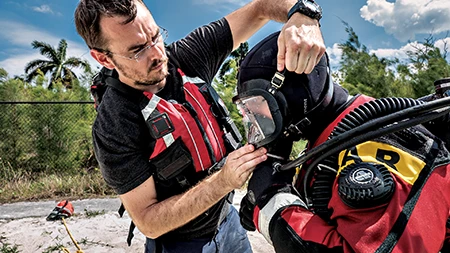
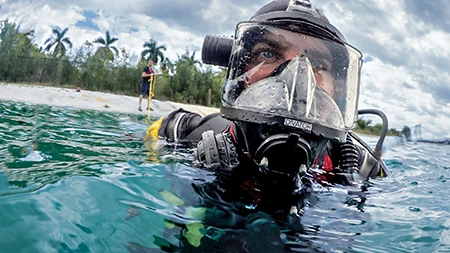
Public safety divers, hazmat divers, and environmental response teams don’t rely on aftercare to stay healthy. They rely on encapsulation: no exposed skin and no opportunity to breathe or ingest a hazardous substance.
For recreational divers who might end up in contaminated environments — whether intentionally or unintentionally — that means rethinking your gear and procedures. A special drysuit is the first step. A proper hazmat-capable drysuit should be thoroughly sealed, cleaned meticulously after each dive, and ideally used with an integrated latex hood.
These hoods cover the entire head and neck as well as an underlying full-face mask, leaving only the mask lens exposed. The nose and mouth stay protected under the mask, and the hood completely seals off the ears. The hood should be latex because even the best-fitting neoprene hood can trap a pocket of sludge against your scalp.
An Ounce of Prevention
Some divers shrug off precautions because they think a brief exposure doesn’t matter. Even a splash to the eye from a contaminated glove can lead to conjunctivitis, chemical exposure, or worse. The nose is a direct path to your sinuses and, ultimately, your brain. If there is no way to avoid potential contamination, ear beer has a place as a solid preventive when used properly, but it’s no substitute for protective measures.
In contaminated-water diving, the goal isn’t to clean up after but to avoid getting dirty in the first place. Proper hazmat and contaminated-water diving courses from reputable providers, along with an encapsulation gear setup, are crucial.
Your gear should include a hazmat-rated drysuit, integrated latex hood, full-face mask, chemically resistant gloves sealed to the suit, and boots or booties sealed to the suit. After diving always follow a decontamination protocol that includes gear scrub-down, thorough cleaning later, and wastewater containment. Topside personnel should do the same rigorous decontamination, as their exposure can be greater than that of an encapsulated diver.
This preparation is a significant step up from simply grabbing a standard wetsuit, but your health is at risk when the water is questionable. Treat all water in these locations as contaminated until it is tested and proven otherwise.
It’s also important to consider family members or anyone at home who might be in contact with you. What are you taking home with you on your gear? Who will be exposed to contamination gear if they are in the car with it or pick up your scuba mask and put it on?
Bottom Line
Ear beer is a fine aftercare ritual, but don’t rely on it, recreational dive gear, or bravado. Rely instead on smart preparation, full encapsulation, and a healthy respect for the invisible hazards lurking just beneath seemingly innocuous water.
It’s also not enough to only look for obvious debris or a rainbow shimmer on the surface. In dirty water diving, what you don’t see can hurt you.
© Alert Diver – Q4 2025