Coral and kelp are the ivory and ebony of ecosystems: mirrored opposites. Coral thrives in warm, clear, low-nutrient waters, while kelp lives in cold, nutrient-rich waters that tend to be murky because of those nutrients.
Coral needs herbivores like parrotfish to protect it from algae, whereas kelp is algae and needs predators to protect it from herbivores like sea urchins. Both are great places of wonder to dive in, although you try not to touch coral reefs, but swimming through a dense kelp forest can be a full-contact sport.
Kelp provides around $500 billion in services annually, from seafood production to storm protection, and — along with seagrass and mangroves — generates 20% of our oxygen. Kelp includes around 30 species of fast-growing macroalgae. The largest species, giant and bull kelp, grow more than 1 foot (0.3 meters) a day.
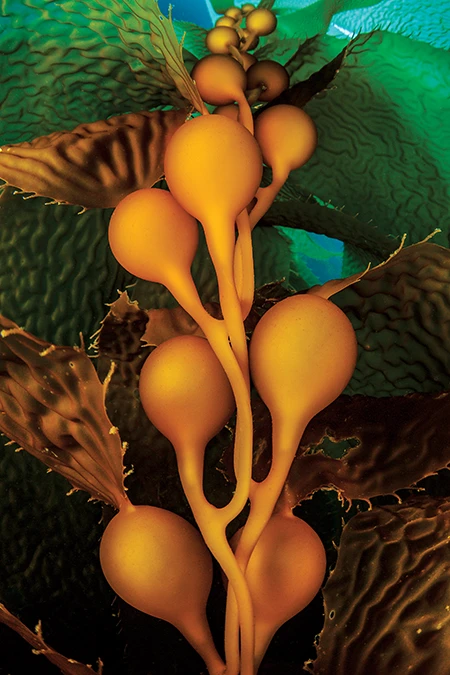
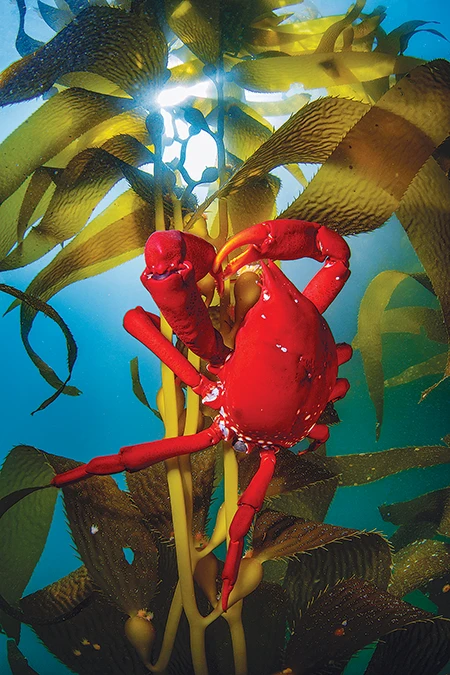
Kelp forests are more dynamic than coral reefs, with natural cycles of abundance, decline, and recovery. Historic declines have been linked to the loss of sea otters, lobsters, and large fish — the predators of kelp-eating urchins and other herbivores — to hunting, fishing, pollution from coastal sprawl, and wild harvesting for alginate, which is found in kelp cell walls and used as an emulsifier and binder in food, cosmetics, and other products.
Wild harvesting is contributing to kelp loss in northern Chile and southern Peru, where criminal gangs rip out entire kelp beds to meet black-market demand for alginate exports to China. Historic declines are driven by warming cycles, such as the strong El Niño of 1957, which reduced the Point Loma kelp beds at San Diego, California, from 15,000 to 150 acres (6,070 to 60.7 hectares).
In the early 1960s, a commercial kelp harvester dumped quicklime on the urchins that had replaced the Point Loma marine forest, burning them away along with everything else on the bottom. Kelp spores slowly resettled the area, so the kelp beds had fully recovered by 1967.
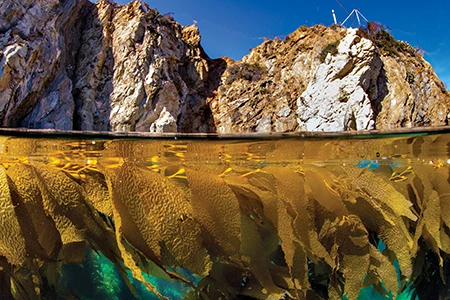
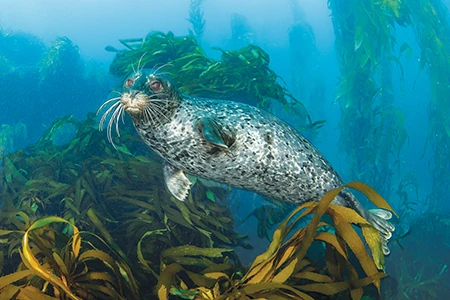
Marine heatwaves are now the primary driver of kelp loss, and natural recovery has slowed as ocean temperatures have risen. A 2026 study by scientists from the National Oceanic and Atmospheric Administration (NOAA) and elsewhere found that the ocean absorbed more heat in 2025 than ever before, triggering a record number of marine heatwaves.
A marine heatwave in 2010 hit Tasmania, off southern Australia, with little effect. The strengthening of the East Australian Current since the 1990s had already brought hotter water and long-spined sea urchin larvae to the island, wiping out 95% of its giant kelp. On the western coast of Australia, that same heatwave caused 60 miles (96.6 kilometers) of kelp forest to turn into filamentous turf algae, which began to fill with parrotfish and baby corals as the water transitioned from temperate to tropical.
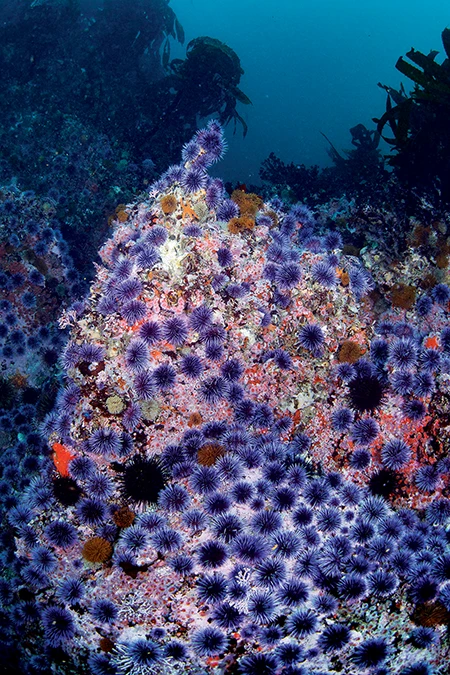
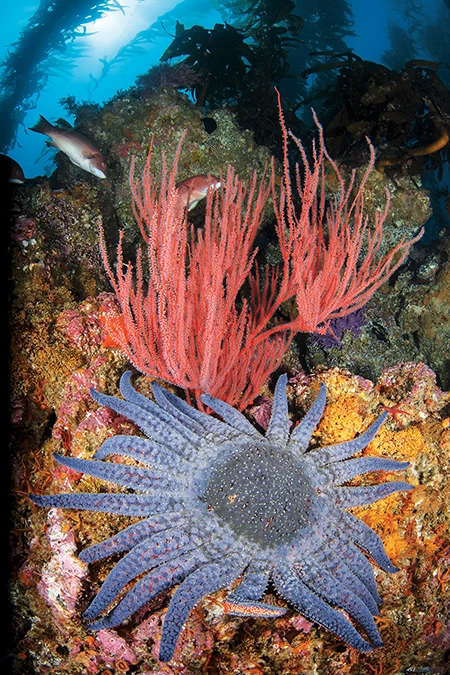
Beginning in 2013, a massive marine heatwave hit North America’s West Coast, weakening the kelp and supercharging a bacteria-based sea star wasting disease. The 2014 El Niño event made a bad situation even worse. The huge, fast-moving sunflower sea stars, the only remaining purple urchin predators in northern California and southern Oregon, were reduced to about 1% of their former population. Without them, the kelp-eating urchin population exploded, converting more than 300 miles (483 km) of bull kelp forest to urchin barrens.
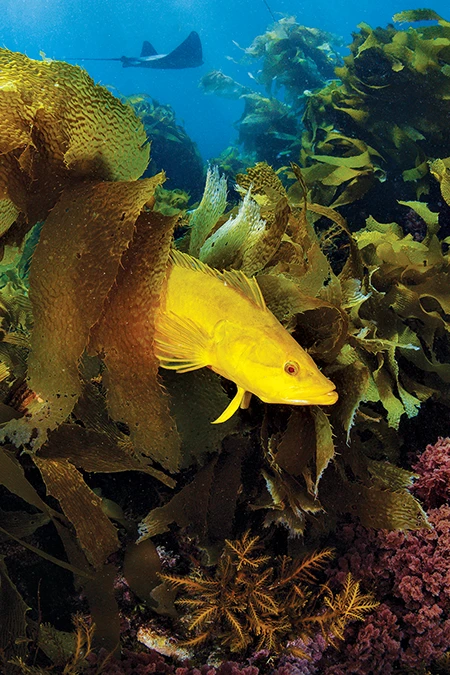
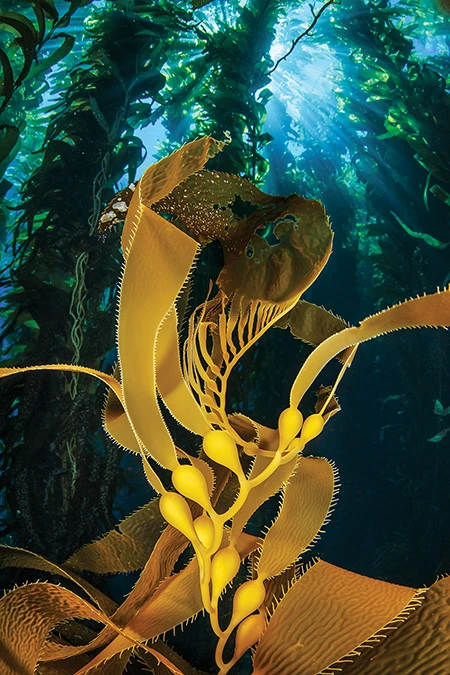
The giant kelp in central and southern California was less severely impacted due to additional herbivorous predators, including lobsters and large sheepshead fish. A study led by Monterey Bay Aquarium scientists and funded in part by the National Science Foundation found that sea otters there quickly ate the urchins in the absence of the sea stars.
Warming waters have also contributed to the conversion of southern Maine’s sugar kelp beds to far less productive turf algae.
There are winners and losers with climate change, so across the Atlantic in South Africa the dominant Southeaster wind is now blowing stronger and pushing surface water offshore more frequently, encouraging more nutrient-rich upwelling, which has resulted in giant bamboo kelp forest growth and expansion.
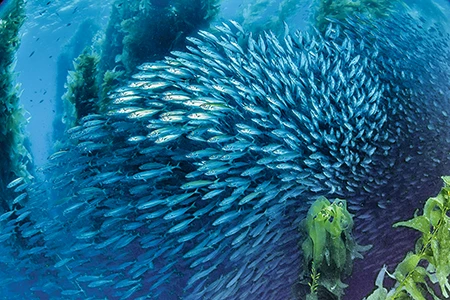
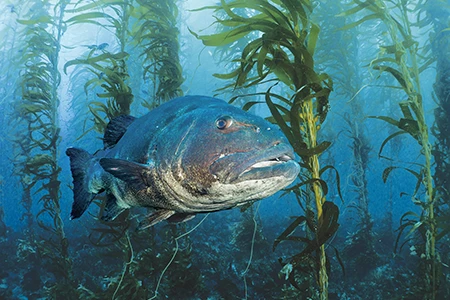
In Norway, where kelp loss of 40% to 80% is linked to past overfishing, warming waters have brought a boom in native brown crabs. The crustaceans happily eat their way through fields of mussels, razor clams, and green urchins, helping with the natural restoration of kelp in the herbivore-free seabeds.
Farther north in the Arctic Ocean’s Svalbard archipelago, large, healthy beds of mainly winged kelp have increased fivefold along the western coast as warming waters have reduced ice cover. But with the Arctic warming three to four times faster than the rest of the planet, gravel, sand, and mud from retreating glaciers could threaten to bury this new global kelp frontier in the coming years. Dive it while you can.
In traveling and diving for my new book, Forest of the Sea: The Remarkable Life and Imperiled Future of Kelp, I realized that fast growth rates and natural spore dispersion over greater distances than scientists previously believed are critical to global kelp restoration efforts. Even in the face of a 50% decline in kelp since the 1970s, these characteristics have made kelp restoration work more promising than similar efforts in coral restoration.
Both efforts, however, are labor-intensive and rely on a range of methods, including hundreds of thousands of dive hours from mostly volunteer divers. While boating and diving with the Bay Foundation off Southern California, I witnessed 80 acres (32 ha) of a restored kelp forest that had been all urchin barrens a decade ago. On the Izu Peninsula of Honshu, Japan, they used concrete blocks full of kelp spores to restore 2,000 acres (809 ha) of lost kajime (paddle weed) sea forest.
The global standard of hope to date is the initiative by South Korea’s fisheries agency. Recognizing kelp loss as a threat to the nation’s food security and fishing industry, the agency has invested $29 million per year to restore kelp forests. They have revived 50,000 acres (20,234 ha) to date, with a goal of restoring 125,000 acres (50,586 ha) by 2030.
In the Azores, Patagonia, and elsewhere, work is underway to establish large marine protected areas to preserve some of the world’s healthiest wild kelp forests. The Australian-based Kelp Forest Alliance and University of New South Wales researchers published a study in the January 2026 issue of Biological Conservation estimating it would cost $14 billion to protect 7.5 million acres (3 million ha) and restore 2.5 million acres (1 million ha) of kelp by 2040, noting that it’s a worthwhile investment, given that kelp generates half a trillion dollars in value each year.
“It’s bloody expensive to restore a kelp forest, and the next heatwave it’ll be gone again,” worries Craig Johnson, one of Australia’s leading kelp experts. “The reality is if we don’t start quickly bringing down greenhouse gases, we’ll lose all our giant kelp and seaweed by 2100.”
Other kelp advocates have expressed hope that with more divers becoming stewards of the most basic building blocks of life, including algae, we might still be able to change the course for kelp, coral, and ourselves.
Explore More
See more of the Kelp in a bonus video linked below.
© Alert Diver – Q2 2026