Cases of dengue fever, also known as break-bone fever due to its hallmark symptom of extreme joint pain, are substantially on the rise globally. Most cases occur in the warm tropical and subtropical areas of South Asia, Africa, and Central and South America.
Cases spiked in the U.S. in 2024, with the highest number in Florida. Data from the World Health Organization (WHO) show that 104 countries had reported cases of the disease in 2025. With 390 million cases reported each year, consider the statistics carefully when planning your next dive destination.
Florida’s humid, subtropical weather, especially in the south, is the perfect breeding ground for mosquitoes. Most dengue cases in Florida are travel-related, meaning those infected had recently visited other areas, but there are reports of locally transmitted cases.
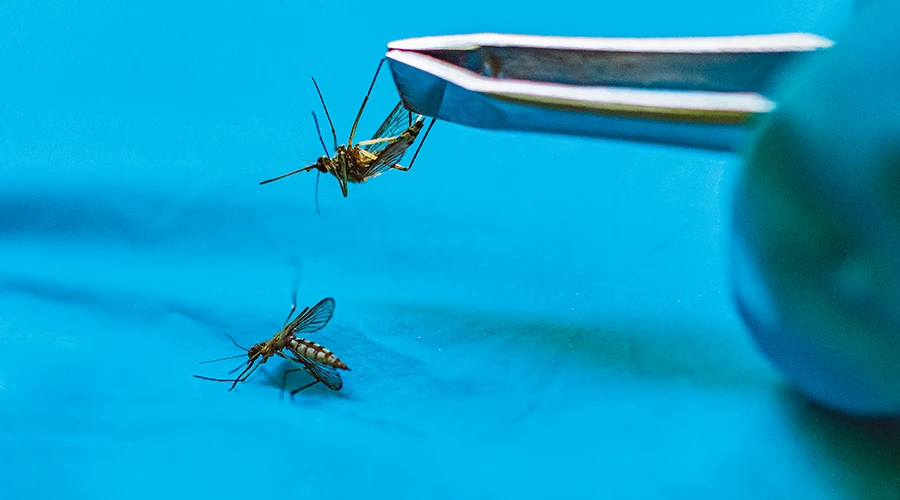
The dengue virus (DENV) belongs to the Flaviviridae family and is transmitted to humans by the Aedes mosquito species, which you can identify by the white stripes on its back and legs. The Centers for Disease Control and Prevention (CDC) estimates that roughly one in four people who become infected with the virus will develop dengue fever, but most remain asymptomatic.
Dengue’s incubation period is four to seven days from exposure to symptom onset; in some cases it can take up to 14 days. Symptoms include the following:
- High fever around 104°F (40°C)
- Pain behind the eyes
- Nausea and vomiting
- Rash
- Severe headache
- Joint and muscle pain
- Swollen glands
Fever can initially be absent, mild, or biphasic, so some early symptoms — such as nausea, vomiting, headache, eye pain, rash, lymphadenopathy, and abdominal or joint pain — could be confused with a dive-related injury if they’re first noticed after a dive. Other infections, including mosquito-borne illnesses such as Zika and chikungunya, may present similarly, hence the need for medical evaluation.
The WHO has three classifications for symptomatic dengue cases: with or without warning signs and severe dengue. Severe cases of dengue fever that include shock can occur during primary infection but often happen with a subsequent infection; a previous infection with one dengue strain can be followed by reinfection with another strain. Fortunately, dengue fever is rarely fatal.
If you become sick from this infection, stay hydrated and seek medical attention. Your physician may suggest managing mild cases at home with proper fluids and pain medication. Severe cases may require hospitalization to ensure adequate recovery.
No medications can cure dengue, but good fluid intake, rest, and a balanced diet are important. Measures that strengthen your immune system, increase your platelet count, and manage your symptoms to support recovery are beneficial. Avoid taking anything that can interfere with your body’s ability to clot, including nonsteroidal anti-inflammatory drugs (NSAIDs) and aspirin.
Nutritional supplements may be helpful. The American Journal of Tropical Medicine and Hygiene published a 2021 literature review that highlights studies from several countries on how supplementing with certain micronutrients may “offer hypothetical benefits to dengue fever patients via numerous potential mechanisms, including modulation of the host immune response.”
Some nutrients mentioned in the article are vitamins C, D, and E, and zinc. Kiwi, dragonfruit, and papaya are rich in vitamins A, C, and E, and potassium.
There is no known treatment for dengue, so prevention is key. The fear of mosquito bites may keep some people from spending time in nature, especially when planning their next dive vacation, but there are several preventative measures you can take to significantly reduce your risk so you can spend time outside without hesitation.
- Wear long sleeves and pants if you know you will be in a mosquito-prone area.
- Use insect repellent.
- Use a house fan in your backyard or patio to keep mosquitoes away.
- Place marigolds, lemongrass, and other mosquito-repelling plants around outdoor areas.
- Prevent standing water in items such as pet bowls, gutters, trash and recycling bins, bird baths, and children’s toys, as these are breeding grounds for mosquitoes.
- Install a bat house. Mosquitoes are one of bats’ favorite meals.
With proper planning, we can enjoy the summertime outdoors without fear of becoming the next human buffet for mosquitoes. When planning your next dive trip, consult the WHO or CDC at cdc.gov/dengue/areas-with-risk for details about your prospective destination to determine whether it is a risk area.
© Alert Diver – Q2 2026