Scuba divers train for a dynamic environment where gravity shifts, breath can control movement, and efficiency conserves energy. Divers often overlook one of the most effective training approaches: training in the same medium in which you dive.
Water aerobics can improve cardiovascular endurance, muscular strength, joint mobility, breath control, and comfort in the water. It can also help improve your understanding of how small adjustments can impact underwater control and efficiency. You can do water aerobics in shallow or deep water, in a group or individually. It will directly benefit your diving and long-term injury prevention while minimizing impact on your joints.
Shallow-water aerobics are typically conducted in chest-deep water with your feet on the pool floor. This stable environment is especially valuable for divers who want to refine movement mechanics without added balance demands. It also allows isolated targeting of specific muscle groups.
Deepwater exercises, where you can’t touch the pool bottom, require the body stabilizers to be continuously active. It removes stability and significantly increases core engagement. The suspended environment is more representative of snorkeling or diving conditions and necessitates a greater focus on breath control.
Group training offers the advantage of accountability. Scheduled classes promote regular exercise, and the camaraderie of group exercise is more enjoyable for many people. Guided movement builds confidence and allows instructors to provide real-time corrections and structured progression.
Training solo provides more personal space and the freedom to travel across the pool, lengthen kicks, widen arm sweeps, and perform propulsion drills without worrying about bumping into others. If you have the space, jogging in the water is a great addition to your training program that minimizes joint impact. Solo training offers flexible scheduling and more personalization.
Control is the focus of this workout. Water naturally encourages momentum, but divers benefit from deliberate, precise movements. If momentum takes over or technique begins to break down, stop, reset your posture and breathing, and regroup before continuing. Quality is more important than speed.
Complete three sets of each exercise. After finishing all four movements, return to the first and repeat the sequence. The goal is to complete three total rounds.
Vertical Flutter Kick
- Start in deep water with some clearance below your feet to avoid kicking the bottom.
- Wear a flotation belt, and cross your arms over your chest, or use a water dumbbell in each hand with your arms at your sides. Maintain a tall vertical posture.
- Fully extend your legs with your toes pointed.
- Initiate small, controlled kicks from your hips for 30 seconds.
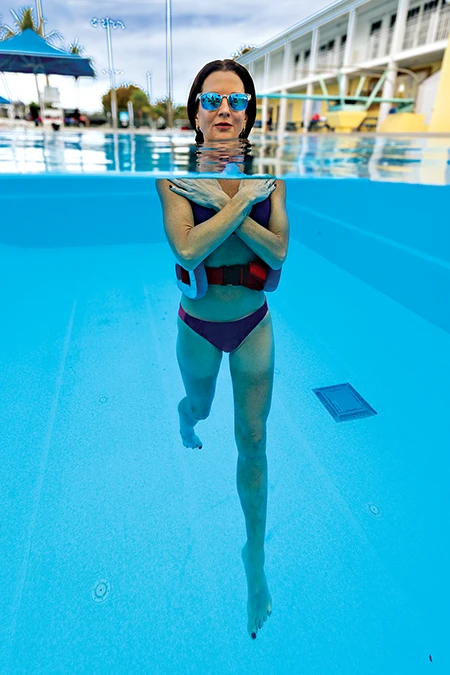
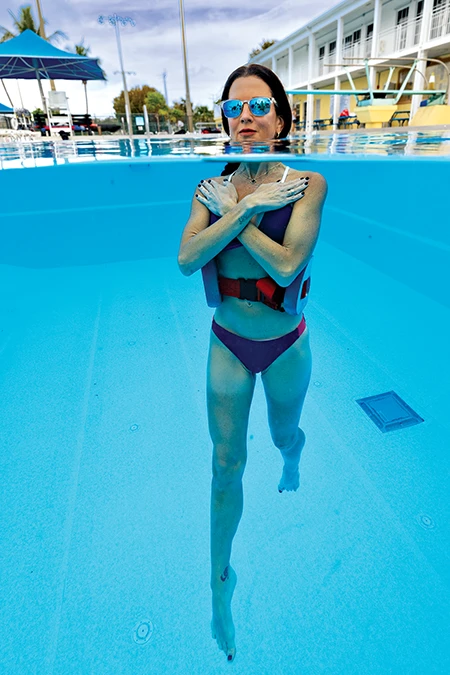
Tip: Keep legs extended and toes pointed, minimizing knee bend to mimic streamlined finning.
Modification: Reduce the time to 20 seconds to ensure proper form on every kick.
Challenge: Increase the time to 60 seconds.
Underwater Arm Sweeps
- Stand in chest-deep water with your arms at your sides.
- Sweep your arms forward from the shoulder to the surface and then backward to the surface. Your
range of motion should increase throughout the exercise. - Complete 15 to 20 repetitions.
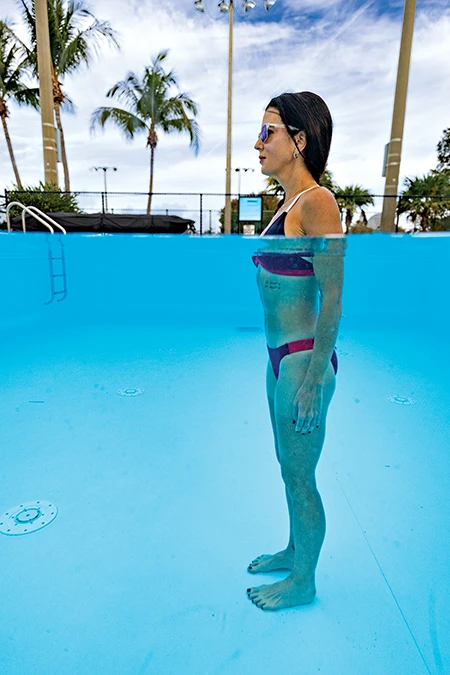
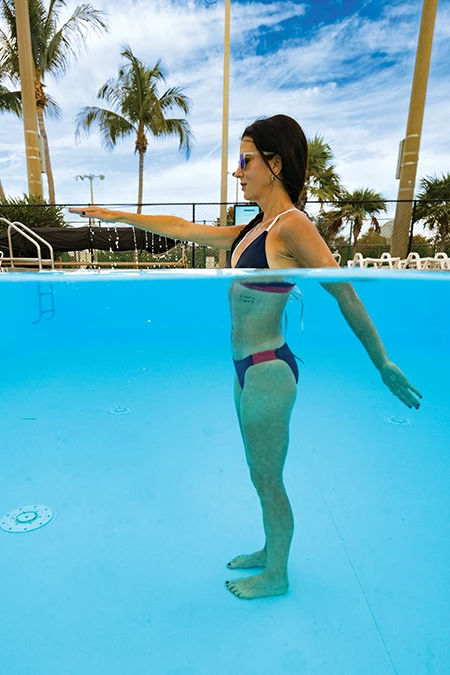
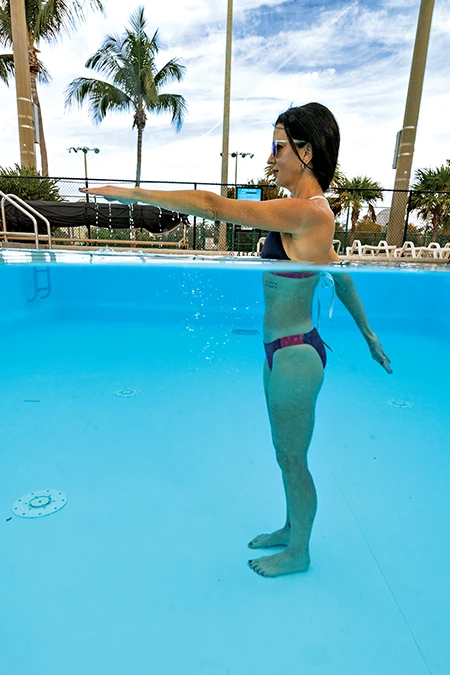
Tip: Maintain your body position, and resist the urge to let your feet or upper body sway with this motion.
Modification: Reduce the tempo and range of motion.
Challenge: Gradually increase speed or add water dumbbells while maintaining your body position.
Suspended Core Tucks
- Wear a flotation belt, and start in deep water with your arms folded across your chest, or use a water dumbbell in each hand with your arms at your sides.
- Bring your knees up toward your chest, and then extend slowly back to vertical.
- Complete 10 to 15 repetitions.
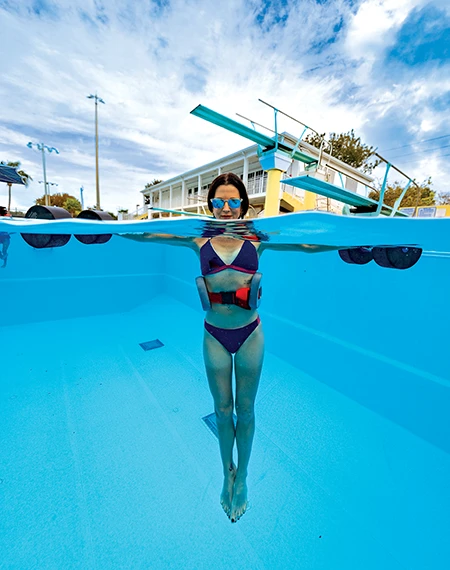
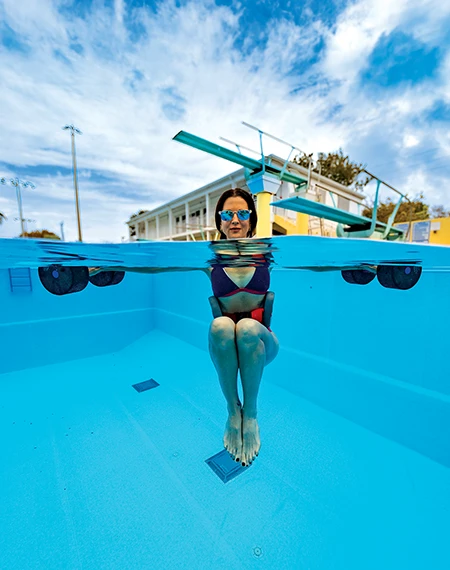
Tip: Control your breathing by inhaling on leg extension and exhaling when you bring your knees toward your chest.
Modification: Perform alternating single knee lifts in shallow water without a flotation belt or water dumbbells.
Challenge: Pause at the top for three to five seconds while maintaining the vertical positioning of your upper body in the water.
Traveling Lateral Lunges
- Begin in shallow water with your feet on the pool bottom and enough space to take a few lateral (side) steps.
- Take 10 side steps in one direction.
- Take 10 side steps in the opposite direction, returning to your original position.
- Repeat five times.
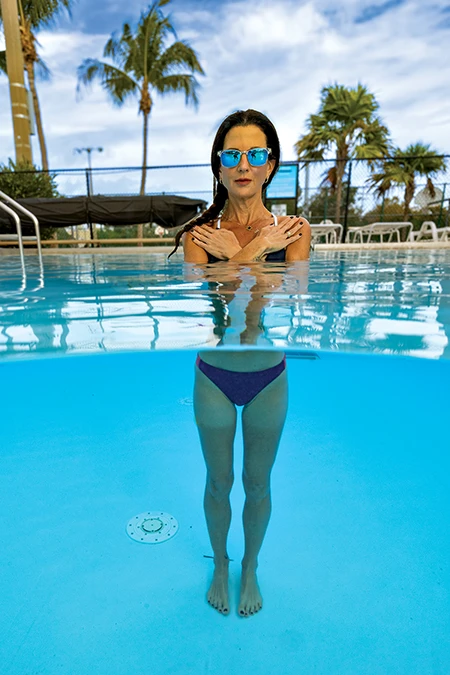
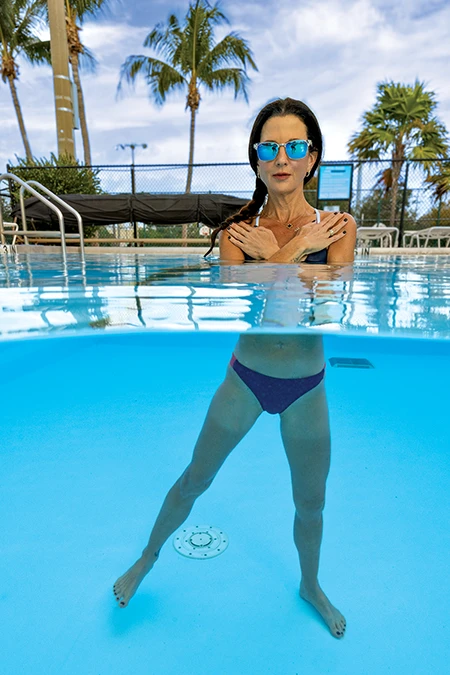
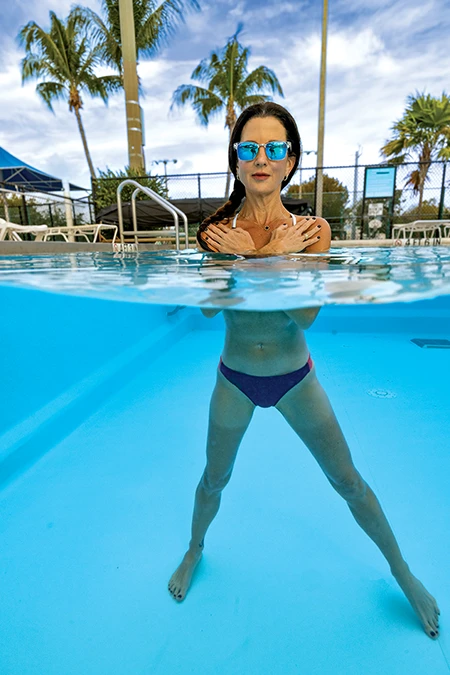
Tip: Ensure your upper body remains upright and under control with good, relaxed shoulder posture. Do not allow your shoulders to drift up toward your ears.
Modification: Reduce the number of steps in each direction, especially if space is limited.
Challenge: Increase your speed without letting momentum carry you.
NOTE: To avoid an increased risk of decompression sickness, DAN® recommends that divers avoid strenuous exercise for 24 hours after making a dive. During your annual physical exam or following any changes in your health status, consult your physician to ensure youhave medical clearance to dive.
© Alert Diver – Q2 2026