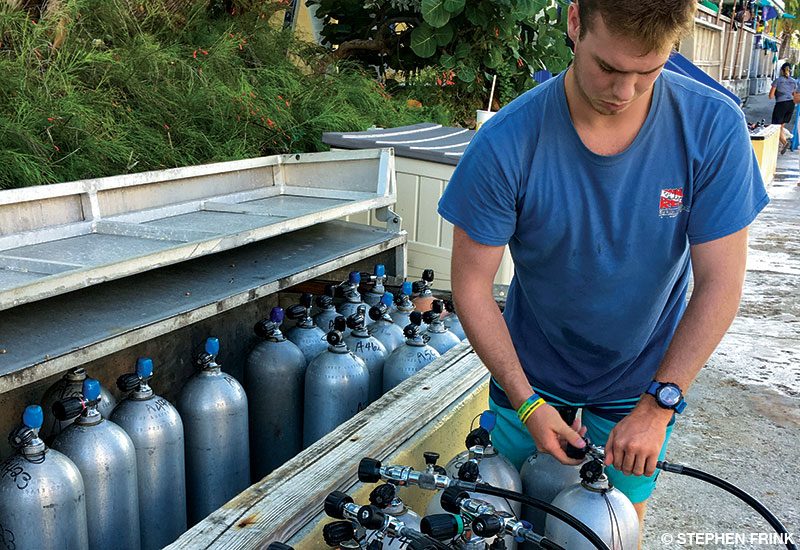
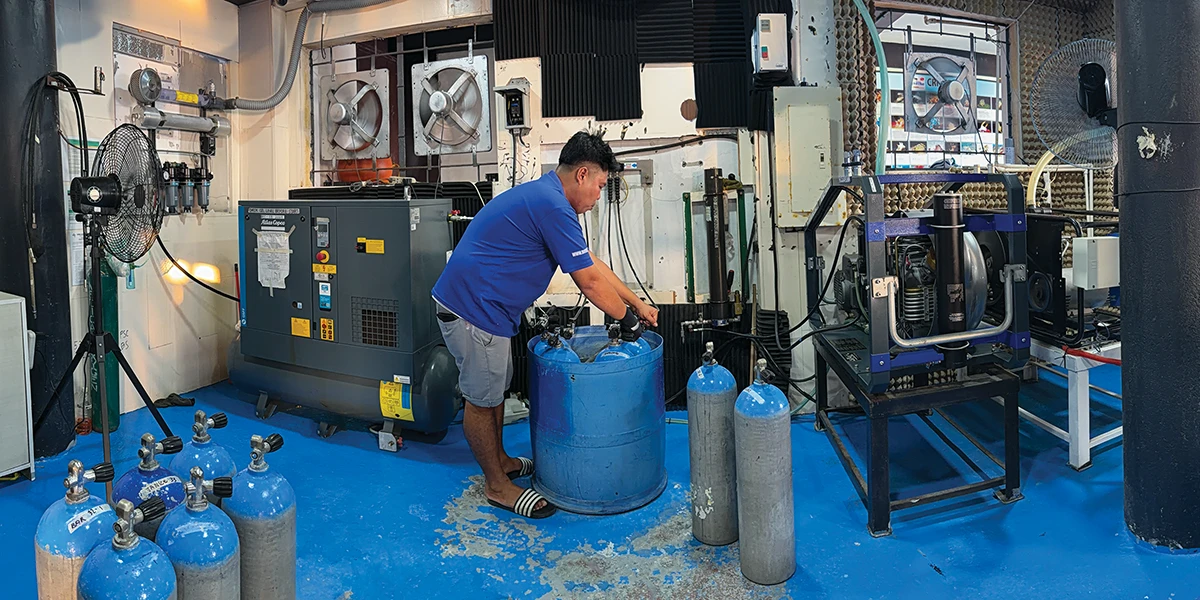
Users must operate cylinders within design parameters, such as filling only to the rated service pressure and having cylinders inspected by formally trained and qualified technicians and requalified by a reputable, recognized test facility. More than 90 percent of ruptures occur during filling, so diligent inspection during this process is critical. Cylinders should operate safely throughout their entire service lives if users adhere to design and operating conditions.
Drysuits enable divers to dive longer and test their own abilities. Do you know drysuit basics? Cultivate a better understanding of drysuits and how to find the right one.
SURFACE MARKER BUOYS (SMBS) AND DELAYED SURFACE MARKER BUOYS (DSMBS) are common and essential safety devices. These brightly colored, inflatable tubes, sometimes called safety sausages, are critical pieces of equipment […]
Enriched air, or nitrox, has become a trusted way for many recreational divers to extend no-decompression limits and reduce fatigue. By increasing the oxygen content and reducing nitrogen absorption, divers […]
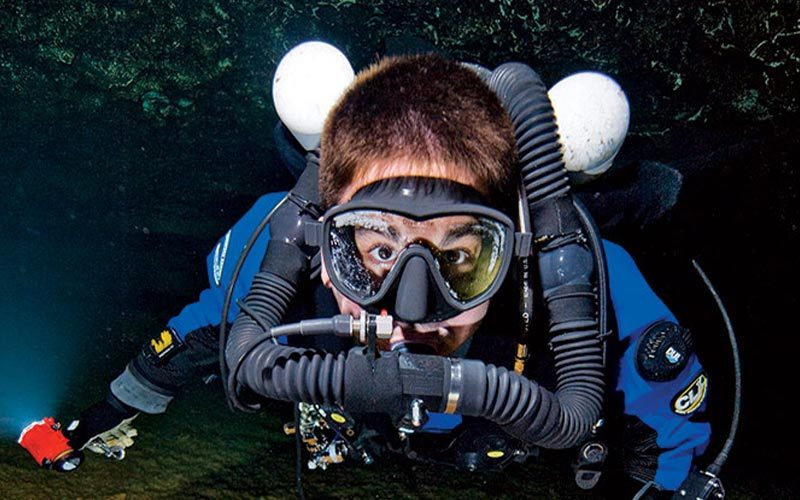
A rebreather diver respires an artificial atmosphere that changes dynamically with depth over the course of a dive.
A scuba regulator enables humans to breathe regularly. Get the basics on scuba regulators.
DIFFERENT TERMS CAN SOMETIMES DESCRIBE the same piece of equipment in the dive industry. What some divers call a dive light, for example, others call a dive torch. They are physically identical, so the names are interchangeable …
Faulty or improperly used gear can quickly change and impact a dive. Read gear-related dive incident reports and avoid these mistakes.
Do you know how to find the right pair of fins to fit your feet? Read our best tips on finding the right fins for you.
The dive light is essential equipment that can benefit all divers on most dives. There are several types of lights with various uses and a few key considerations you should make before purchasing. There is no one-size-fits-all approach to dive lights, so each diver must carefully consider their own goals and needs before deciding which model is most useful.