In a world of journalism where bits of information are curated for easy and often superficial consumption, deep immersion into a subject is an anomaly. No one dives more deeply into a marine or natural history subject than Thomas Peschak, but his coverage of the Amazon shows yet another level of commitment.
He invested 396 days on location over two and a half years — plus three years of research and preparation before traveling — for his National Geographic book, Amazon: A River’s Journey from the Andes to the Atlantic. The book reveals a comprehensive view of the world’s most iconic river basin, which is about 4,000 miles (6,650 kilometers) long and would run from Anchorage, Alaska, to Miami, Florida, if stretched out and superimposed on a U.S. map.
In terms of scale, the river’s watershed covers 11 countries and is nearly half the size of Australia. According to Peschak, there are dozens of distinct ecosystems, each as different as a coral reef is to a kelp forest. One river ties it all together, and one photographer needed to tell the story.
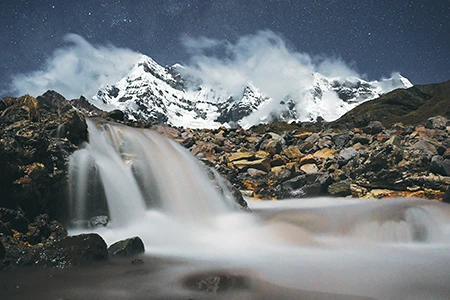
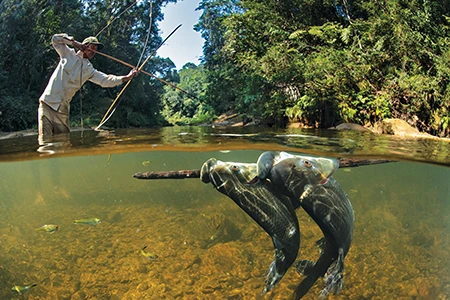
This is a massive accomplishment. I was astonished by the degree of difficulty in your image captures in your book — not only the technical excellence in challenging environmental conditions, but also the logistics of getting to the location where you clicked the shutter. Tell us the backstory.
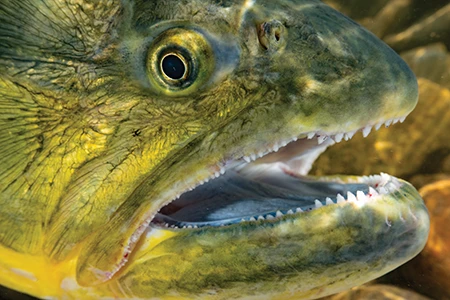
I conceived the idea over a decade ago. I had the thought of doing something in the Amazon after reading some scientific papers and National Geographic articles, but the timing wasn’t right. I had been doing underwater ocean photography pretty much full-time for almost 20 years, however, and was starting to feel complacent. I wanted to reinvent myself and challenge myself again — to get out of my element and to feel what it was like to be a beginner again.
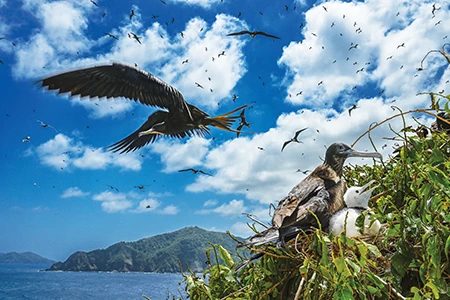
So I spent several years photographing above-water articles for the magazine, covering topics such as the global seabird crisis, the Kalahari Desert, and the remote wilderness of Niassa in northern Mozambique, which were invigorating experiences. Despite missing underwater photography, however, I was still not quite ready to get back to ocean stories.
Around that time I came across a statistic that stopped me in my tracks: A 2023 study identified 434 dams that had already been built across rivers in the Amazon watershed and another 463 that are proposed. Dams at this scale are a death knell for freshwater biodiversity, as they block animal migrations and disrupt the critical flow of nutrients and sediments downstream.
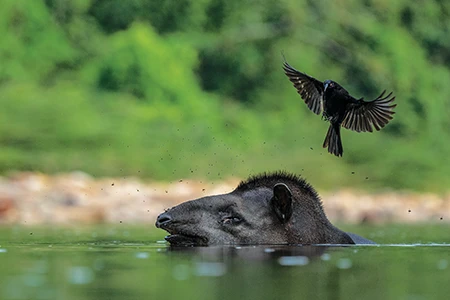
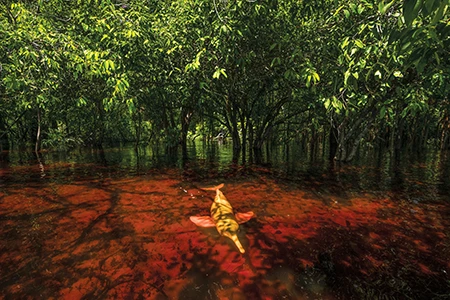
If you add climate change, gold mining, and overfishing, the aquatic biodiversity of the Amazon River faces more conservation challenges than the marine ecosystems I have been helping protect for more than 20 years. The time was finally right to dust off my decade-old Amazon story idea.
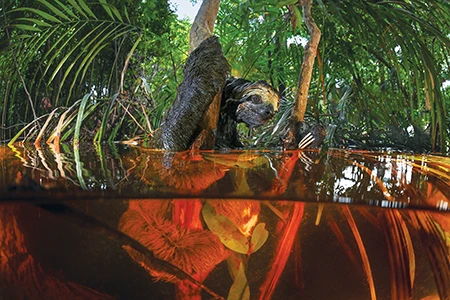
My first proposal that National Geographic greenlit envisioned a 30-page feature on the underwater world of the Amazon Basin, with a six- to eight-month field time commitment, but that was delayed for about two years due to the COVID-19 pandemic. During that time the National Geographic Society renewed its partnership with Rolex’s Perpetual Planet program, and we turbocharged my Amazon idea into something much bigger: a multiyear marriage of science and storytelling.
In addition to supporting my longer 396-day photography odyssey across the Amazon River Basin, they would also provide substantial grants to some of the best local scientists conducting aquatic research across the watershed. I was poised to incorporate their endeavors and findings into my photography and storytelling.
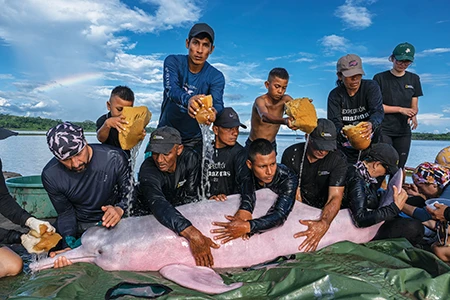
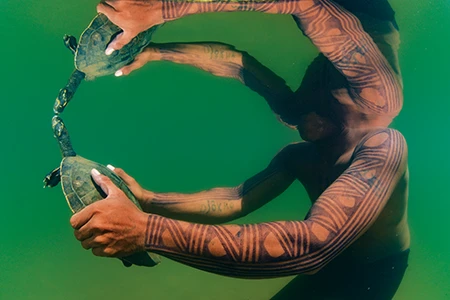
The project grew to be a complete National Geographic issue, and I became only the second photographer in the publication’s 137-year history to photograph an entire issue. I took nearly 500,000 photos along an altitudinal gradient ranging from 19,685 feet (6,000 meters) above sea level to 65 feet (20 m) below the surface. Temperature extremes ranged from 5°F to 104°F (–15°C to 40°C).
My time there spawned a Disney+ film celebrating incredible research carried out by local scientists, now airing as Expedition Amazon. A second documentary focused on my journey — and filmed by my long-suffering assistant and videographer, Otto Whitehead — is currently in production. I didn’t want the distraction of a dedicated film crew in such challenging and arduous locales, but Otto was with me for all 396 days, and he had the technical and artistic expertise to film it all. We covered everything, stills and video, with Nikon Z9 cameras. Nothing ever broke, and the image and video quality were outstanding.
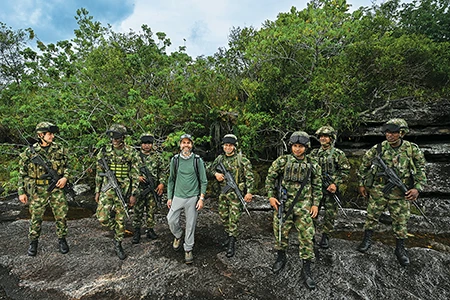
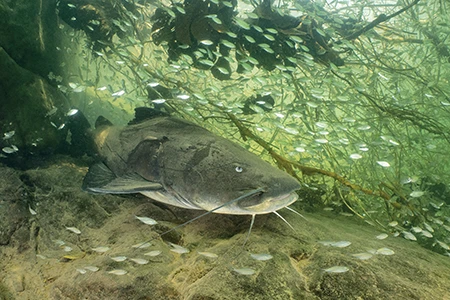
Are you glad you came to this project in the digital era? Can you imagine taking it on using film?
It cuts both ways. I come from a film background and spent my formative years shooting Fujichrome. Could I have gone into the Amazon project with 2,000 rolls of film and a couple of drybags? Absolutely.
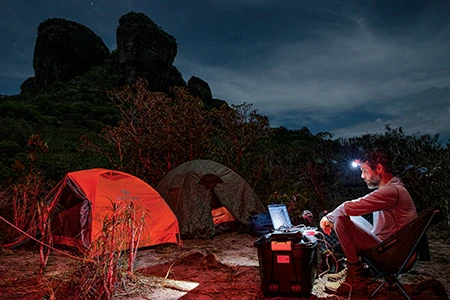
It was a massive effort to move the computers, solar panels, generators, and digital paraphernalia around with us, but the immediacy of review, increased resolution, and safety of redundant backups of all my photos make digital the tool of choice.
There were moments when the dark of night was the only time I could edit my photos without being swarmed by sweat bees so thick they would invade my eyelids. At those times I thought I could be asleep in my tent if we were shooting film. I’m pretty sure Otto was also happy to have endless digital capacity rather than less than three minutes on a spool of 16mm film.
Did you have any physical challenges in these extraordinarily remote regions?
Fortunately, we were both fit and stayed healthy, and we didn’t do 396 days in a row. I would typically work for three or four months in the field before needing to switch out my gear anyway. During the breaks I would gain back some weight and build up my resistance.
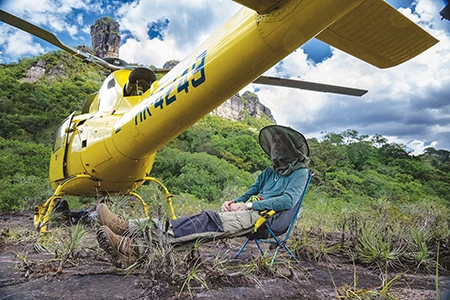
The environments differed drastically. Sometimes I would have 1,200 pounds (544 kilograms) of gear loaded up on pack horses and llamas, and at other times it would be a much smaller gear complement on a helicopter ride to some remote headwaters. We had multiple levels of insurance to cover an evacuation, including all our team being insured through DAN. It’s better to have it and not need it, which was the case.
We had a few close calls, and there was no margin for error. One of the Cessnas we had been using crashed into the rainforest, but not with our crew aboard, and nobody died. When you research how many small planes are lost forever in this vast wilderness, you become aware that there are risks beyond your efforts to mitigate that are integral to the project.
While the wildlife was not out to kill us, and the environment was not inherently lethal, we were so remote that a small problem could quickly grow large due to the challenges of evacuation.
What’s next for you? This project will be hard to top.
After 30 years of working professionally across most of the world’s oceans, first as a marine biologist and then as a photographer, it can feel like there are very few places left — apart from the deepest seas — where no one has ever dived. There is almost always information about what you are likely to encounter and where, and in your mind’s eye, you probably already know exactly how to photograph it.
There was none of that in the Amazon. I had to figure out things for myself underwater as I went along, and I thrived on that challenge. I was never one to repeat what others have already done, and it is getting harder to find iconic topics of consequence.
As far as ocean stories go, I am not yet fully committed to anything new. I’m keeping my options open and seeking a challenging project that will drive measurable conservation impact and yield a novel, multiyear body of work. I’ll know it when I see it.
Explore More
See more in the videos linked below.
© Alert Diver – Q2 2026