Three Years Inside Mexico’s Sardine Run
When the Pacific Ocean cools each autumn and the first offshore winds stir the nearby mangroves at Magdalena Bay, the unassuming harbor in Puerto San Carlos, Mexico, comes alive. Fiberglass pangas line up at dawn. Divers load freediving fins, and boat crews test radios. For a brief, electrifying window from October through December, this humble fishing village in Mexico’s Baja California Sur is the gateway to one of our planet’s most dynamic wildlife events: Mexico’s annual sardine run.
We have returned at the same time for three consecutive years to chase a phenomenon that feels half nature documentary and half fever dream. Each season has revealed something new about the predators, the prey, and the fragile balance that allows this event to unfold.
Built on Instinct and Opportunity
Mexico’s sardine run is not a migration in the classic sense. Baitfish — mostly sardines, anchovies, and mackerel — maneuver into dense schools, but only when conditions align. Water temperature, nutrient availability, and plankton productivity fluctuate significantly from year to year. One thing, however, remains constant: the response.
Striped marlins, sea lions, and other pelagic hunters home in on baitballs with uncanny accuracy. Seabirds overhead detect baitfish from astonishing distances. Pangas, in turn, follow the birds. Out here, everything follows something else.
“The birds follow the fish, the marlins follow the birds, and you follow me,” proclaims our boat captain.
2023: A Season of Firsts
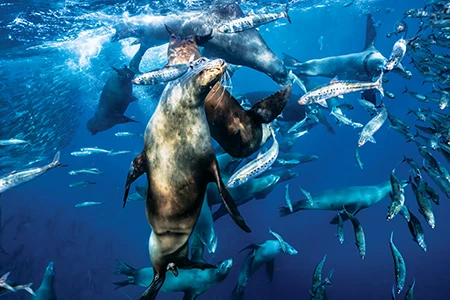
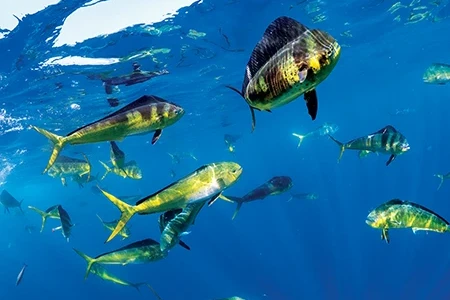
The local captains still talk about our first sardine run season in 2023 with a smile. The baitballs were abundant, dense, incredibly large, and, importantly, static. The dominant predator was dorados, also known as mahi-mahi or dolphinfish, which arrived by the thousands, adorned in their dazzling hunting colors of gold, blue, purple, and green. Local fishers told us they had not seen anything like it for more than 60 years. The dorado numbers are thought to have exploded in response to warmer ocean currents.
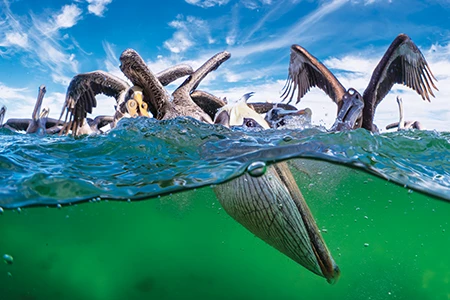
Sea lions joined the chaos like overcaffeinated gymnasts, tearing apart the schools as frigatebirds and brown pelicans dive-bombed from above to snatch their share. Marlins did their best to muscle in, loitering deep, making a few shy passes, and vanishing as quickly as they arrived. Whether this reflected the dominance of other predators or broader ecological forces was unclear.
The ocean pulsed with energy like nothing we had ever experienced. Sardines on the baitball’s edges would sense predators, and then panic and rush in, pushing fish in the center to the edges, creating a hypnotic, rolling motion. Huge schools of bonitos would occasionally arrive, decimating what remained of the baitfish in a frenzy.
That first year also delivered an encounter with a family of orcas. The ocean felt generous.
2024: A Season of Speed
Returning in 2024 was like arriving at the same theater but for a different show. Many of the previous performers returned except for the mahi-mahi, which went from abundance to depletion.
Without the disruption from mahi-mahi, marlins and sea lions played the leading roles. Multiple marlins hunted cooperatively and methodically — a behavior we don’t fully understand. A marlin would peel off from the periphery, angle its body, and then lance through the baitball with surgical precision and speed. Within seconds, another would follow. Marlins were also in force at the surface, dynamically hunting with relentless, fluid energy.
Vast numbers of sea lions hunted dense schools of mackerel and sardines, disrupting marlin strikes by stealing the bait and creating chaotic surface conditions. The sea lions surged through the baitfish in aggressive, coordinated drives, herding them into tight, shifting groups. Their style was frenzied yet precise, ramming, corralling, and striking with relentless speed.
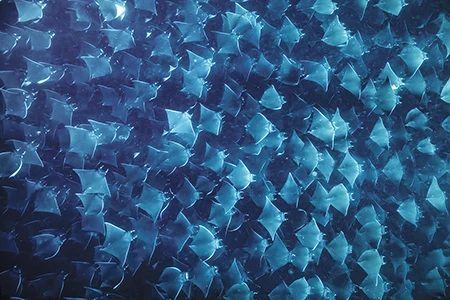
Photographing the scene was exhausting. Baitballs would explode, regroup, and vanish into the blue before we could adjust our position or camera settings. A colossal fever of mobula rays rewarded our endurance.
2025: A Different Energy
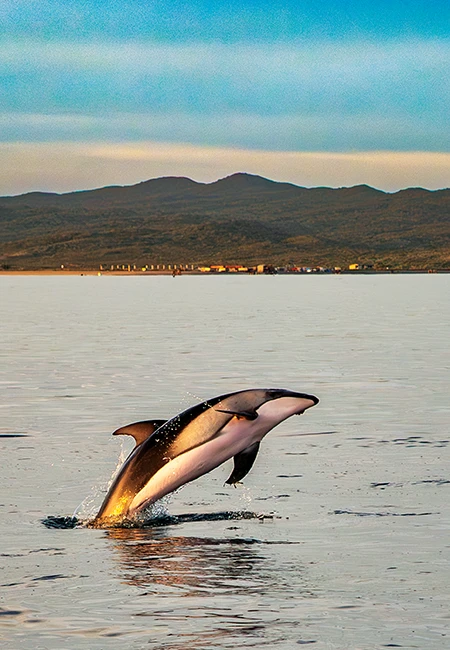
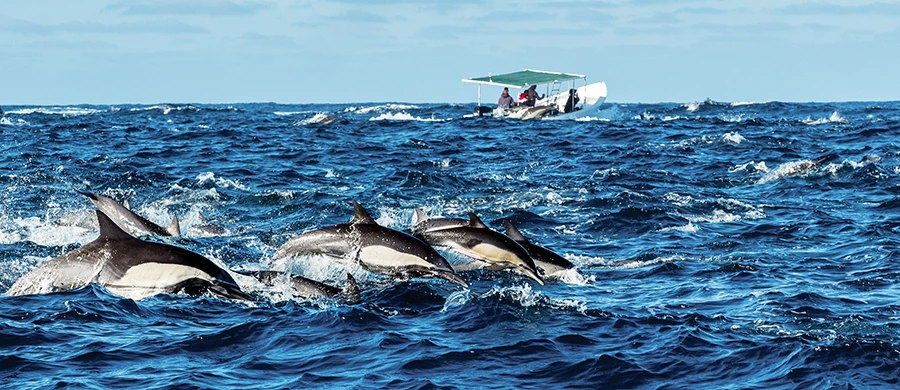
Last year unfolded with a different energy, marked by an extraordinary and diverse mix of hunters and marine life drawn to the baitfish. Alongside marlins, sea lions, and seabirds, super pods of thousands of dolphins and other unexpected visitors added to the show.
In October, operators and guests reported silky sharks in the hundreds predating on baitballs. Unlike the well-charted journeys of whales, silky sharks’ nomadic movements are dynamic, shifting with the pulse of currents, temperature, and prey. Their migrations are not linear but a response to a changing ocean.
This was the first time operators had seen silky sharks in such numbers; as with the mahi-mahi of 2023, the thought was that the sharks arrived with the warmer ocean currents. By the time we slipped into the sea there a month later, the water temperature had cooled, and the silky sharks had left.
The most striking change we witnessed in 2025 was the size of the baitballs. Instead of large, steady, and cohesive like we had experienced in previous years, they were small, scattered, and fragmented. They were faster-moving and prone to collapse under pressure, never staying static for more than a minute or two.
Even though the baitballs were small and less frequent, predators were still abundant. There was also more intensity to our underwater interactions. We sensed the predators were hungrier and foraging more aggressively, making the baitballs more stressed and the competition fiercer. It was a reminder that abundance and vulnerability can coexist.
The scarcity of baitfish led to fewer sea lions hunting than what we witnessed in previous years. Most appeared to be conserving their energy, resting in a huge colony on the nearby beach.
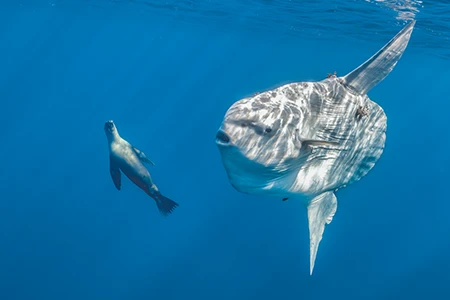
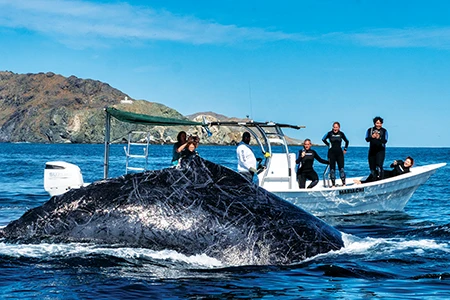
This season had exceptional cetacean diversity around feeding areas, with visits from humpback and Bryde’s whales, multiple dolphin species, and even false killer whales and orcas. The trip also gifted us a sunfish — a solitary giant drifting like a wandering ocean moon.
Ocean Physics, Prey Availability, and Us
Our idea in the first year was simple: Document the behavior of predators as part of a personal photography project. By returning at the same time each year, however, we were actually documenting change. No two seasons have been the same, and no two days have been identical. Some mornings delivered action so intense it left us breathless, while others gave us a blue desert and empty horizons.
Mexico’s annual sardine run is not merely a seasonal attraction but also a barometer for ecosystem health, a measure of the shifting balance between predator and prey, and a living example of broader environmental change.
While there is no single explanation for why each year has been different, in 2025 it appeared there was not enough baitfish for all predators to feast. Research on Pacific sardines and other small pelagic species indicates that their populations can fluctuate dramatically. Ocean temperatures, the strength and timing of upwellings, and the availability of plankton are all key drivers. Small changes to any one of these influences can ripple into the following season.
Fisheries agencies such as the National Oceanic and Atmospheric Administration (NOAA) have documented the boom-and-bust nature of Pacific sardine populations, noting that fishing pressure combined with environmental variability can intensify declines or shift where and when sardines aggregate.
To put it simply, warm years with weak upwellings can reduce plankton and hinder juvenile sardine survival, producing smaller, more scattered baitfish schools months later. A colder and more productive year can therefore do the opposite. At a local scale, winds and currents can also concentrate or disperse baitfish schools in a matter of hours.
The science, however, makes one thing clear about sardine runs like the one in Mexico. Although natural variability plays a large role in shaping them, they are also no longer untouched by human interference.
Local sources express concern about sardine and mackerel fishing in the area and about climate-driven changes in ocean temperatures that are beginning to impact the arrival of baitfish schools, affecting marine life and the local communities that depend on this annual event for their livelihoods.
Although the Pacific sardine fishery has been closed in the U.S. since 2015, when biomass estimates fell below management thresholds, these same sardines migrate to Baja California Sur, where Mexico allows the fishery to remain open.
Communities and Local Knowledge
There is no question that this seasonal wildlife event has reshaped and reenergized the local economy in Puerto San Carlos. Instead of hauling in and processing fish, many local fishers have traded their fishing nets for guiding photographers, filmmakers, freedivers, and nature lovers. This shift has brought reliable, steady income to local communities, creating jobs far beyond the water and giving the entire community the drive to keep their local ecosystem intact, rich, and abundant.
One thing that strikes us each year is how much local knowledge continues to shape our success. People such as our boat captain, Gabino, who is a pioneer in ecotourism, have spent decades on these waters and reliably put us into the best action. Their knowledge of currents, bird lines, subtle surface cues, and animal behavior now underpins a rapidly growing ecotourism industry. The skills they once used to take from the ocean are now focused on respecting, protecting, and responsibly sharing it.
What Will 2026 Hold?
While every season looks different from the one before, the health of marlins, sea lions, dolphins, pelicans, whales, and other species depends on an abundant and predictable forage of baitfish. For a system as tightly interlocked as the Mexican sardine run, protecting baitfish such as sardines and mackerel and regulating their harvest are key to keeping these multi-predator aggregations resilient.
At the local level in Puerto San Carlos, conservation is no longer an abstract idea. It is intrinsically tied to livelihoods, pride, and a future where abundance provides greater opportunity. Strengthening the livelihoods of the community and recognizing the role that local people play in stewardship is as important as any regulation of sardine and mackerel fisheries.
We will return again this year, understanding that each season is unpredictable and the ocean does not owe us a performance. If we want one of Mother Nature’s greatest shows to continue, we will have to earn the privilege of watching it.
How To Dive It
Getting there: The easiest route is to fly into La Paz (LAP) or San José del Cabo (SJD), Mexico, and then continue to Puerto San Carlos by rental car, bus, or prearranged transfer through your operator. If driving yourself, travel only during daylight hours.
Puerto San Carlos offers a handful of simple, comfortable hotels with warm Mexican charm and hospitality. They are well located for town services, including local cantinas serving delicious food and drinks.
Conditions: The sardine run occurs from October through December. Average temperatures drop from 75°F (24°C) in October to 71°F (21.7°C) in November and 66°F (19°C) in December, with dramatic variations driven by cold upwellings. November is often considered the peak month for predator activity. Be prepared for rough surface conditions and long hours on the water.
A mask, fins, snorkel, and 3-5 mm wetsuit are sufficient, while freediving fins may help experienced swimmers for this primarily snorkeling and freediving adventure. Bring a windproof and waterproof jacket, warm layers, sunscreen, hats for cold and sun, and sunglasses for protection during navigation between stops.
A cooperative of former local fishers leads trips on their 25-foot (7.6-meter) pangas with outboards. The cooperative sets the rules of engagement at and below the surface, ensuring respectful, responsible interactions with wildlife and among guests. Some regional operators also offer liveaboard trips, with itineraries varying by season.
Other activities: If you want to add scuba diving to your sardine run itinerary, Los Islotes, near La Paz, offers memorable encounters with playful California sea lions in clear, shallow water that is perfect for wide-angle shooting. On the mainland, Mexico’s cenotes boast freshwater cavern systems and exceptional underwater image-making opportunities. Cabo Pulmo’s protected reefs support dense fish life, while far offshore the Revillagigedo Archipelago (Socorro) delivers Mexico’s ultimate big-animal diving, with intimate encounters with giant mantas, sharks, dolphins, and whales.
Explore More
See more of the Shifting Sea in bonus videos linked below.
© Alert Diver – Q2 2026