Tight neck seals can be hazardous
Even experienced divers and instructors may unexpectedly experience lightheadedness or loss of consciousness during a dive for numerous reasons. Causes may include decompression illness, barotrauma, gas contamination, dehydration, stroke, seizure, hypoxia, cardiovascular disease, or dysrhythmia.
Another possible mechanism is stimulation of the carotid sinus reflex. The carotid sinus is a small sensory area along each carotid artery that helps regulate blood pressure by monitoring the force of blood moving toward the brain. The body may interpret pressure in this area as elevated blood pressure, prompting a reflex response that slows the heart rate to lower the blood pressure.
This reaction can be dramatic in some individuals. A sudden drop in heart rate and blood pressure can lead to dizziness, confusion, lightheadedness, vision changes, or loss of consciousness.
If the reaction is pronounced, this response is known as carotid sinus hypersensitivity. Neck position, vascular compression, exertion, dehydration, underlying cardiovascular disease, and other dive-related medical problems can play a role in triggering or worsening this physiological response.
External pressure on the neck, such as pressure from an improperly fitted drysuit neck seal, may also contribute to this reflex. Designed to prevent water from entering the suit, these seals are often made from latex or silicone and must be trimmed carefully to fit the diver comfortably.
A neck seal that is too tight can exert continuous pressure on various structures in the neck, including the carotid sinus and other important compressible vascular structures. The effect on land may be subtle at first, causing discomfort or a feeling of tightness. Underwater, however, the resulting reduction in blood flow and heart rate can lead to impaired judgment, weakness, disorientation, and unconsciousness.
The symptoms of carotid sinus syncope can resemble exhaustion, dehydration, panic, or cardiac issues, so the underlying cause may not be immediately recognized. In the following two episodes involving improperly fitted neck seals, the symptoms appeared consistent with possible carotid sinus syncope, although follow-up testing would be necessary to fully confirm the diagnosis.
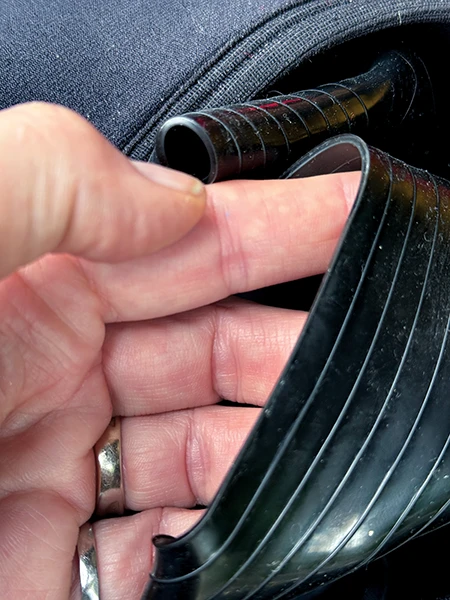
Incident One
Many years ago I was conducting training for a local public safety organization at a regional quarry when two divers emerged from the water, dragging a third diver behind them. An experienced instructor had become distressed at depth and then unresponsive. His students reacted quickly and brought him safely to the surface and then to the shore.
Fortunately, dive medics were present and immediately evaluated the diver, stabilized him, and requested emergency medical services. Due to the urgency of the situation, they began cutting away his drysuit to remove it. His condition changed dramatically when the neck seal was cut, suggesting that it may have caused or contributed to the loss of consciousness.
It did not rule out other dive-related or medical causes, however, and the diver was transported to the hospital for further evaluation. A physician’s examination revealed fluid in his lungs. Had he refused follow-up medical care, he might have developed more serious complications.
Incident Two
During a dive event at another local quarry nearly 10 years later, I watched as friends and students pulled another instructor from the water after he had become distressed at depth and needed rescue. He was pale, lightheaded, and unable to think clearly.
The students helped him remove the drysuit, provided fluids, and kept him seated while he recovered. As the neck seal pressure was relieved, his symptoms rapidly resolved.
Two incidents a decade apart reinforce the same lesson: Improperly fitted neck seals may contribute to or can cause a serious medical hazard, even among seasoned professionals. In both situations, well-trained, competent students and supportive bystanders saved the lives of dive professionals, demonstrating that instructors should plan for emergencies that include themselves as potential injured persons when preparing their courses.
Lessons Learned
These incidents highlight several critical lessons for divers and instructors. A drysuit neck seal must be fitted correctly. A properly trimmed seal should keep water out while allowing normal breathing, swallowing, and head movement. It should never feel restrictive or create a choking sensation.
Any diver using a new drysuit should first wear it on land and in controlled underwater conditions before relying on it in demanding environments.
Divers and support personnel should understand the possible warning signs of carotid sinus stimulation, including dizziness, unusual fatigue, confusion, pale skin, vision changes, and sudden changes in consciousness.
The safest divers acknowledge that unexplained loss of consciousness or altered mental status warrants medical evaluation, even if the diver appears to recover quickly, because the cause could also be a life-threatening condition that requires prompt intervention. Responders should not assume that relieving a tight neck seal fully explains the event.
Whether you are a new diver or a veteran instructor, ensure your equipment fits correctly, seek assistance when needed, and never ignore signs that something is wrong. Scheduling regular dive physical evaluations and reviewing even small symptoms with your physician help maintain your fitness to dive.
The best example any instructor or diver can set is to prepare carefully, maintain their equipment and fitness, and place safety above convenience or pride.
© Alert Diver – Q3 2026