Part 1: Before the Dive
Most divers think about decompression in terms of depth, bottom time, ascent rates, and safety stops. But the body experiences a dive as more than just time underwater. Decompression stress begins to take shape before the dive even starts and continues for hours afterward.
This article is the first in a three-part series exploring how everyday choices before, during, and after diving can influence decompression stress and overall dive safety. Part 1 focuses on the conditions we bring to the dive before we enter the water.
A Dive Doesn’t Exist in Isolation
Diving can be a rewarding recreational activity, but like all human pursuits, it is not without risk. Human biology evolved on the planet’s surface to support metabolism in a relatively stable barometric environment, delivering oxygen and removing metabolic waste.
Our bodies are not meant to descend in the water column while breathing compressed gas, absorb inert gases under pressure, and eliminate them as we return to the surface. It is technology, not biology, that allows us to explore underwater. Compressed-gas diving challenges the human body to function in an environment for which it did not evolve.
As divers, we learn that a dive begins when we leave the surface and ends when we begin our final ascent. That definition originated alongside the use of dive tables to estimate no-decompression limits and time underwater. From a physiological perspective, however, the dive begins before we enter the water and continues long after we surface.
What a diver does before entering the water shapes the physiological state they bring into the dive. What happens during the dive influences how inert gas is absorbed and distributed, and what follows surfacing affects how efficiently the body clears that gas.
Decompression is a process, not an event. A properly planned dive must be understood as part of a broader timeline and not limited to the immersion. Understanding how everyday choices across this broader timeline interact with decompression physiology is an important part of managing risk and diving conservatively.

Sleep, Travel, and Fatigue
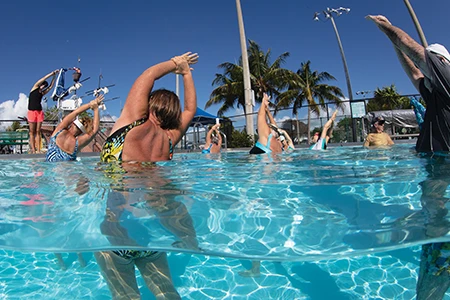
Adequate sleep is a foundational component of overall readiness, yet it is often one of the first things divers compromise on trips. Travel-related fatigue due to flight schedules, jet lag, overnight drives, or excitement can disrupt normal sleep patterns, unsettle circadian rhythms, and reduce sleep quantity or quality in the days leading up to diving.
Prolonged sitting during travel may also contribute to relative dehydration and slowing of venous blood flow, further narrowing safety margins before diving even begins.
While fatigue may seem like a minor inconvenience, it has meaningful implications for safety. Sleep deprivation affects attention, reaction time, judgment, and decision-making, all of which are critical for safe diving.
Fatigue reduces the body’s ability to cope with additional stressors, including exertion, thermal challenges, and possibly decompression stress. It can also blunt awareness of early physical symptoms, making it easier to dismiss warning signs that might otherwise prompt a diver to pause or seek advice.
Diving immediately after extended travel compounds stress rather than allowing for recovery. This doesn’t necessarily mean that a tired diver will have a problem, but divers should prioritize adequate rest before dive days, allow time to recover after long travel, and resist the temptation to push through significant fatigue. A well-rested diver is better equipped to manage the physical and cognitive demands of diving.
Diving While Unwell
Divers often feel pressure to dive even when they are not at their best. Travel logistics, limited opportunities, prepaid trips, and group dynamics can all encourage a mindset of pushing through adversity. Diving while unwell or when your system is stressed, however, can narrow safety margins before the first descent.
Acute illnesses such as mild, mundane viral infections, gastrointestinal illness, fever, or respiratory symptoms may increase the body’s energy needs. They can also reduce overall exercise tolerance and disrupt hydration and electrolyte balance, effectively narrowing the physiological reserve available during a dive.
Several acute issues can be particularly common during dive travel. Gastrointestinal illnesses are one example, as divers may be exposed to unfamiliar foods, water, or local microorganisms. Even seemingly mild symptoms can lead to dehydration and electrolyte imbalances.
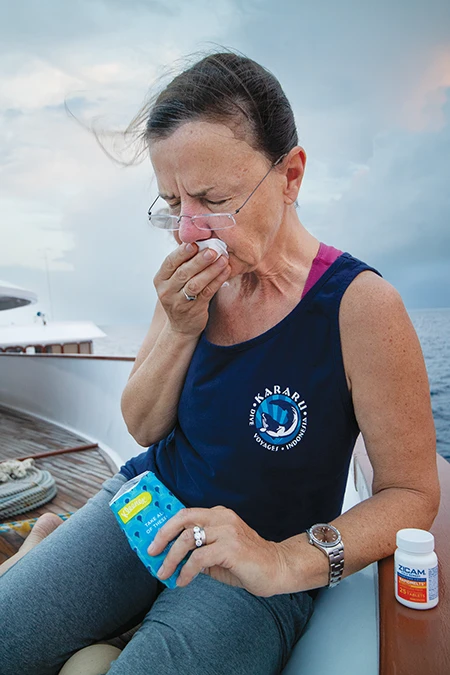
Likewise, divers escaping winter to dive in warmwater environments may arrive shortly after recovering from a cold. They may dismiss lingering sinus congestion if they can breathe reasonably well through the nose. A clear nasal passage, however, does not necessarily mean that the sinuses have fully cleared or returned to baseline function.
Diving with this condition can compromise successful equalization of the paranasal sinuses and increase the risk of barotrauma, even when symptoms seem minimal. A perceived change in voice resonance can be a subtle sign that the upper airway and paranasal sinuses have not yet fully returned to normal.
Other conditions introduce a different kind of stress. Musculoskeletal injuries, localized inflammation, recent surgery, or areas of tissue edema can alter regional circulation. While the net impact of these conditions on how inert gases move through the body is uncertain, they could complicate symptom interpretation if decompression sickness (DCS) ever needs to be ruled out.
What feels like something you can dive through may still be an unnecessary risk. The idea is not to declare diving unsafe every time something feels off; many divers enter the water with minor discomforts and experience no problems. The issue is cumulative stress. Diving while feeling unwell adds another layer to an already complex physiological exposure.
When several stressors are present, postponing or skipping a dive may be the more conservative choice. Arriving at the water healthy, rested, and recovered provides an important physiological reserve.
Hydration: Finding the Middle Ground
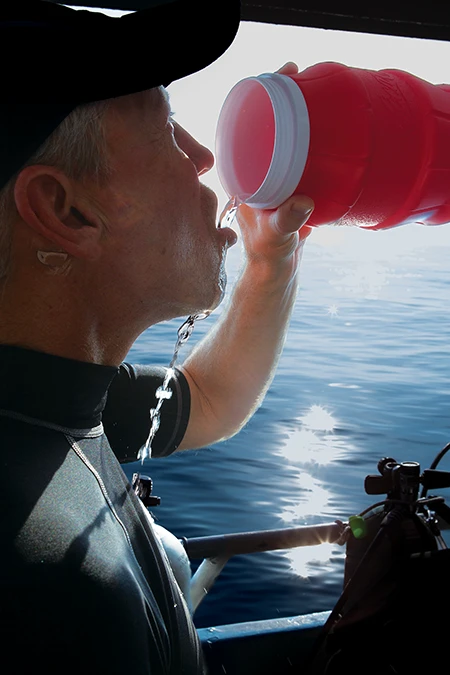
Dehydration is often cited as a cause of DCS, and it is probably one of the most blamed factors when a diver tries to understand an unexpected hit. While dehydration may contribute to risk under certain circumstances, it is rarely the sole or primary driver of DCS. Experiencing mild dehydration after diving is often a natural and predictable consequence of immersion physiology rather than a cause of DCS.
Hydrostatic pressure and peripheral vasoconstriction shift blood toward the chest during immersion. This blood movement increases central blood volume, which imposes stress on our heart and lungs. In response, our body triggers hormonal and neural mechanisms that increase urine production, a phenomenon known as immersion diuresis. That sensation is why divers commonly urinate during a dive.
As a result, some degree of fluid loss during diving is expected and physiologically normal. Routine medical evaluations commonly reveal mild dehydration in divers and nondivers alike, further complicating attempts to assign it as a cause after an uneventful dive suddenly becomes symptomatic.
At the same time, the pendulum can swing too far in the opposite direction. Some divers deliberately overhydrate before diving to avoid dehydration. Excessive fluid intake can create its own problems.
As discussed earlier, immersion shifts fluids toward the central circulation, increasing cardiac preload and pulmonary vascular pressures. In susceptible individuals, this may contribute to immersion pulmonary edema (IPE), which is a potentially life-threatening condition where fluid accumulates in the lungs, severely compromising their function. More is not always better, and overhydration is not a protective strategy.
The goal, therefore, is not aggressive hydration but rather appropriate hydration. The body has effective biological mechanisms to regulate fluid balance. As dehydration develops and blood concentration rises, specialized receptors in our body trigger the feeling of thirst.
Thirst is one of the most useful signals in healthy individuals to guide fluid intake and is often more reliable than trying to consume an arbitrary amount of water each day. If the idea of drinking a glass of water before a dive feels pleasant, topping off your body’s fluid stores is likely reasonable. If drinking water feels unnecessary or uncomfortable, your hydration status is probably close to ideal.
Divers should aim to start a dive euhydrated, which is optimal body water content, neither dehydrated nor overhydrated. Replenishing fluids after surfacing makes sense, recognizing that immersion diuresis has occurred. Balanced hydration before and after diving supports normal physiology without introducing unnecessary risks.
Alcohol Before Diving: More Than Just Dehydration
We often narrowly discuss alcohol consumption before a day of diving in terms of dehydration, but its effects extend well beyond fluid balance. While moderate alcohol intake does not automatically make diving unsafe, drinking close to dive days can introduce several overlapping stressors that may reduce physical and cognitive readiness.
Alcohol has a diuretic effect that promotes fluid loss and can contribute to relative dehydration, particularly if fluid intake is not adjusted. Increased urine output may also affect electrolyte balance, altering the way nerves and muscles communicate and increasing susceptibility to muscle cramps. These effects can be subtle, but they may become more relevant with immersion diuresis, physical exertion, and warm environments.
Beyond affecting hydration, alcohol alters neuromuscular coordination and reaction time. Residual effects may persist after blood alcohol levels return to zero, especially after heavier intake. Alcohol can also disrupt sleep architecture, reducing sleep quality and contributing to fatigue the following day. Fatigue, in turn, may impair judgment, slow reaction time, and reduce tolerance to additional physical stress.
Alcohol may also reduce situational awareness of early warning signals. Fatigue, muscle tightness, mild discomfort, and even thirst may be perceived less clearly, delaying simple corrective actions such as hydrating, resting, or skipping a dive. This reduced situational awareness is particularly relevant in diving, where early recognition of problems is a key safety factor.
As with many aspects of dive preparation, the issue with alcohol consumption is timing and moderation, not prohibition. Drinking well away from dive days is unlikely to pose a concern, but doing so the night before diving — especially in combination with poor sleep, travel fatigue, or dehydration — adds unnecessary stress. Approaching dive days with clear judgment and full physiological reserves is a simple way to reduce avoidable risk.
Exercise Before Diving: Fitness, Timing, and Intensity
Good physical fitness is always an asset for divers. Regular exercise improves cardiovascular health, endurance, strength, and overall resilience, all of which support safer diving.
The activity level needed to carry gear, climb ladders or walk across sand, and then complete the dive should be well within your capability at your normal fitness level. Divers should try to maintain an active lifestyle and arrive for a dive trip physically prepared for the demands of the environment.
The timing and intensity of exercise as they relate to diving matter. Research suggests that light physical activity before diving may have a protective effect, possibly by reducing the number of circulating gas micronuclei or by improving vascular function. Gentle activities such as walking, light stretching, or easy cycling may help prepare the body without adding meaningful additional stress.
The concern arises when divers engage in strenuous or high-impact exercise shortly before diving. Intense workouts can lead to muscle microtrauma, local inflammation, and fatigue. These changes may alter tissue perfusion and could increase susceptibility to bubble formation as we enter the offgassing phase of the dive. Heavy resistance training, long-distance running, high-intensity interval training, and contact sports are examples of activities that may be better scheduled away from dive days.
This is not an argument against exercise but for thoughtful workout sequencing. Being well-conditioned is beneficial, but arriving at the dive already fatigued or inflamed is not. On dive days, light activity that promotes circulation without exhaustion is generally reasonable, while demanding workouts are best reserved for nondiving days or after the dive vacation.
Looking Ahead
A diver will not always arrive at the water in a neutral, baseline state. Sleep, hydration, illness, fatigue, alcohol consumption, travel, and exercise all influence how the body tolerates compressed-gas diving and set the stage for managing decompression stress after we surface. None of these factors alone determine the outcome, but together they shape the physiological reserve a diver brings into the dive.
In Part 2 of this series, we will explore how exertion, carbon dioxide, breathing patterns, and thermal comfort during a dive can influence inert gas uptake and decompression stress.
© Alert Diver – Q3 2026